Schönbrunn Zoo
274 years later, it's still open.
Giant pandas munch bamboo against red walls, sea lions doze on rocks, jade-green chrysalises hang from branches awaiting metamorphosis.
This is the world's oldest zoo still in operation — and voted Europe's best zoo for multiple consecutive years.
I. The Emperor's Zoo
The history of Schönbrunn Zoo (Tiergarten Schönbrunn) dates back to 1752, when Holy Roman Emperor Franz I ordered its construction as a private imperial collection of exotic animals. It predates London Zoo by 76 years and Berlin Zoo by 92 years.
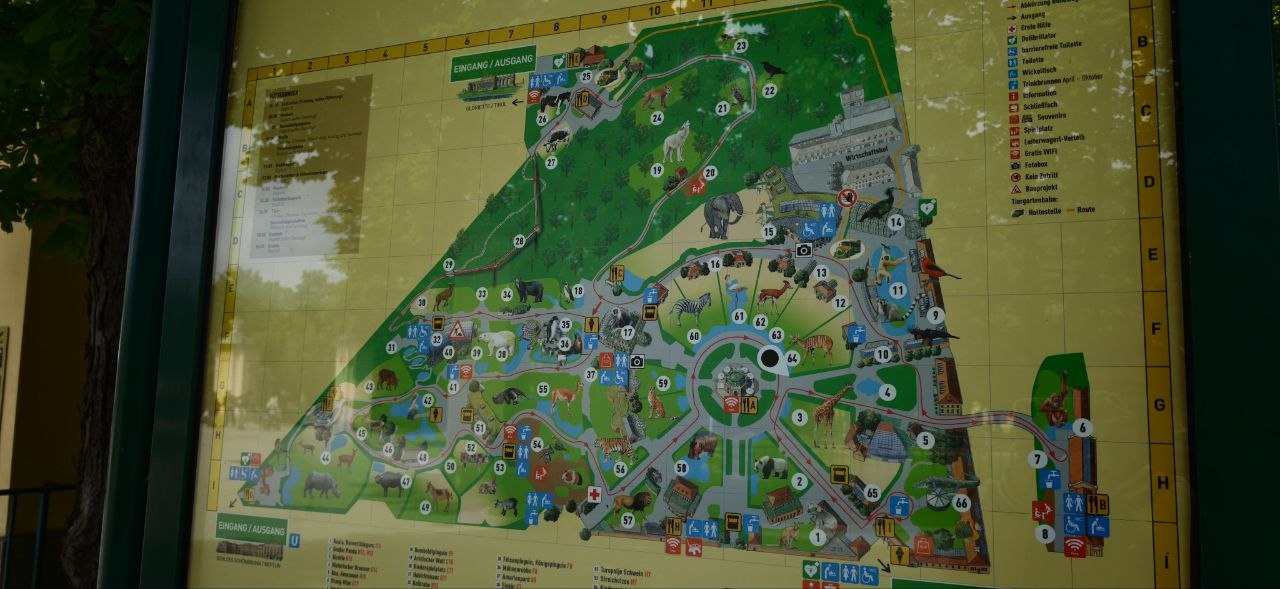
Walking through the grounds, you'll notice it preserves its Baroque-era radial layout — all exhibits extend outward from a central octagonal pavilion, like an unfolding fan. In the 18th century, this design allowed the emperor to survey all his animals from the center; today, it means that no matter which direction visitors wander, they always end up back at the heart of the zoo.
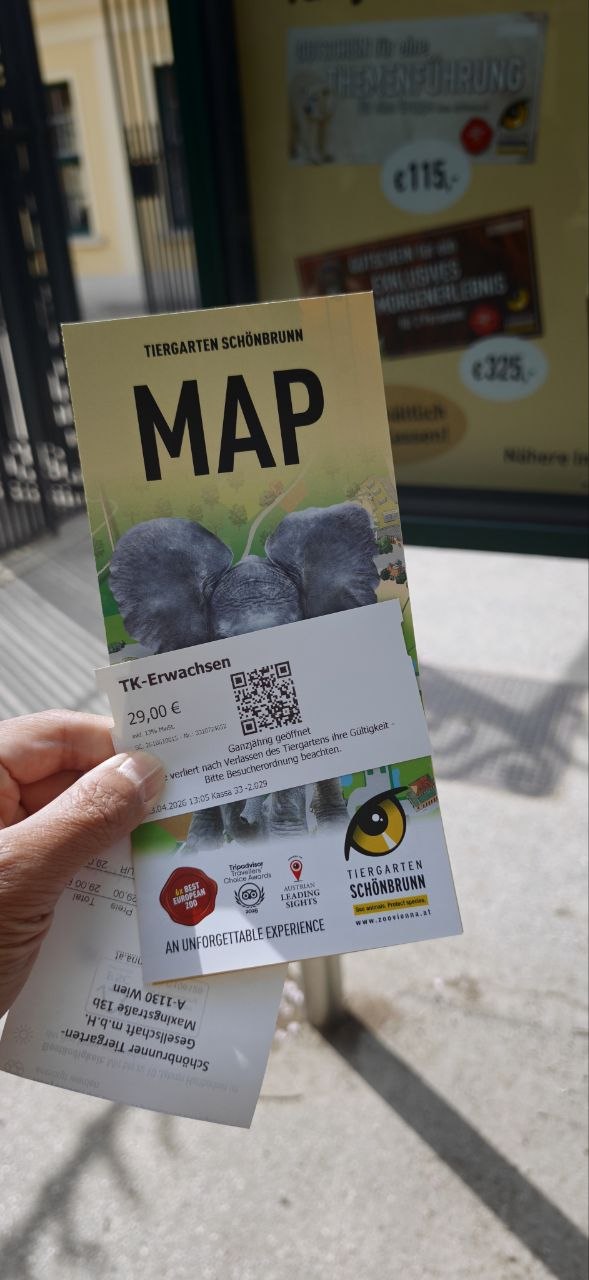
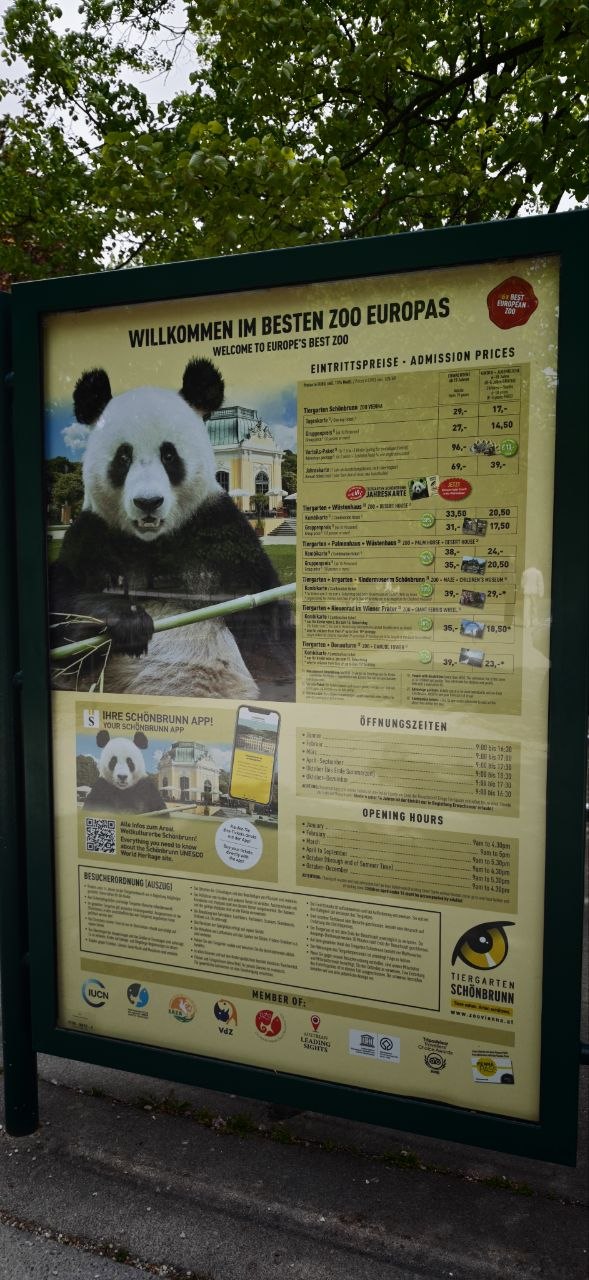
Admission: Adults €29, Children (ages 6–18) €17
Opening hours: Apr–Sep 9:00–18:30, Oct 9:00–17:30, Nov–Jan 9:00–16:30
Combo ticket: Zoo + Palm House + Desert House €35.50
Website: zoovienna.at
II. Giant Pandas — The Zoo's Top Stars
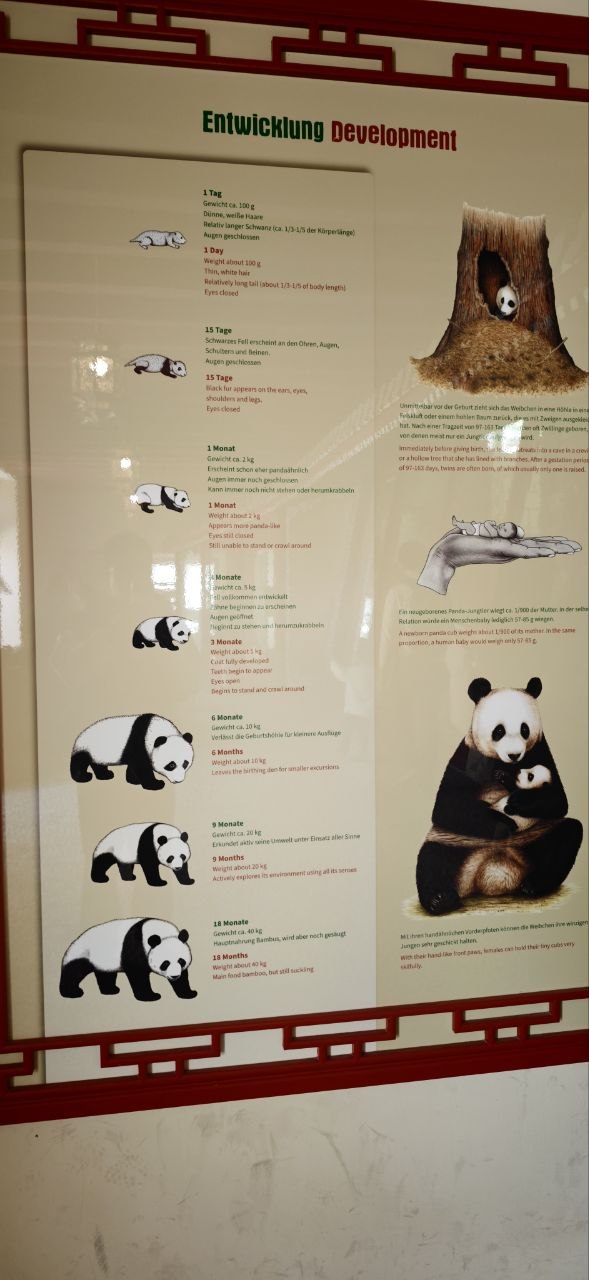
Schönbrunn Zoo is one of the few zoos in Europe with giant pandas, and the only European zoo to have successfully achieved natural panda reproduction. The zoo has a long-standing partnership with China's Giant Panda Conservation and Research Center, with information boards at the entrance detailing this cross-border conservation story.
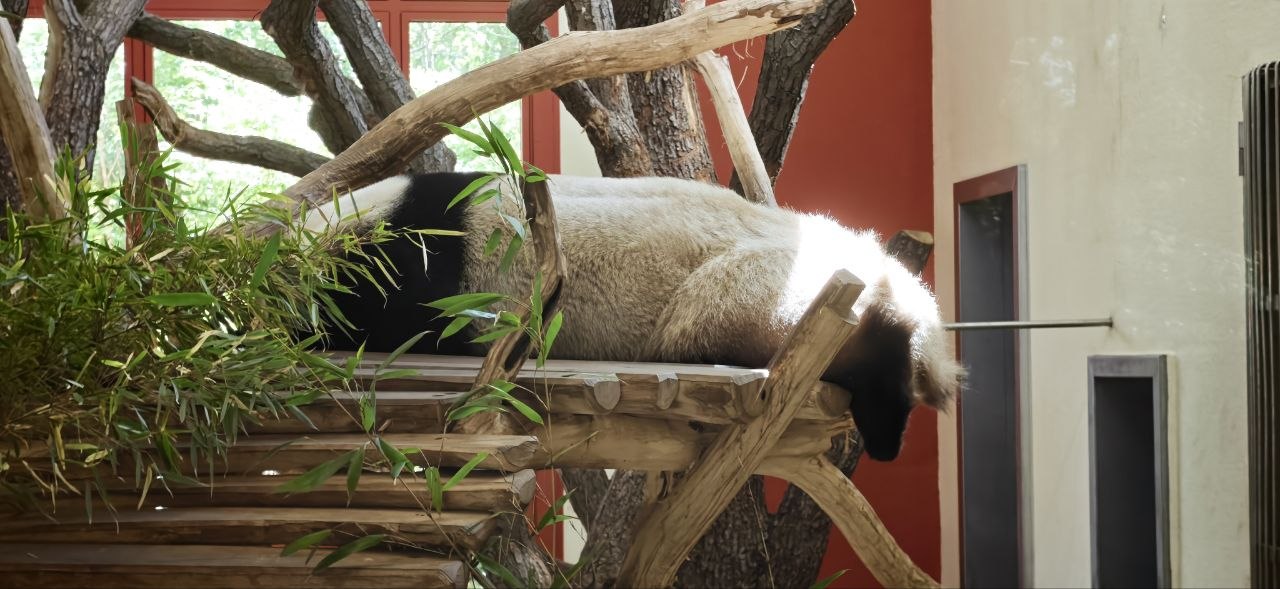
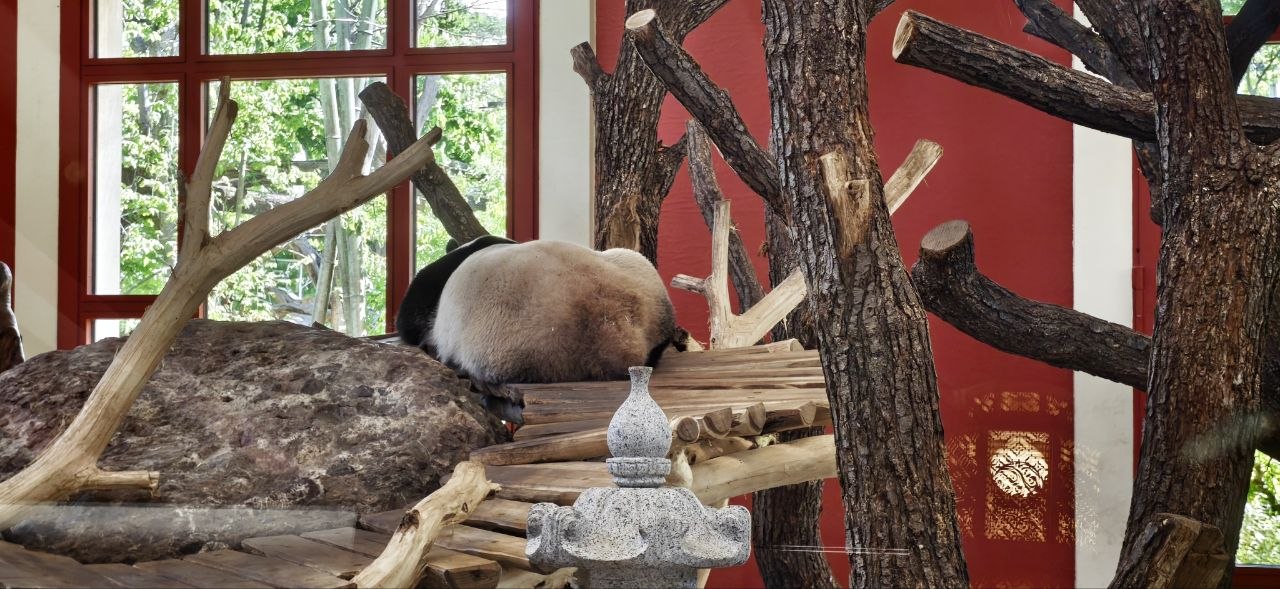
When we visited, the giant panda was curled up on a wooden platform against the red wall, fast asleep. Bamboo was scattered all over the ground, and the panda paid absolutely no attention to the excited visitors pressing against the glass. That's the privilege of being the zoo's number-one star — sleep whenever you want; the fans can watch.
III. Sea Lions — The Zoo's Most Laid-Back Residents
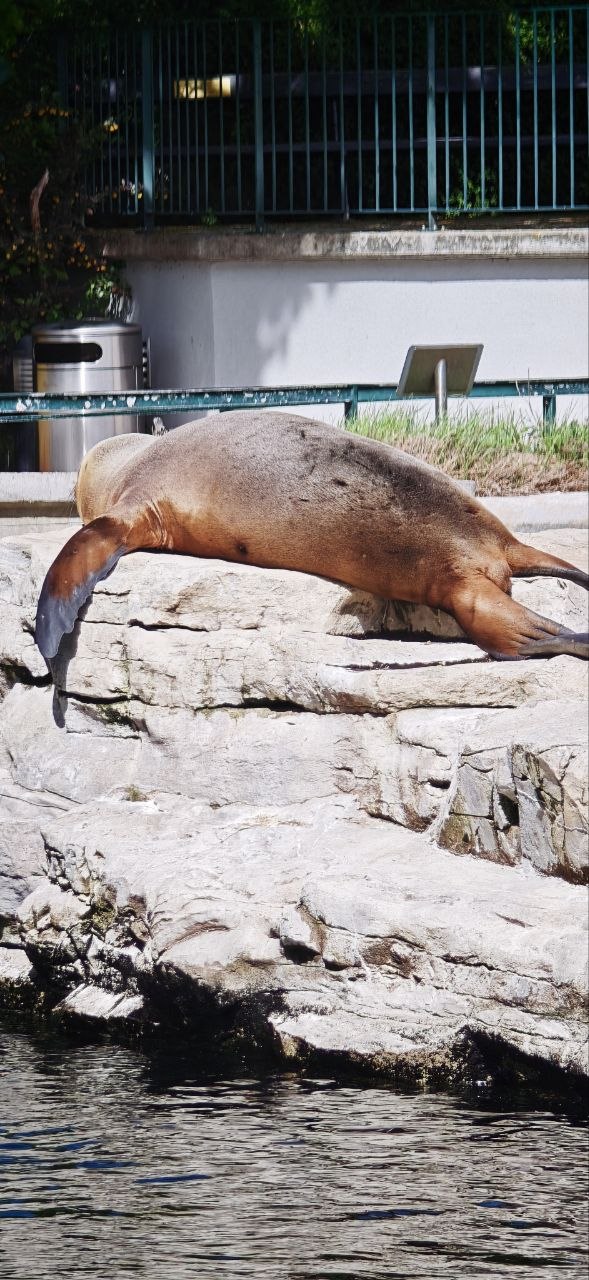
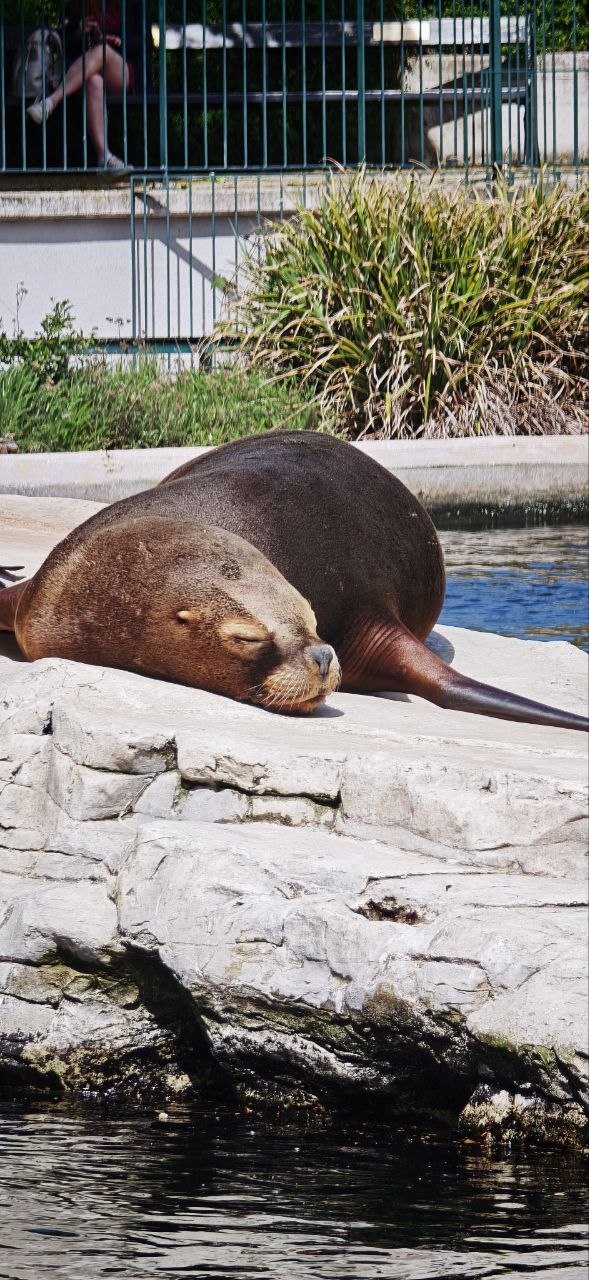
If the giant panda is the zoo's top star, the sea lion is its most laid-back resident. As we passed the sea lion pool, one was sprawled on a rock sunbathing in a pose so relaxed it was enviable. Sunlight gleamed on its sleek fur, eyes squeezed shut to slits — fully committed to the philosophy of "why bother trying in life."
IV. Flamingos, Giraffes, and More Neighbors
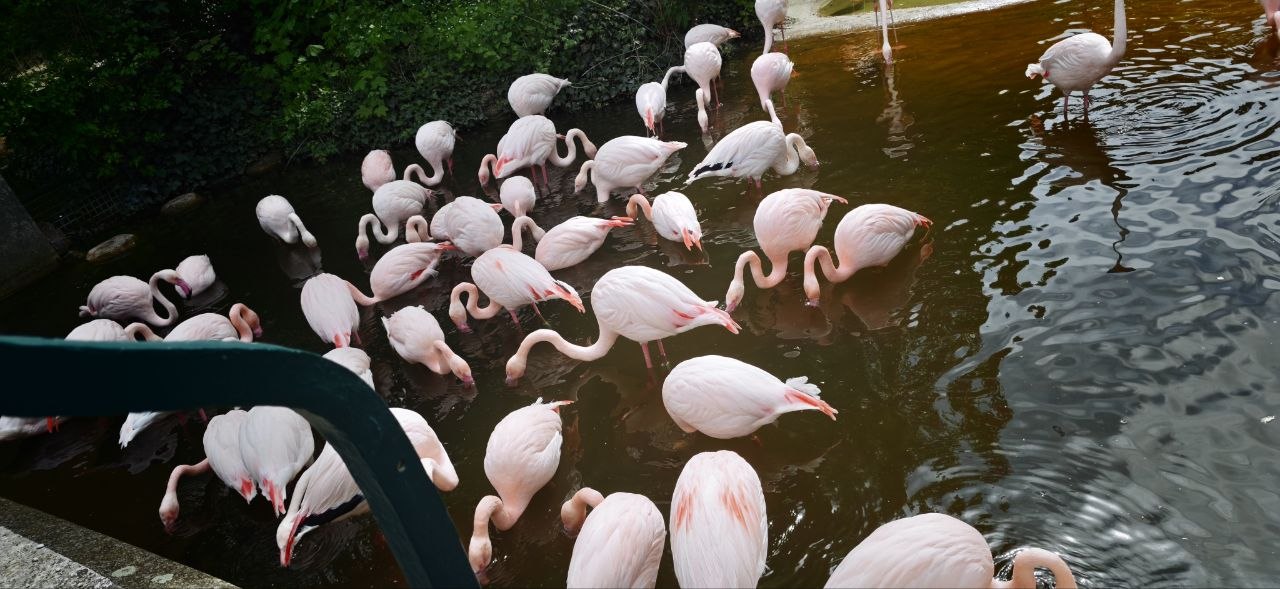
The flamingo flock is one of the easiest sights to stop for. Dozens of pink figures gathered at the edge of a pool — some with heads dipped to feed, some standing on one leg, some preening their feathers with their beaks. Their pink plumage stands out vividly against the green water.
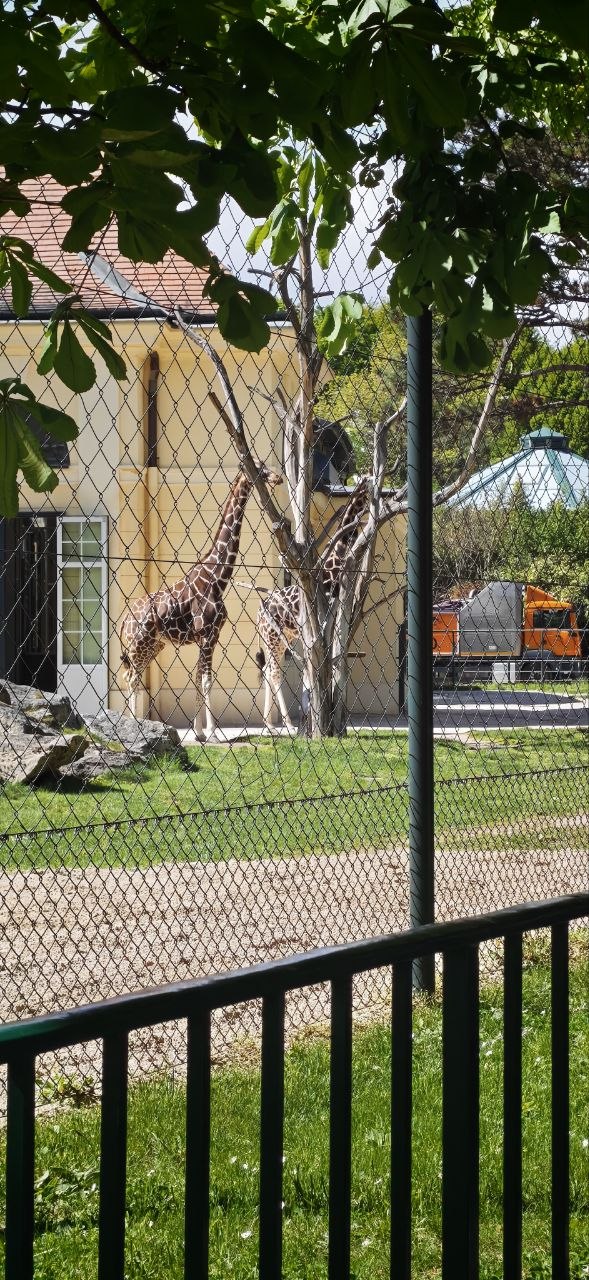
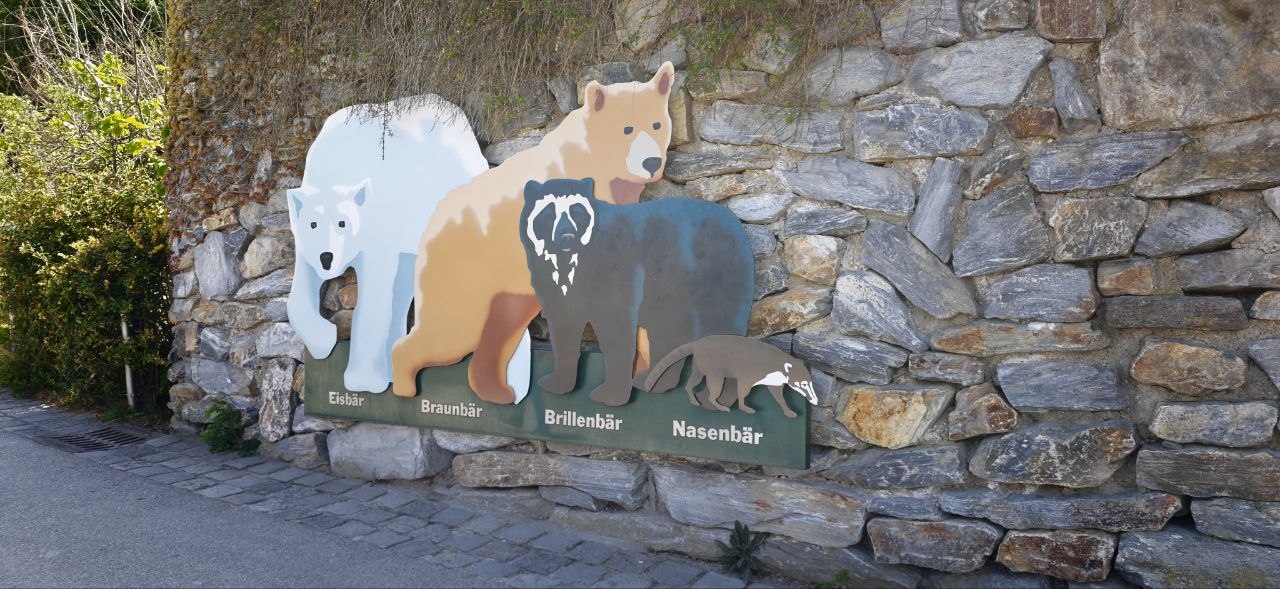
The giraffe area is at the other end of the zoo, but even from behind the fence you can feel the awe of their sheer height. Not far away is the bear section — the zoo has set up a charming sign comparing the sizes of the polar bear, brown bear, spectacled bear, and coati (Eisbär, Braunbär, Brillenbär, Nasenbär) side by side, making it easy for children to see the differences at a glance.
V. Northern Bald Ibis (Waldrapp) — A Conservation Story Pulled Back from the Brink
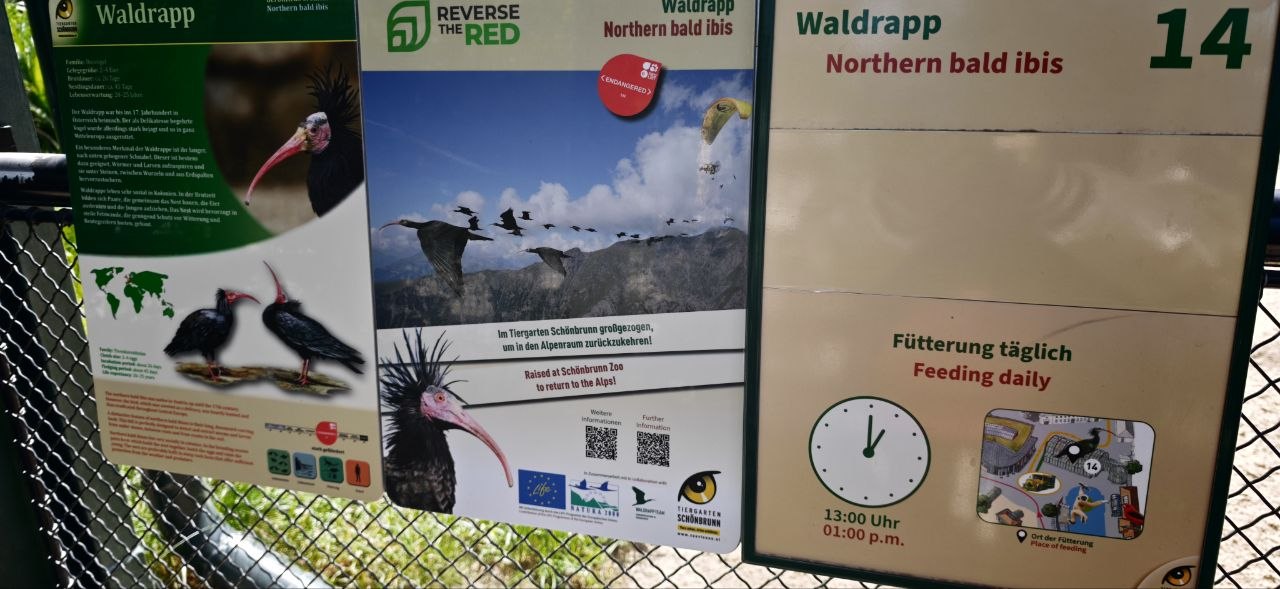
In a quiet corner of the zoo, there's an unassuming area that houses the Northern Bald Ibis (Waldrapp). This peculiar-looking bird once roamed across Europe but had nearly vanished from the continent entirely by the 17th century.
Schönbrunn Zoo participates in the international "Reverse the Red" conservation program, breeding Northern Bald Ibis (Waldrapp) on-site for reintroduction into the Alps. A sign reads: "Bred at Schönbrunn Zoo, so they can return to the Alps." This may be the quietest — but also the most moving — corner of the entire zoo.
VI. Jade Jewels — Butterfly Chrysalises
Inside the tropical rainforest house, the most astonishing sight isn't the colorful butterflies fluttering about — it's the chrysalises hanging from the branches.
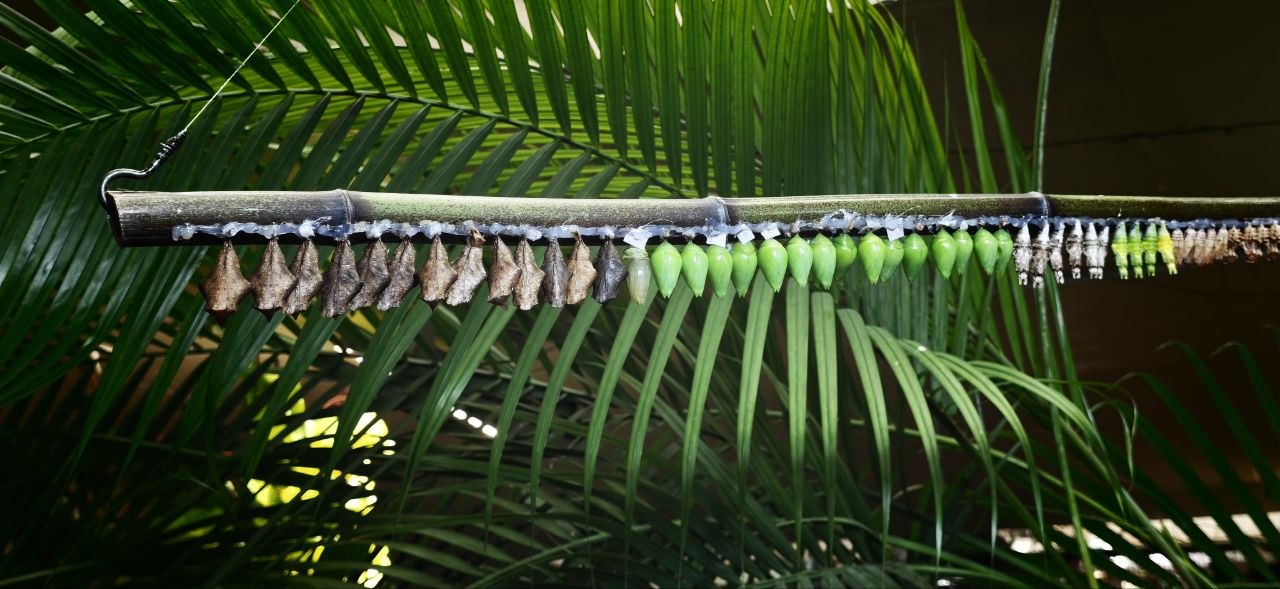
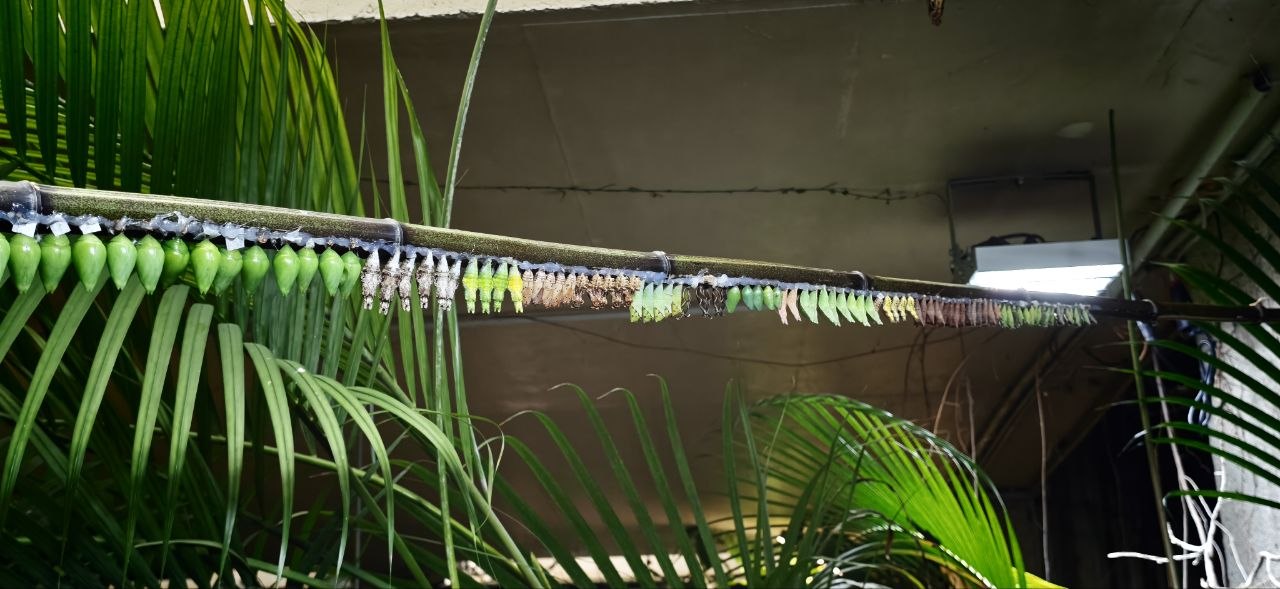
Dozens of jade-green chrysalises hang neatly from a horizontal bar, glistening like a row of emerald jewels under the lights. Some are still a solid green; others have begun to change color and crack open — the butterflies inside about to emerge. Nearby, the empty shells of already-hatched chrysalises have turned grayish-brown, like opened gift wrappings.
This is life's tiniest yet most magnificent moment, condensed onto a bar less than a meter long.
VII. 274 Years of Architecture and the Marks of Time
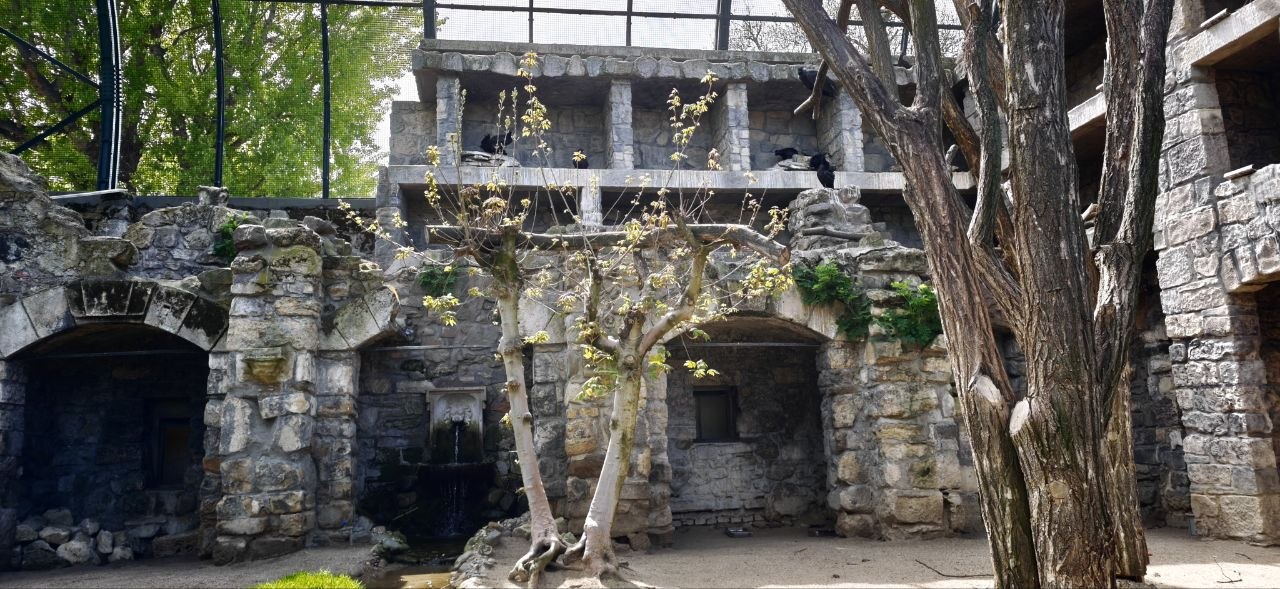
What makes Schönbrunn Zoo truly special is the coexistence of old and new. Some stone structures in the grounds have been preserved in their original 18th-century state, their weathered walls covered in creeping vines; right next to them stand modern exhibit halls built with glass and steel, offering comfortable viewing spaces.
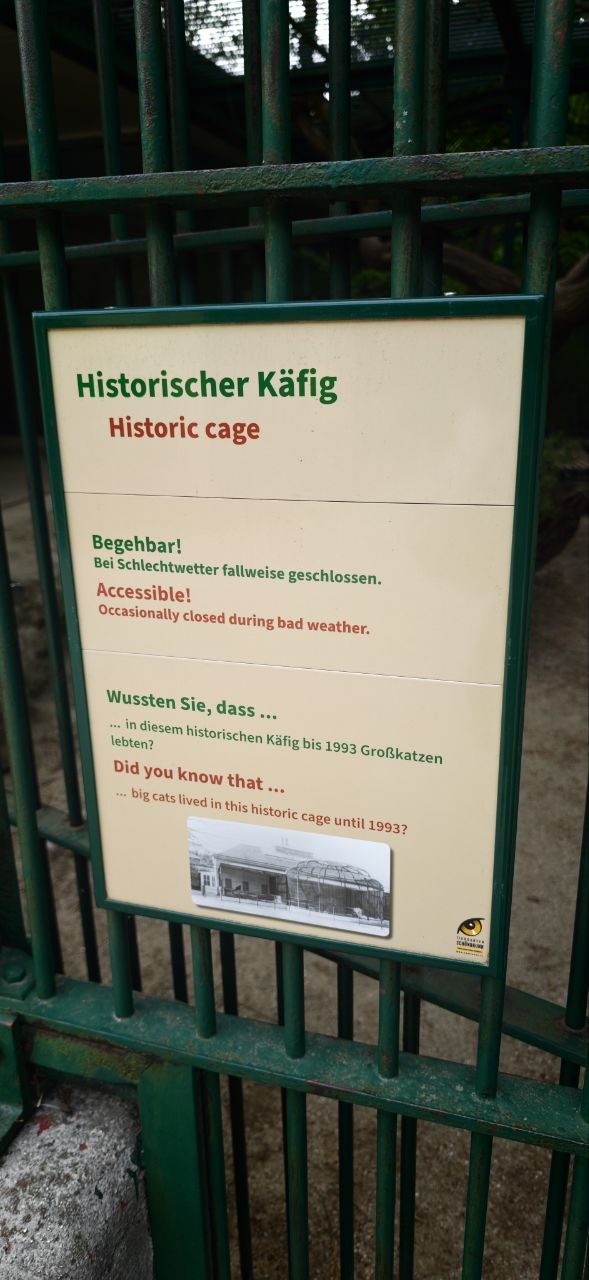
One sign is particularly striking: "Historic Cage (Historischer Käfig) — Did you know? Large cats lived in this historic cage until 1993." From imperial menagerie cages to a modern conservation park, this zoo has walked through the entire evolution of humanity's relationship with animals over 274 years.
VIII. Palm House (Palmenhaus) — The Last Stop in the Imperial Gardens
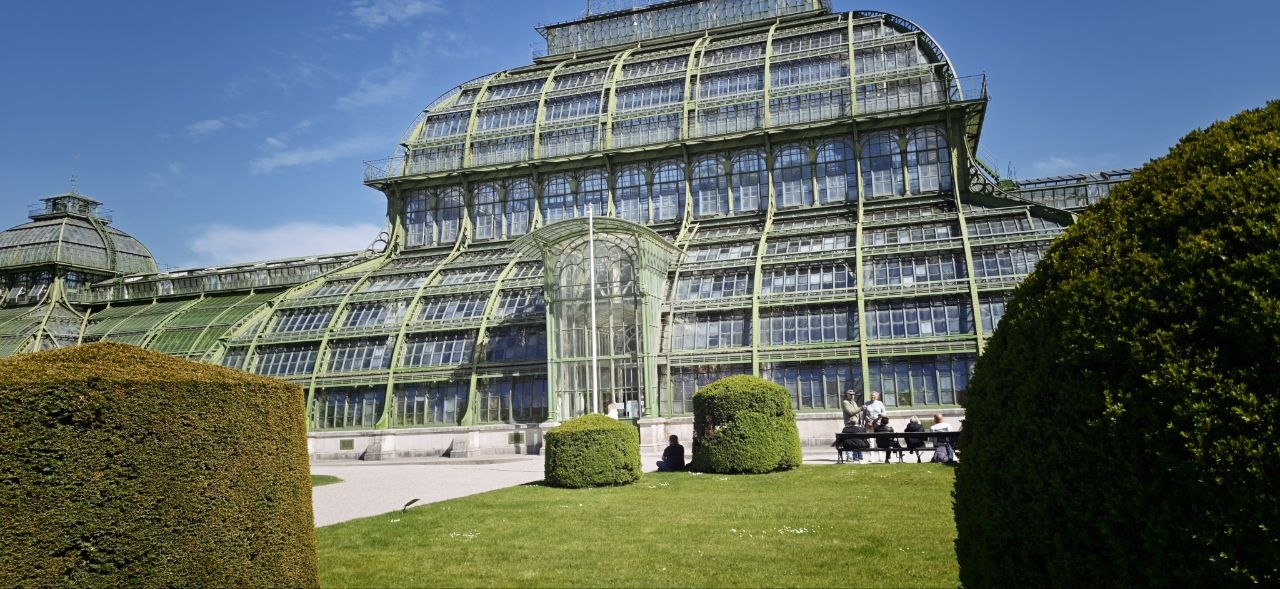
Right next to the zoo stands the magnificent Palm House (Palmenhaus), a steel-and-glass structure built in 1882 and one of the largest greenhouses in Europe. Although it's not included in the zoo ticket (combo ticket €35.50), it's well worth a visit. The greenhouse exterior gleams in the sunlight — one of the most photogenic buildings in the Schönbrunn Palace gardens.
IX. A Day in the Life of the Animals (Videos)
Photos capture moments, but you need videos to truly feel what these animals are like.
Epilogue
By the time we left the zoo, we'd been walking for nearly three hours. Our feet were a bit sore, but our spirits were high.
274 years ago, this was an emperor's private collection; 274 years later, it's a modern zoo that takes conservation seriously and tells its stories well. From imperial menagerie cages to the Northern Bald Ibis (Waldrapp) rewilding program, from the historic cage (Historischer Käfig) to glass viewing windows — this zoo uses its own history to illustrate how the relationship between humans and animals has evolved.
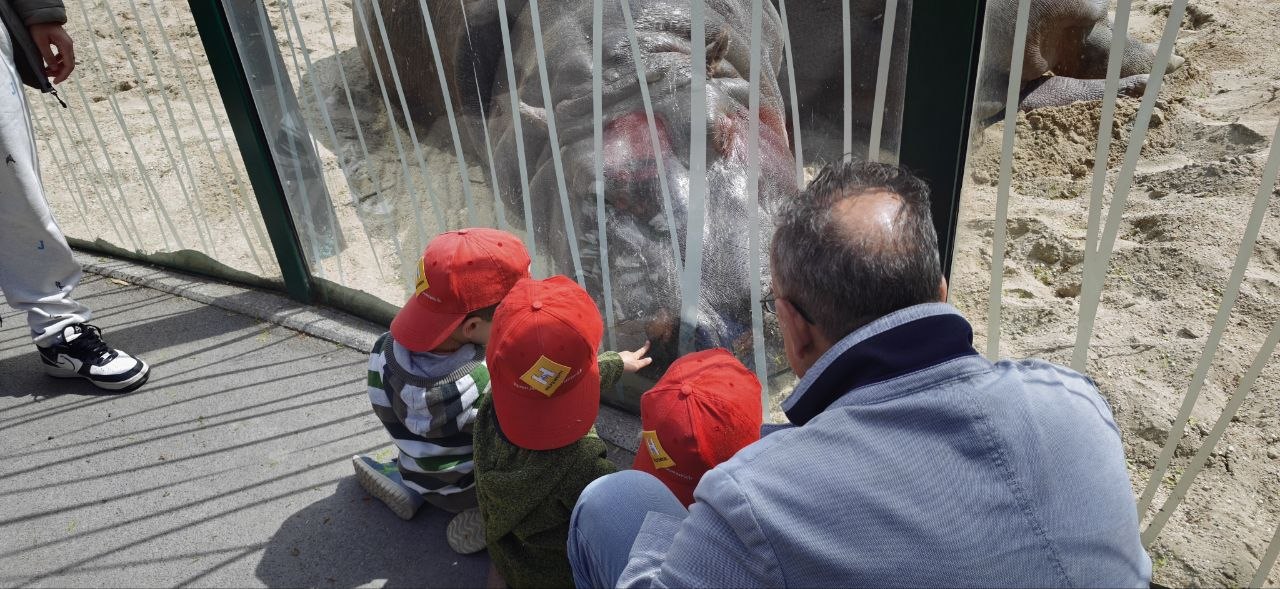
And those children in red hats, noses pressed against the glass — they are perhaps the best future this zoo could ask for.
The world's oldest zoo, still vibrant after 274 years.
Perhaps it's precisely because it's old enough that it knows how to stay forever young.