Chapter 1
Touching Down in Phnom Penh Again
My first visit to Phnom Penh in 2017 left a lasting impression. Two years later, in 2019, I decided to come back to this city on the Mekong River to see how much it had changed.
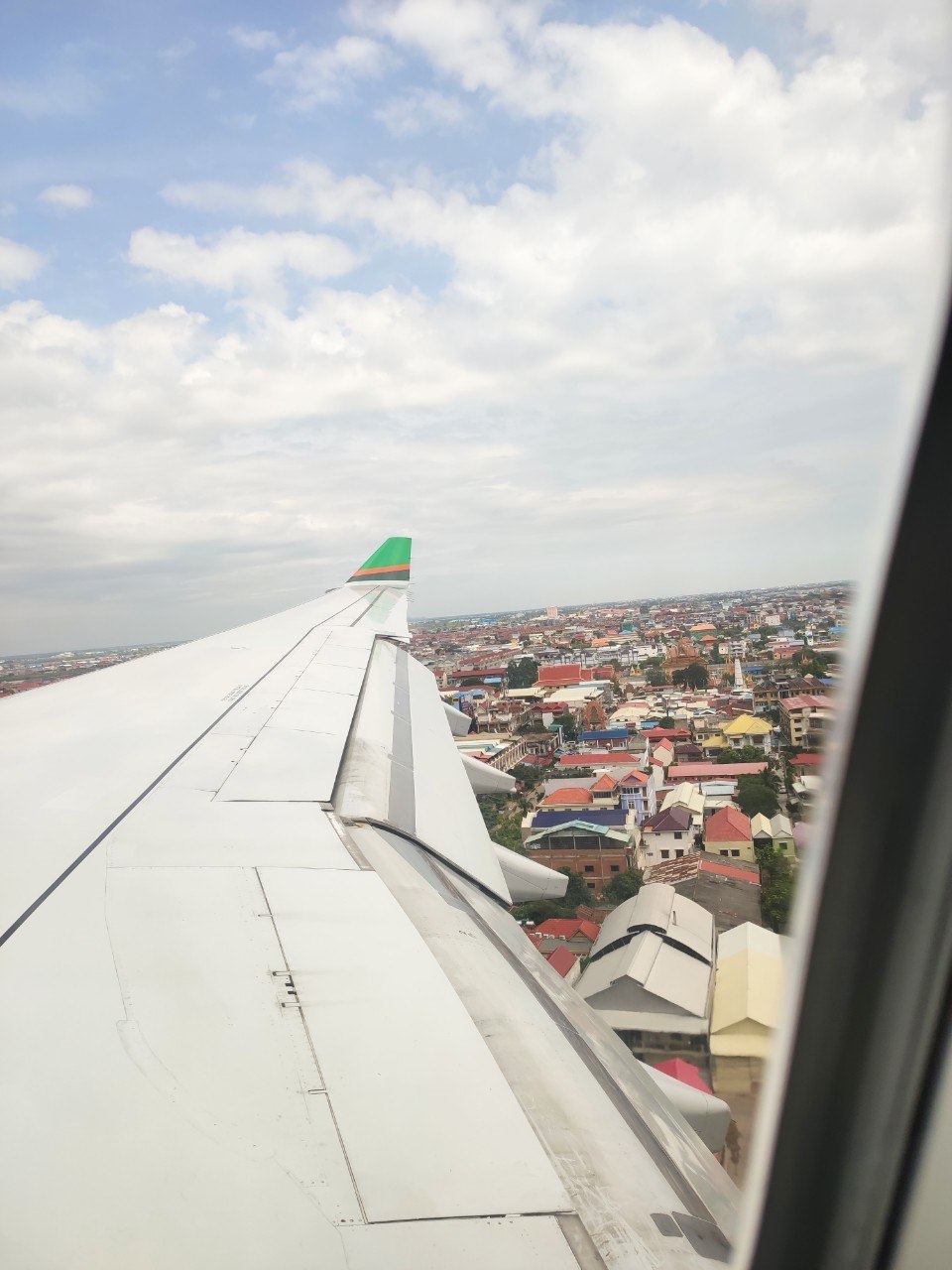
Looking down on Phnom Penh before landing — colorful rooftops gleaming vividly in the sunlight
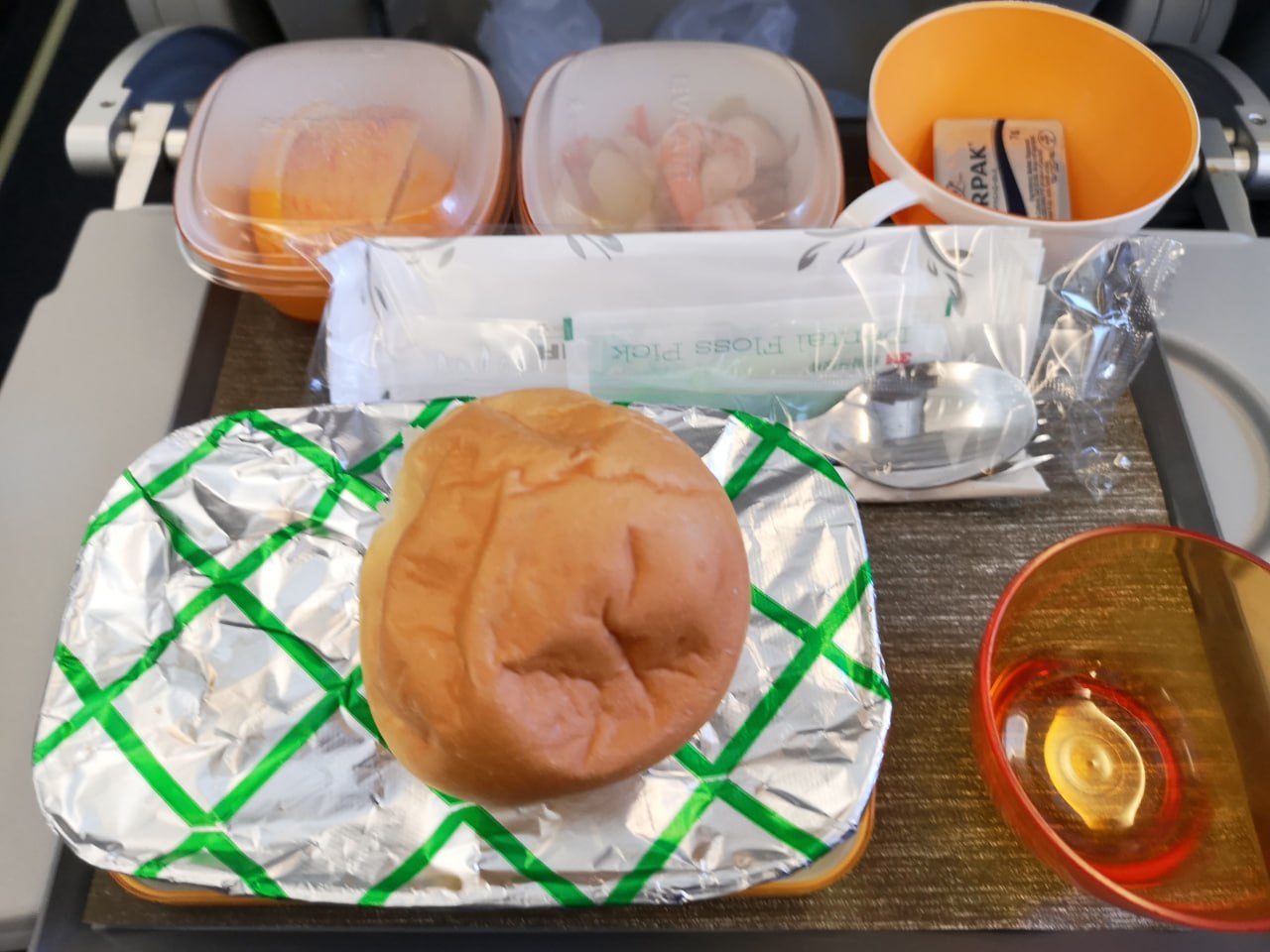
A simple in-flight meal
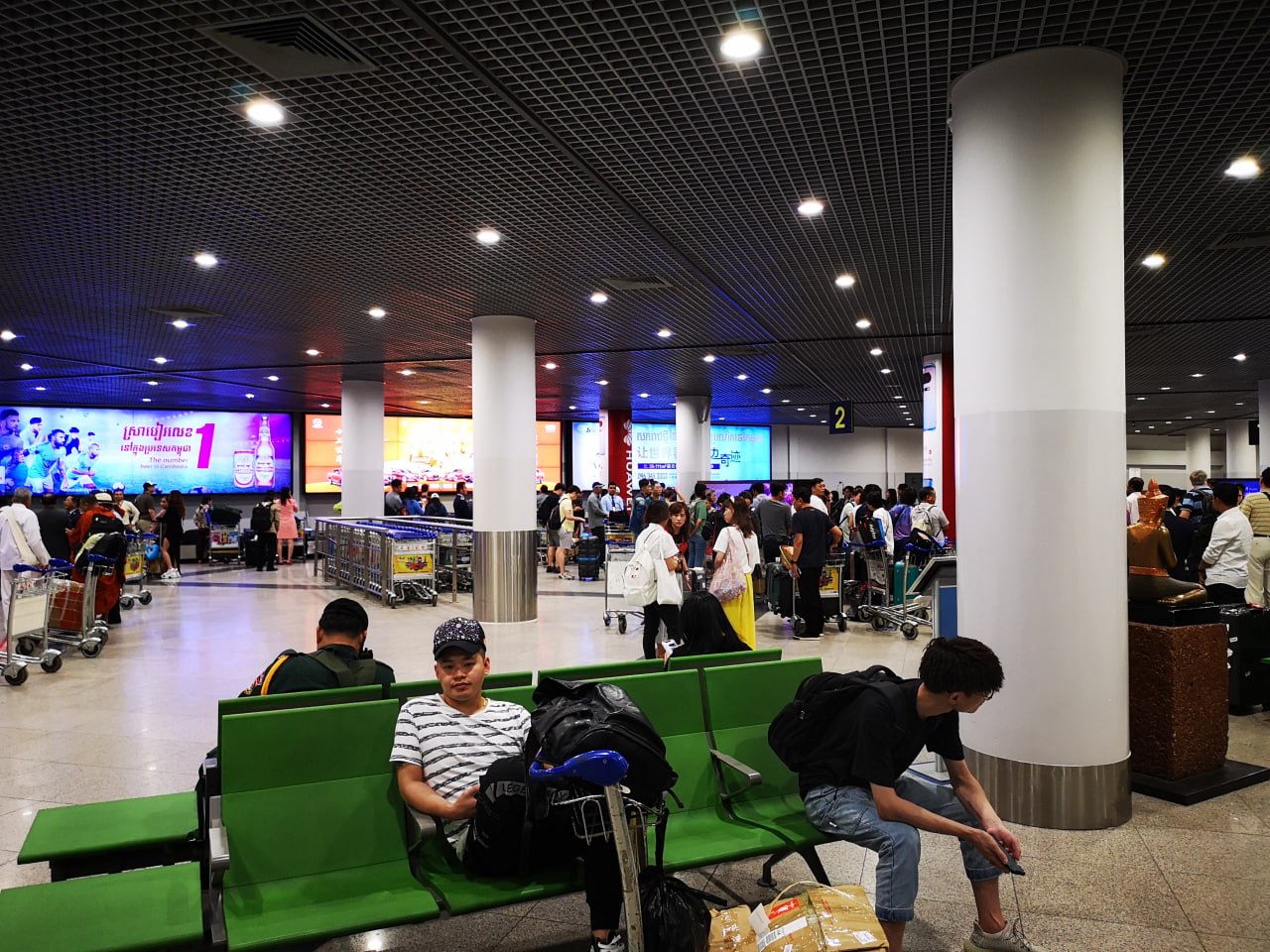
The arrivals hall at Phnom Penh International Airport
Peering through the airplane window, Phnom Penh's skyline was noticeably different. Two years ago it was a mostly flat city, but now several high-rises had sprouted up, with construction cranes everywhere you looked. This city was growing at a staggering pace.
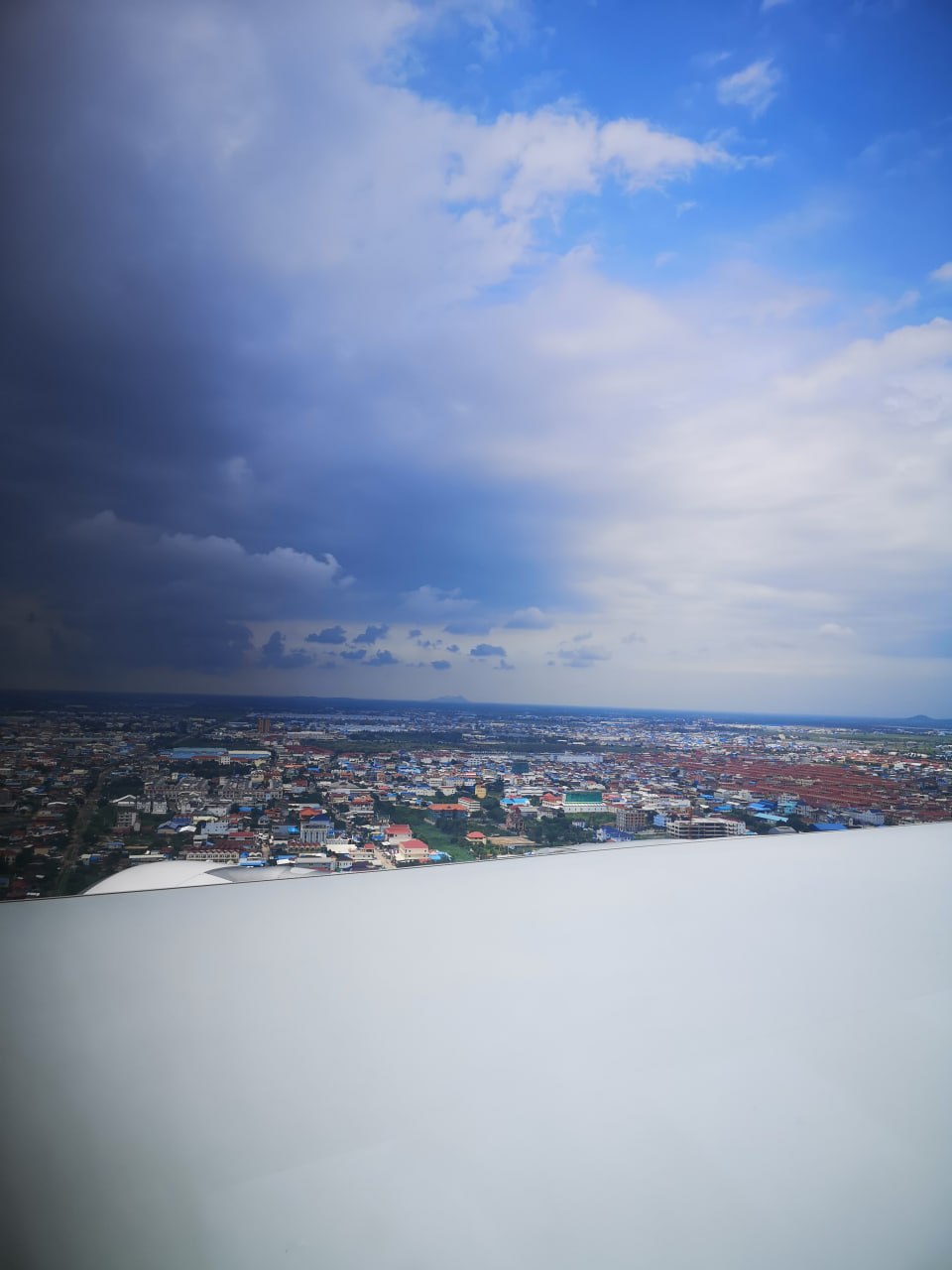
Phnom Penh from beneath the wing — spectacular cloud formations before the rainy season
Chapter 2
The Mekong Riverfront, Day and Night
The most captivating thing about Phnom Penh has always been the river. The Tonle Sap and the Mekong converge right here, with fishing boats dotting the broad waterway and flocks of pigeons gathered along the banks. I fell in love with this riverside promenade on my first visit, and coming back, I found it even more beautiful.
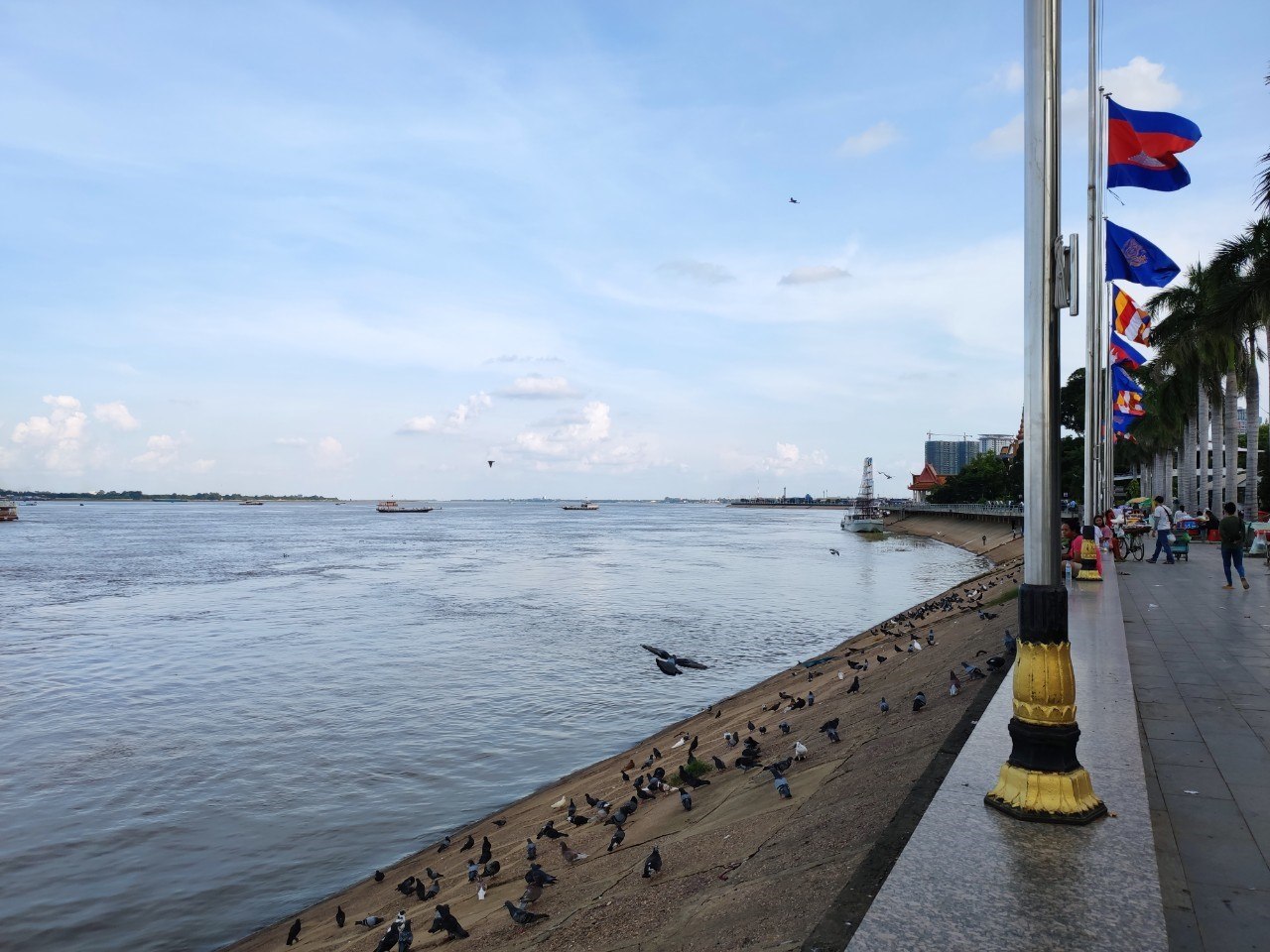
Cambodian national flags and Buddhist flags fluttering along the riverside promenade, with pigeons leisurely foraging on the banks
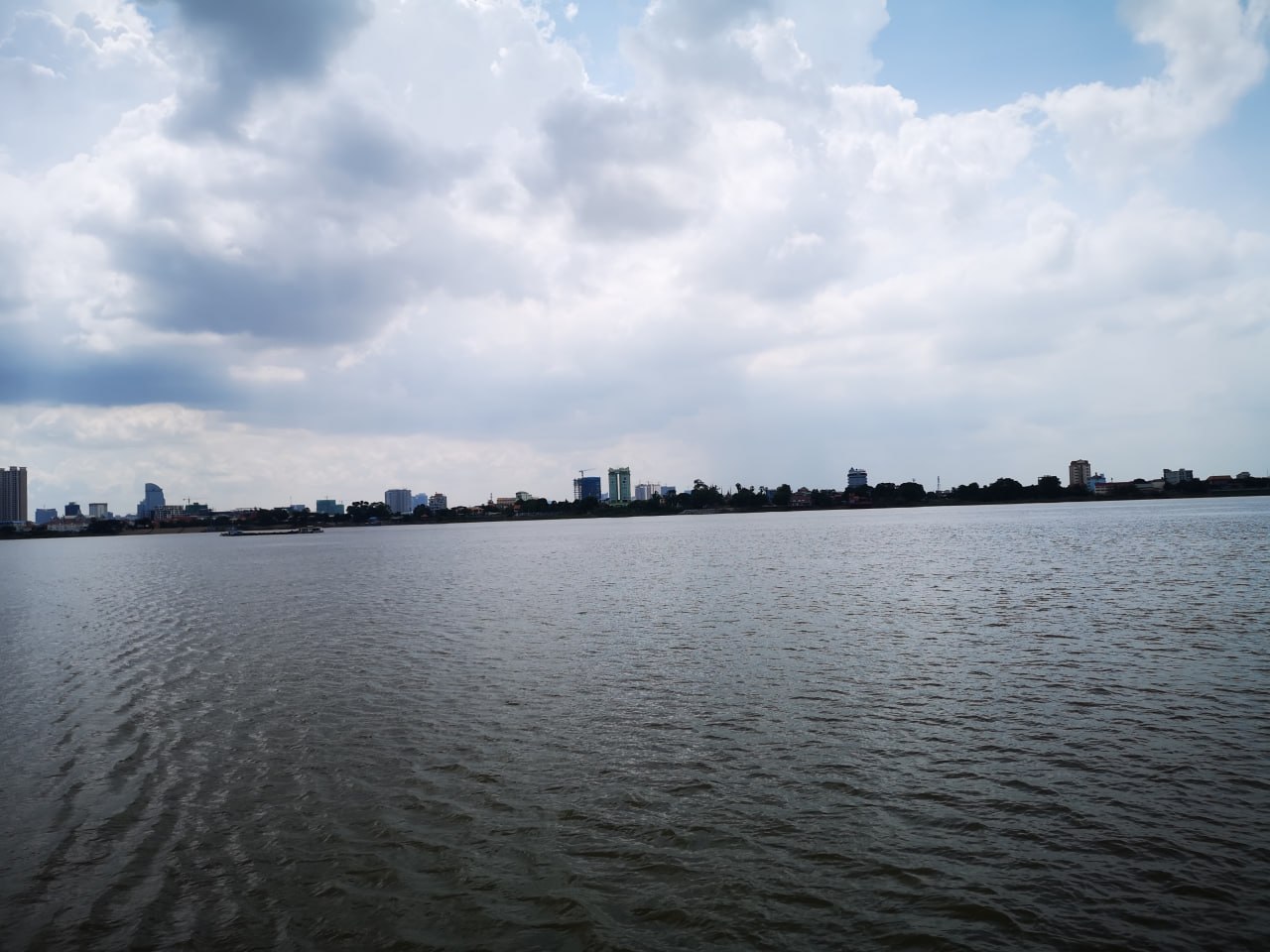
The vast Mekong River — standing on the riverbank, the far shore feels like another world entirely
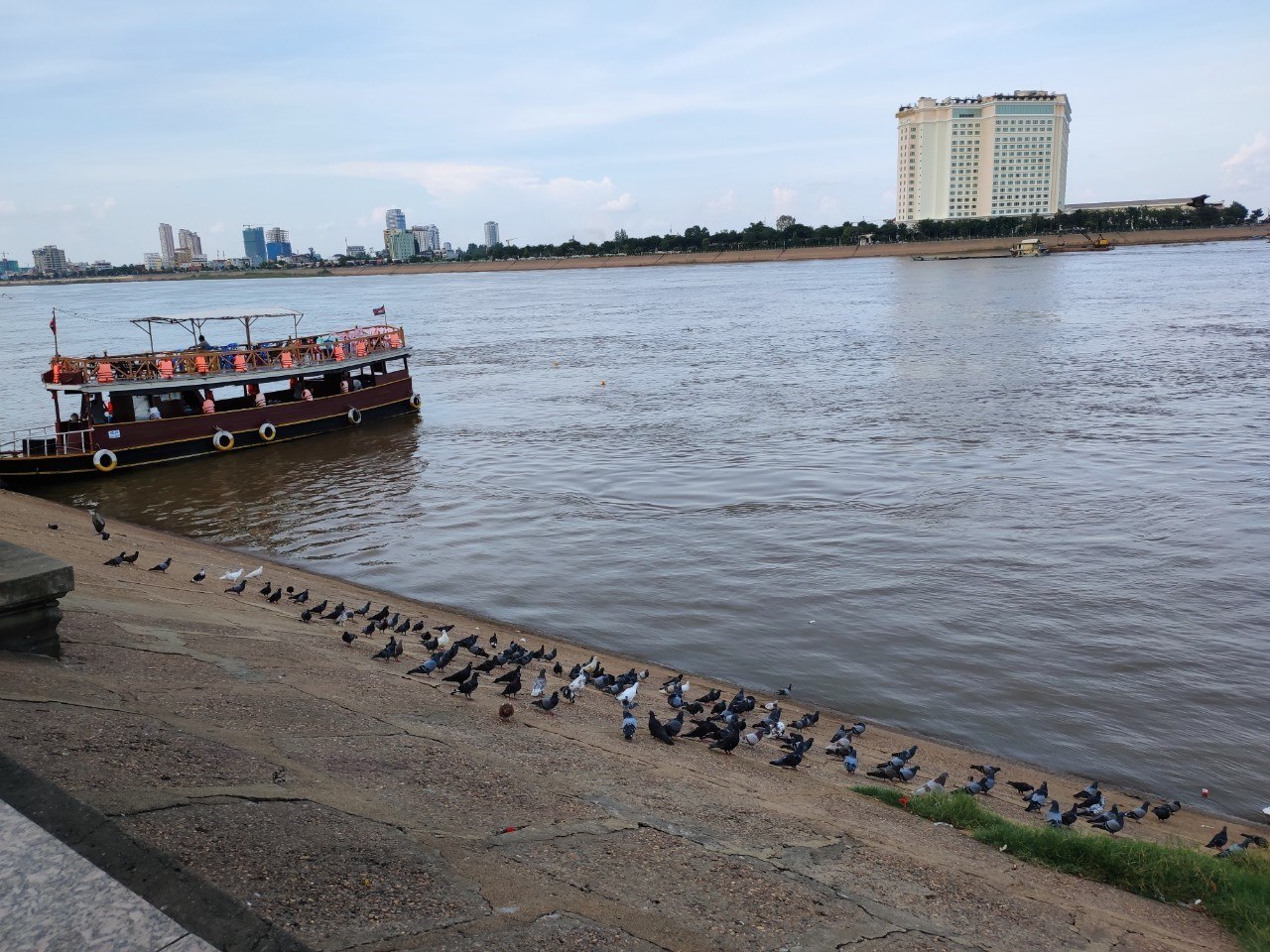
Flocks of pigeons and docked tour boats along the riverbank
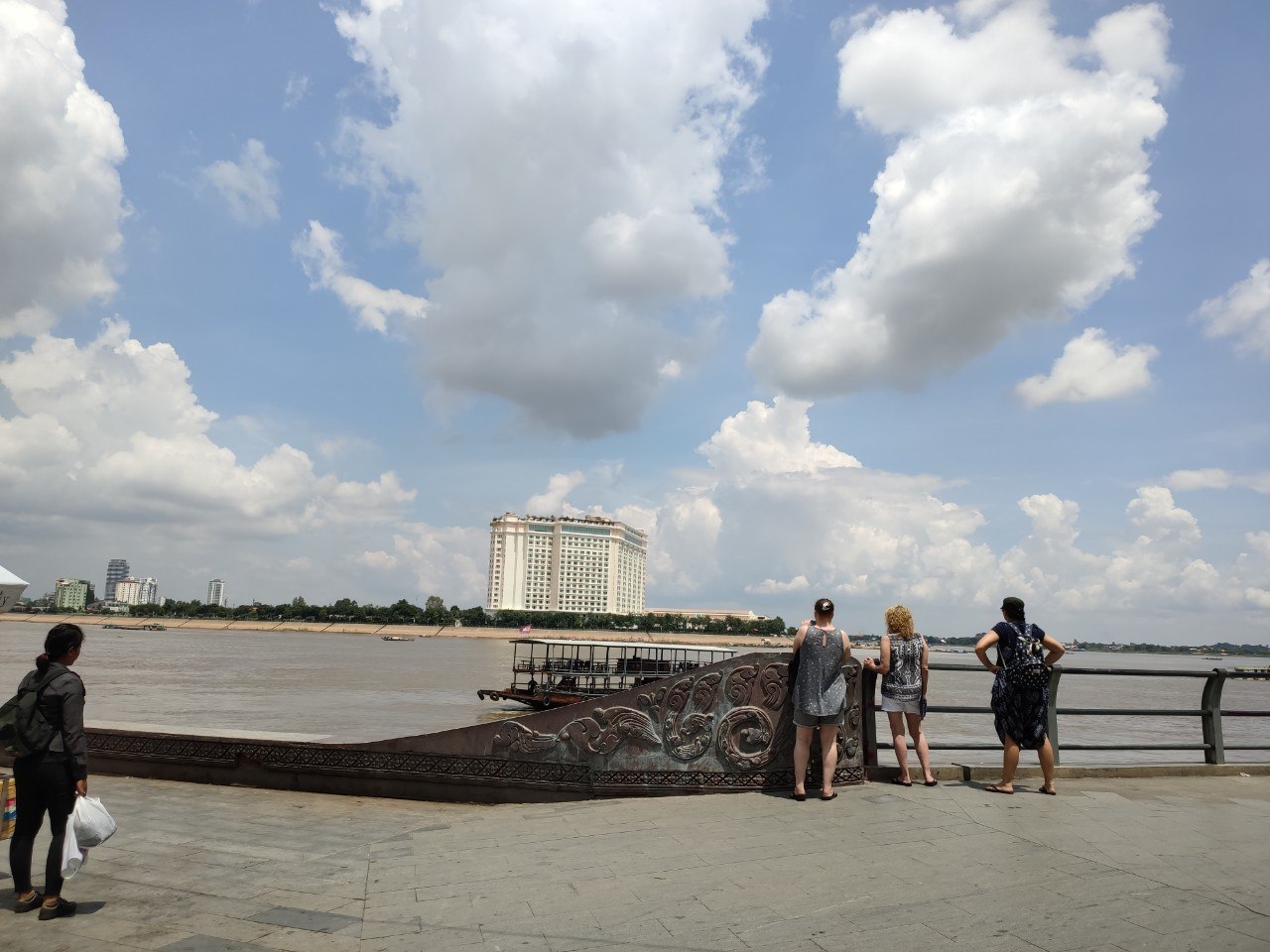
Visitors gazing across to the opposite bank from the riverside promenade
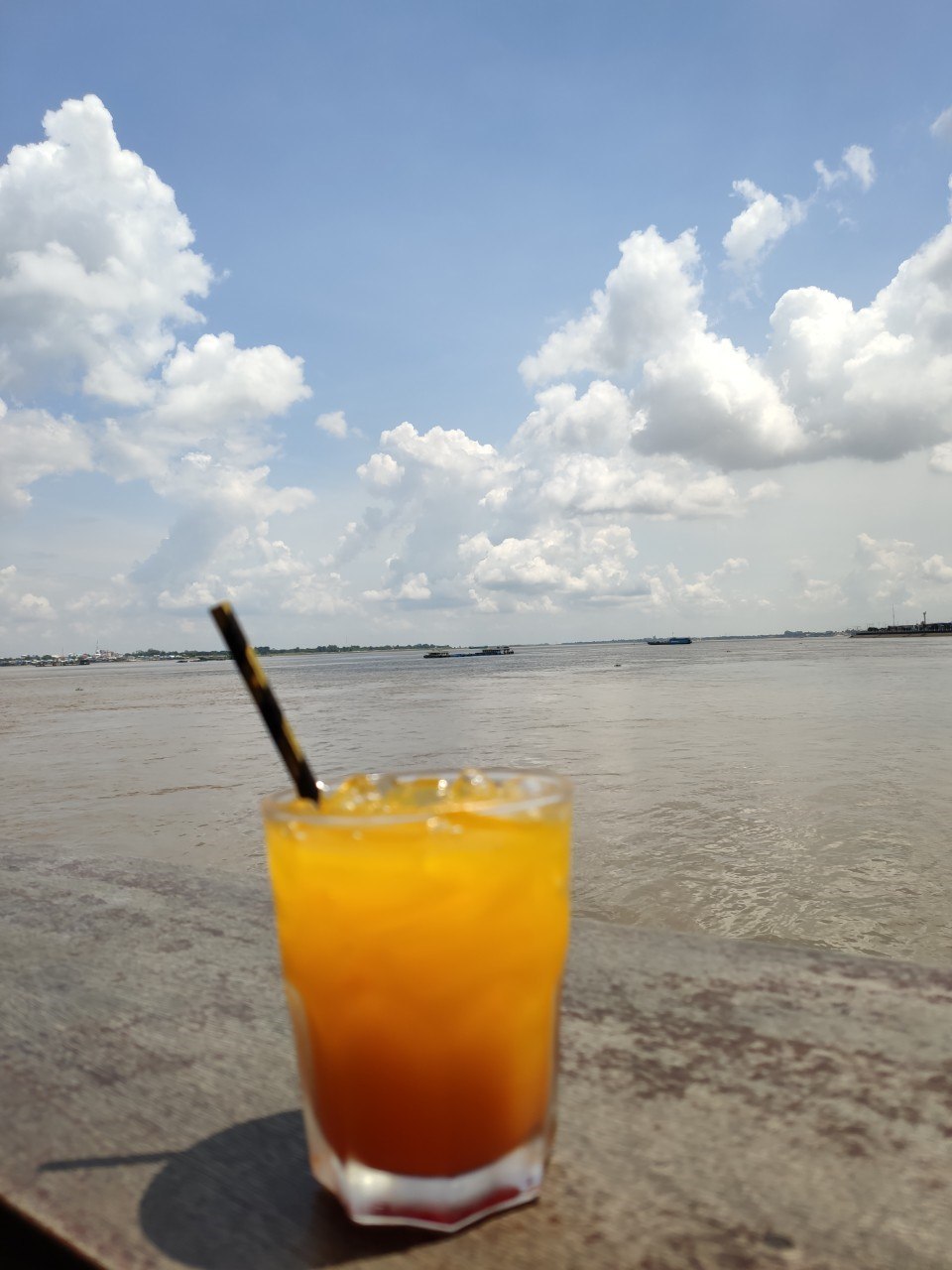
Ordering an ice-cold juice by the river and watching the boats come and go on the Mekong — the most luxurious pleasure in Phnom Penh
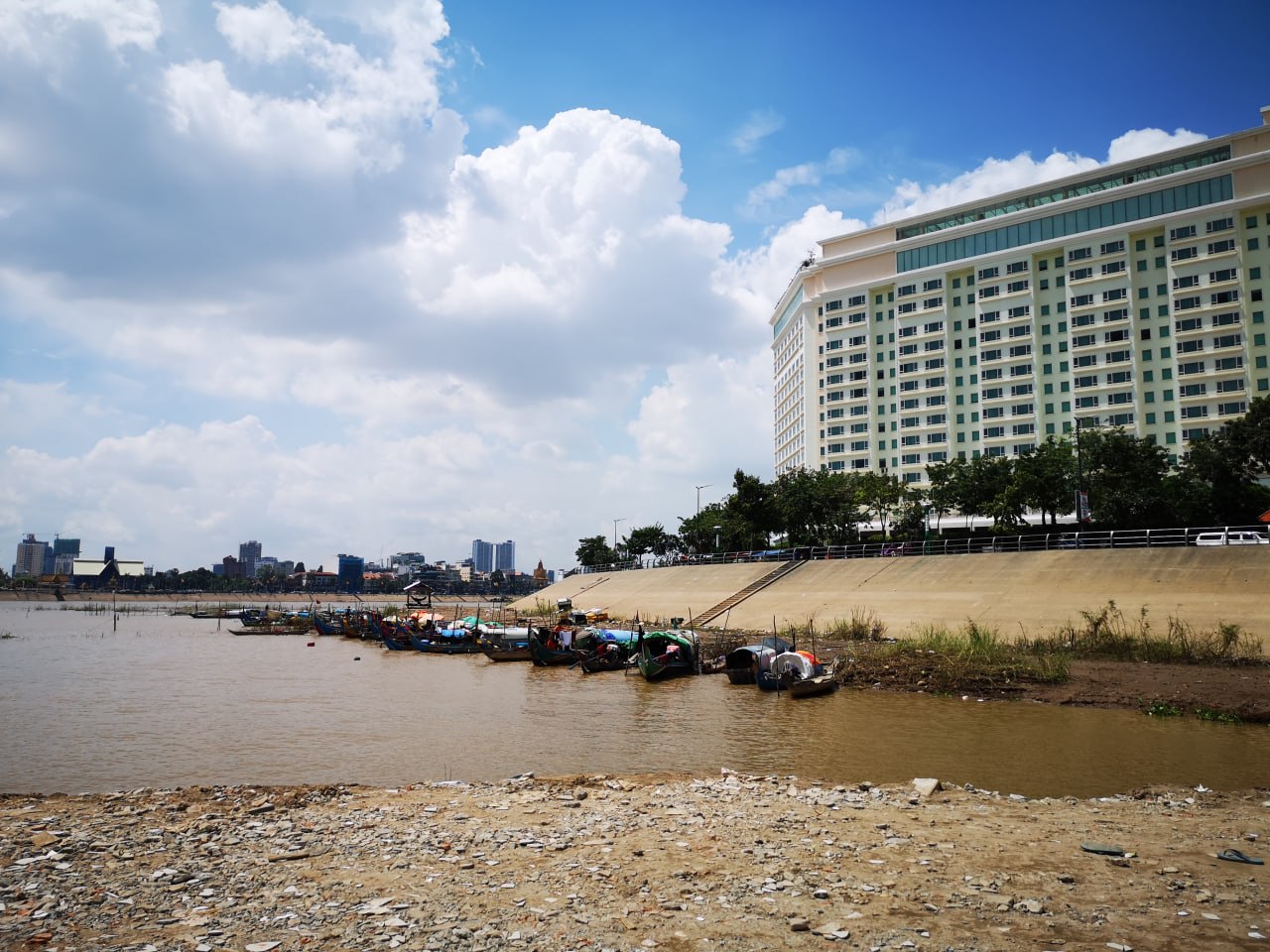
Humble fishing boats along the banks with massive hotels towering behind them — Phnom Penh's most honest contrast
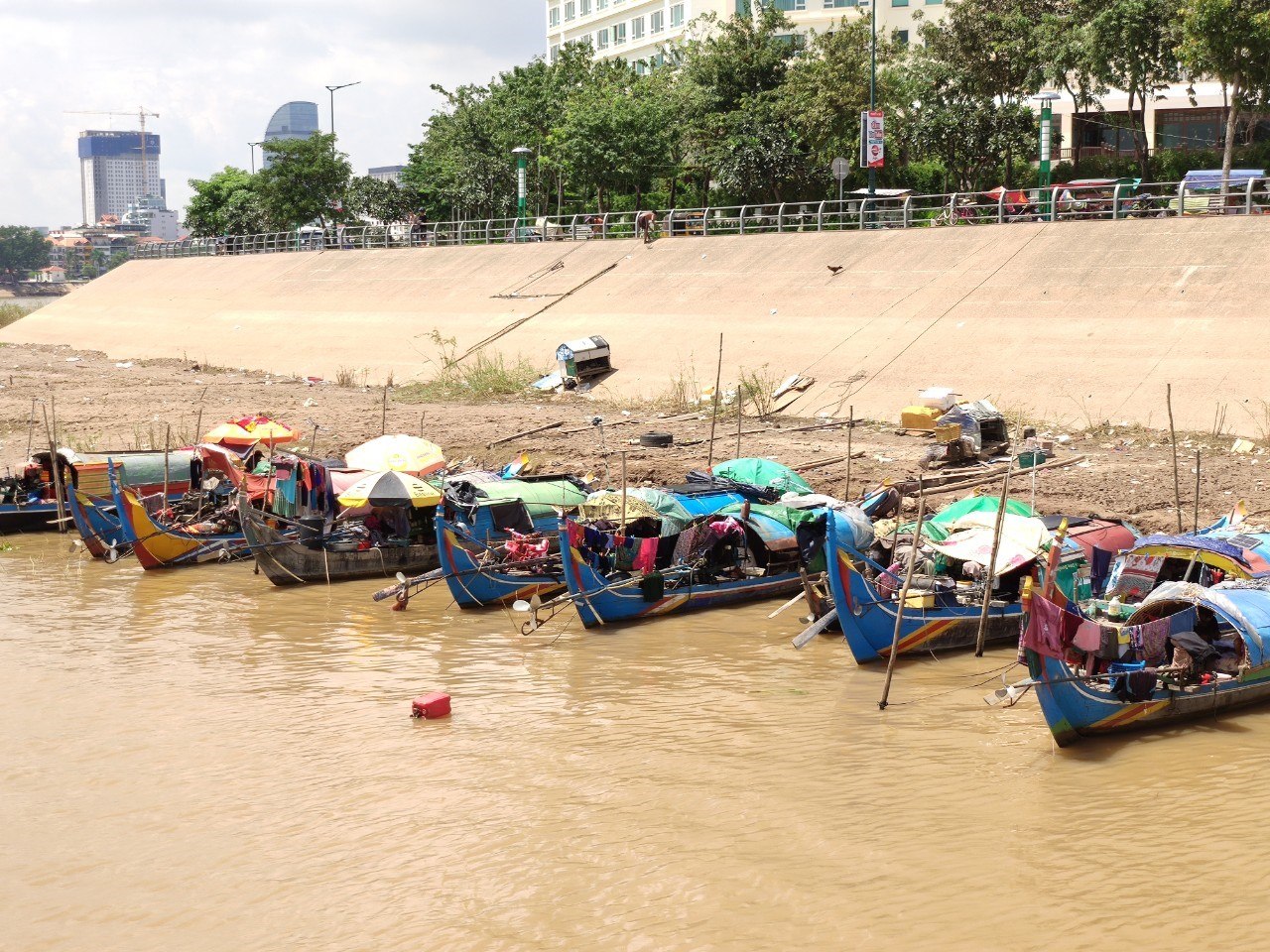
Colorful fishing boats clustered along the riverbank
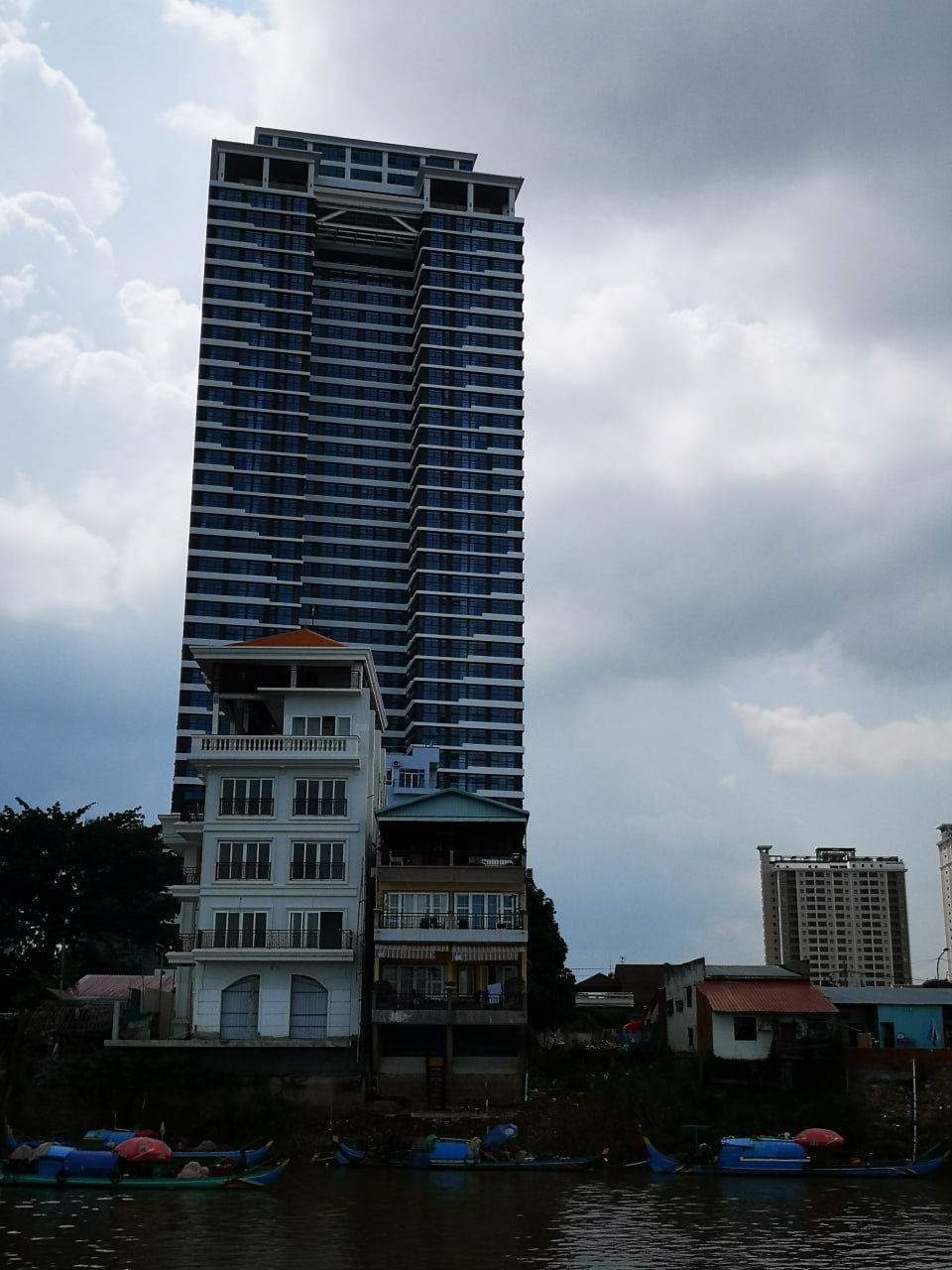
A modern high-rise shooting up by the river, standing in stark contrast to the old houses next door
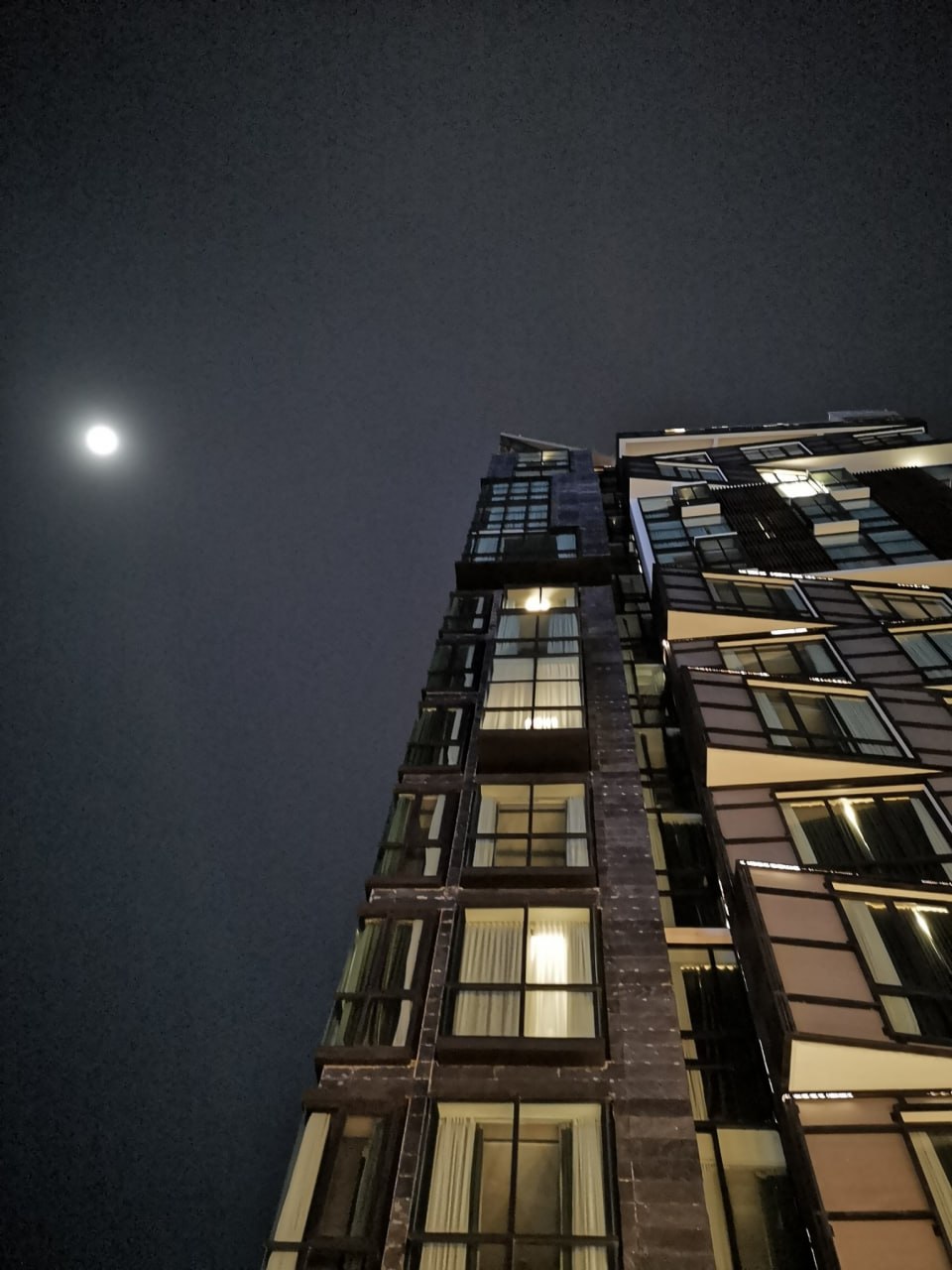
Phnom Penh at night — the moon hanging beside newly built towers, a skyline that changes every year
Chapter 3
Phnom Penh in Transformation
Two years is all it took for Phnom Penh's changes to become impossible to miss. NagaWorld's golden facade was still eye-catching as ever, but the surroundings had gained more new buildings and malls. The influx of Chinese investment had pushed the city's construction into overdrive.
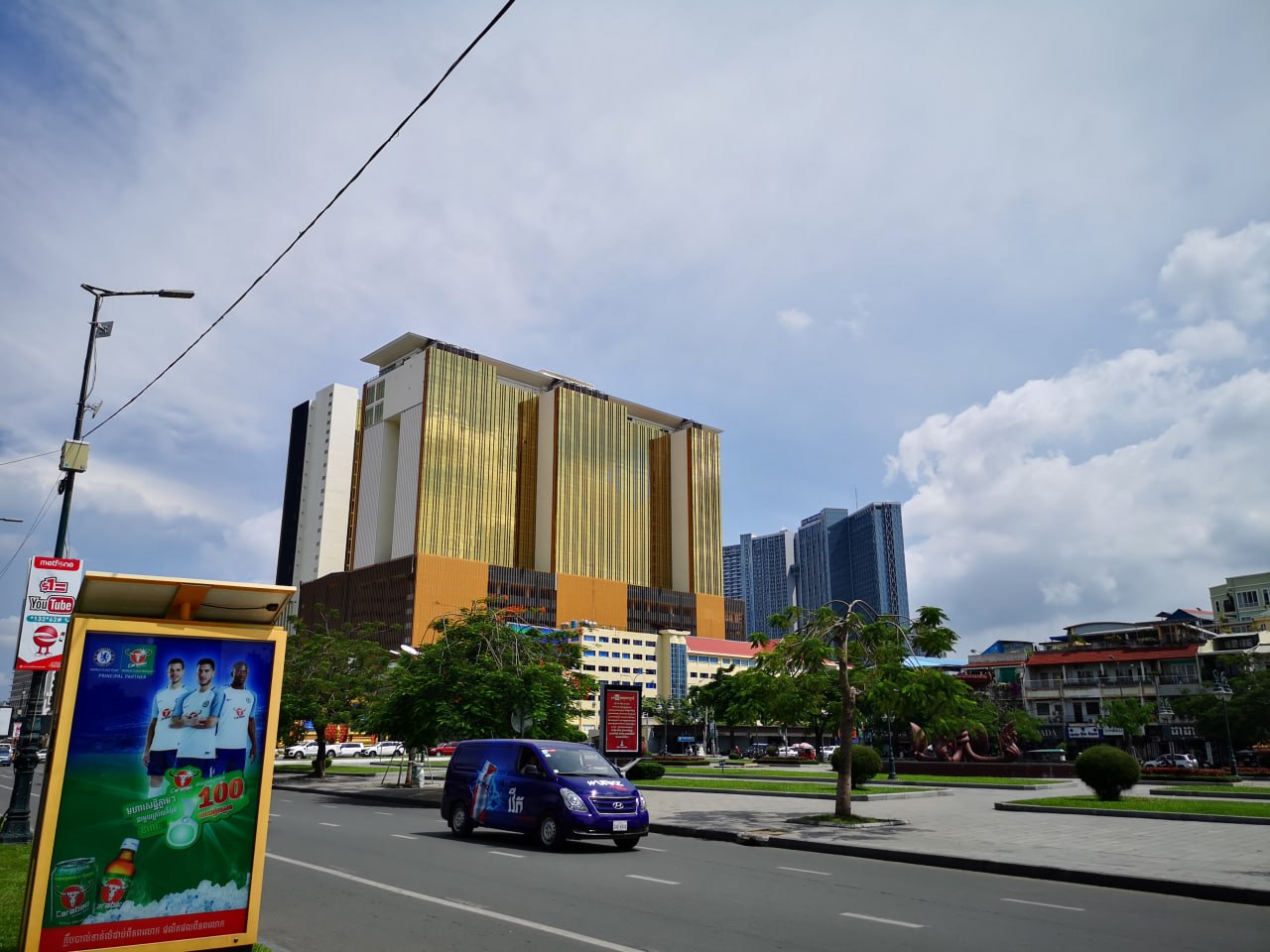
NagaWorld's golden exterior — one of Phnom Penh's most unmistakable landmarks
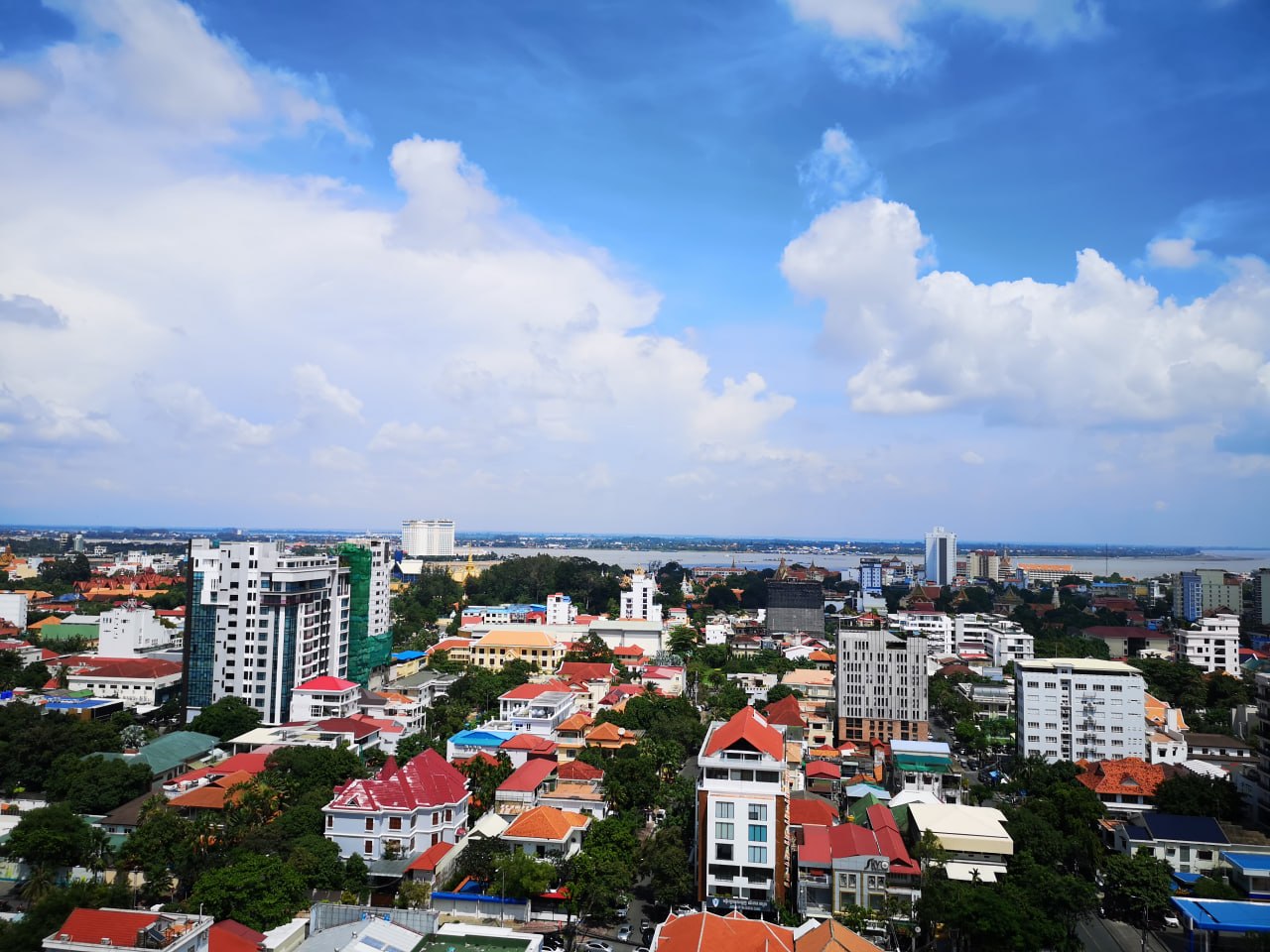
An elevated view of Phnom Penh, where old and new buildings weave together across the skyline
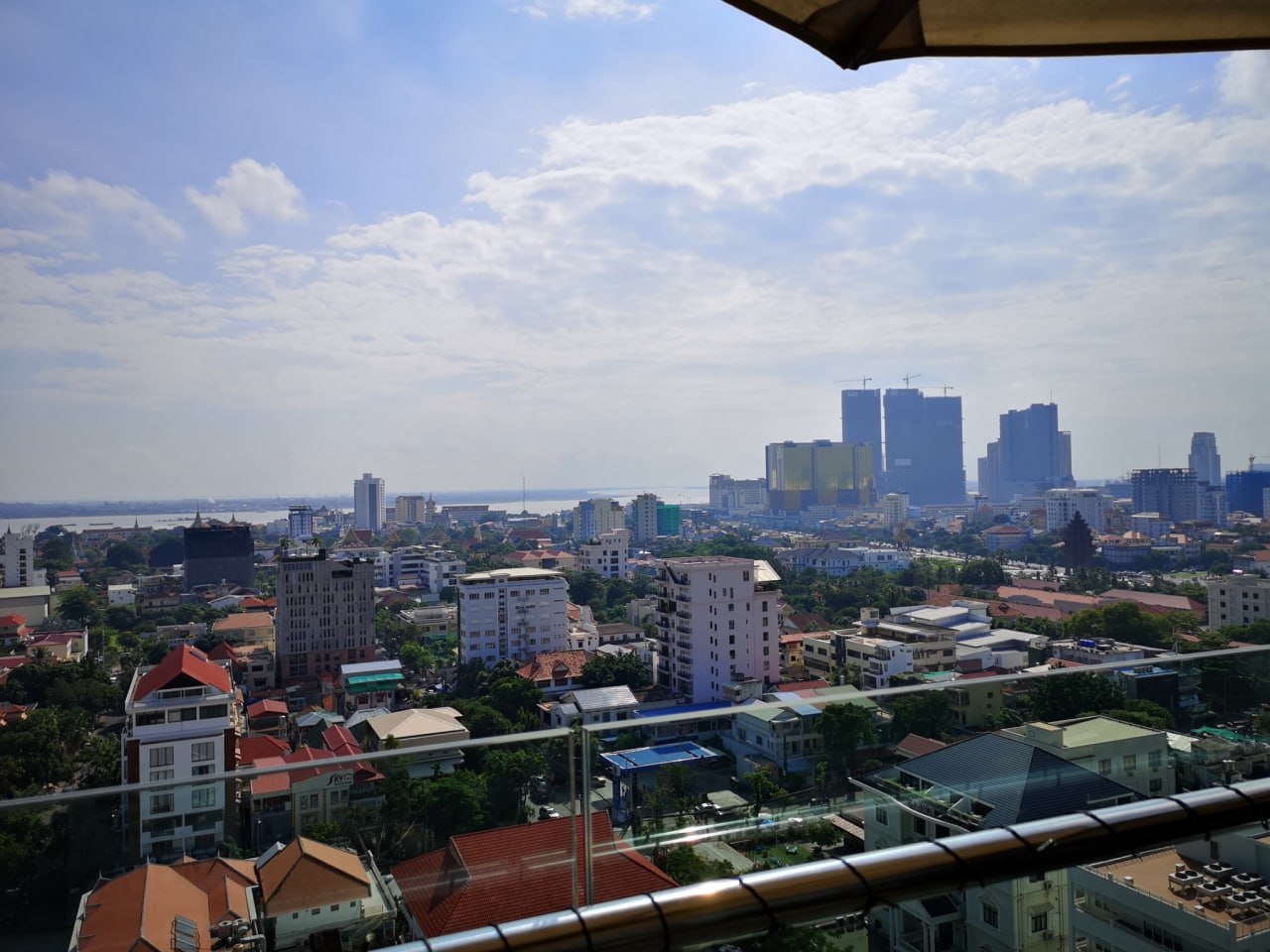
Looking out from a rooftop bar — construction sites and high-rises in the distance outlining this city's ambitions
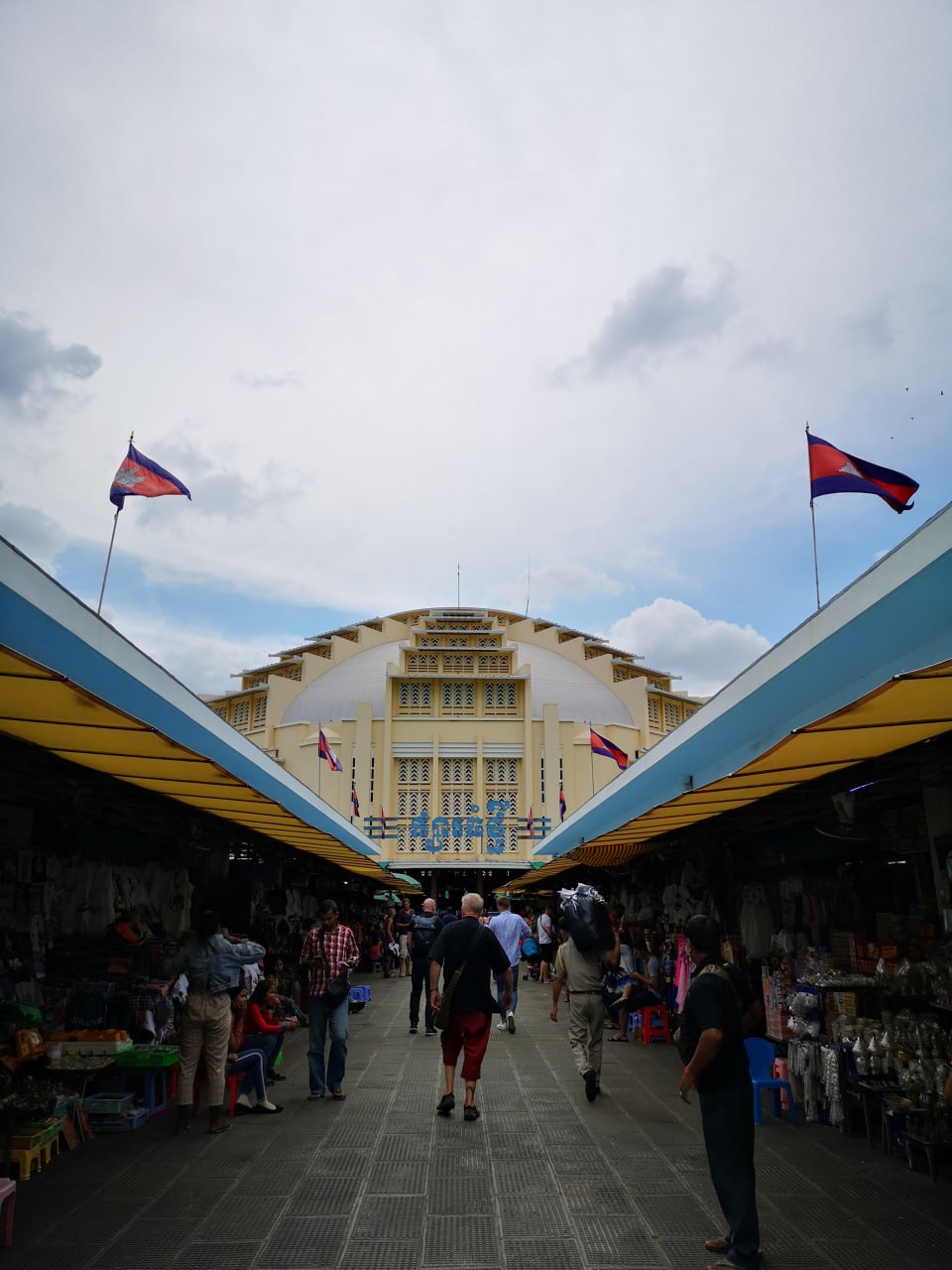
Central Market (Phsar Thmei) — an Art Deco domed building from 1937, flanked by Cambodian flags on both sides
Central Market is one of Phnom Penh's most iconic structures. Designed by a French architect in the Art Deco style and built in 1937, everything from jewelry to dried goods is sold beneath its enormous dome. Two years later, it looked exactly the same — a stubborn old soul standing its ground amid all the new construction.
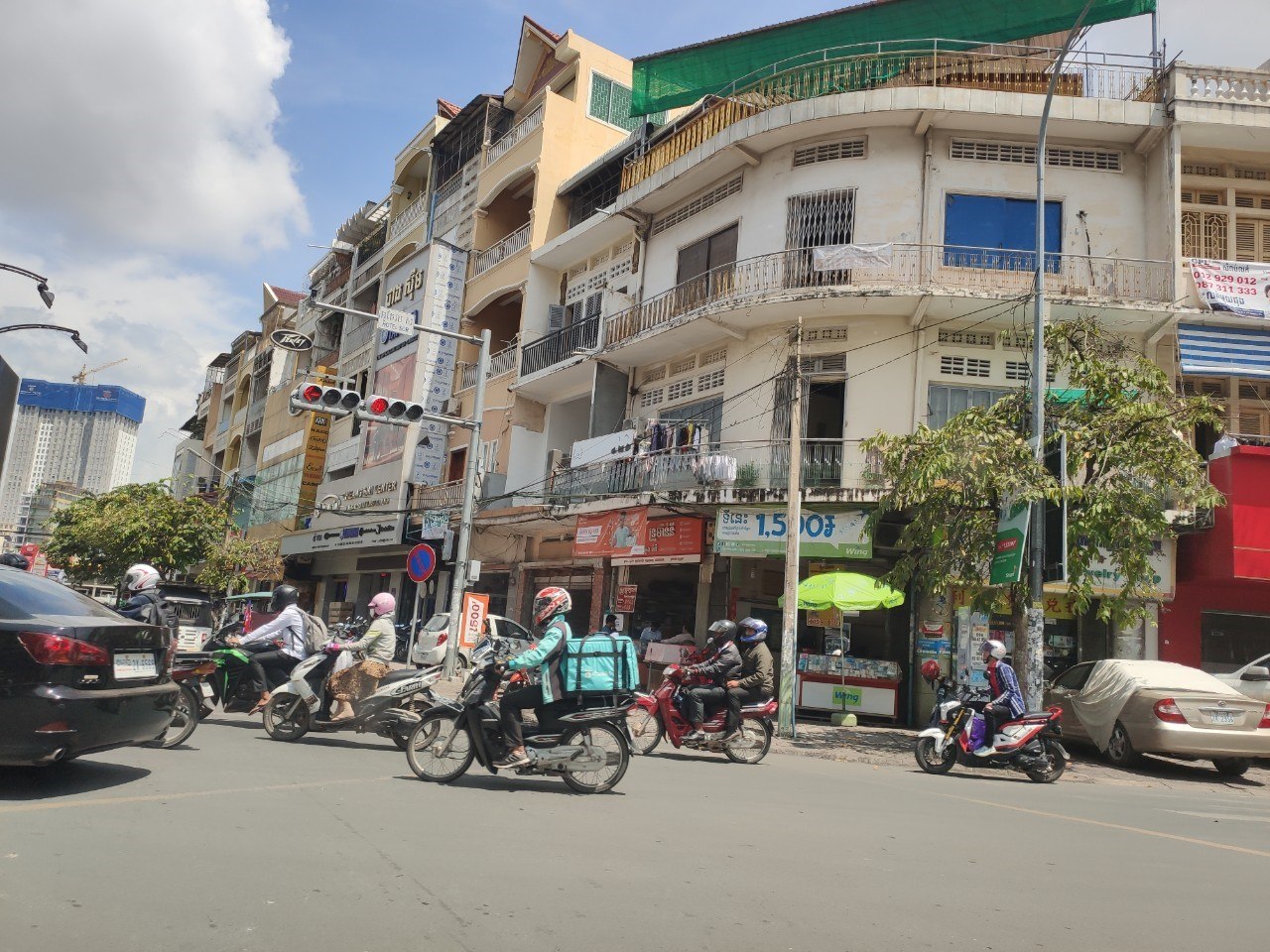
A typical Phnom Penh street — motorbikes, tuk-tuks, and colonial-era buildings
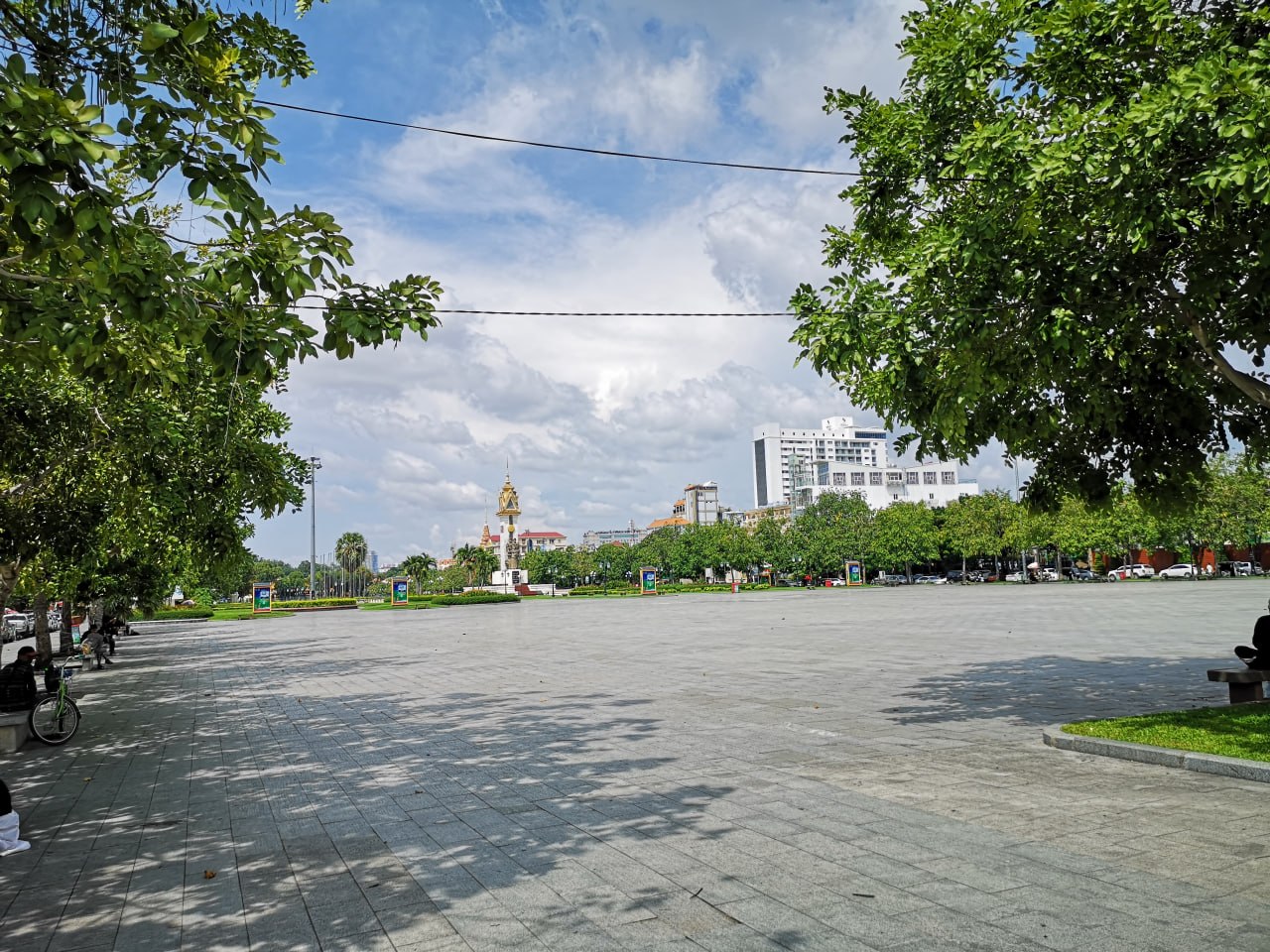
A downtown square — a rare open space in the city
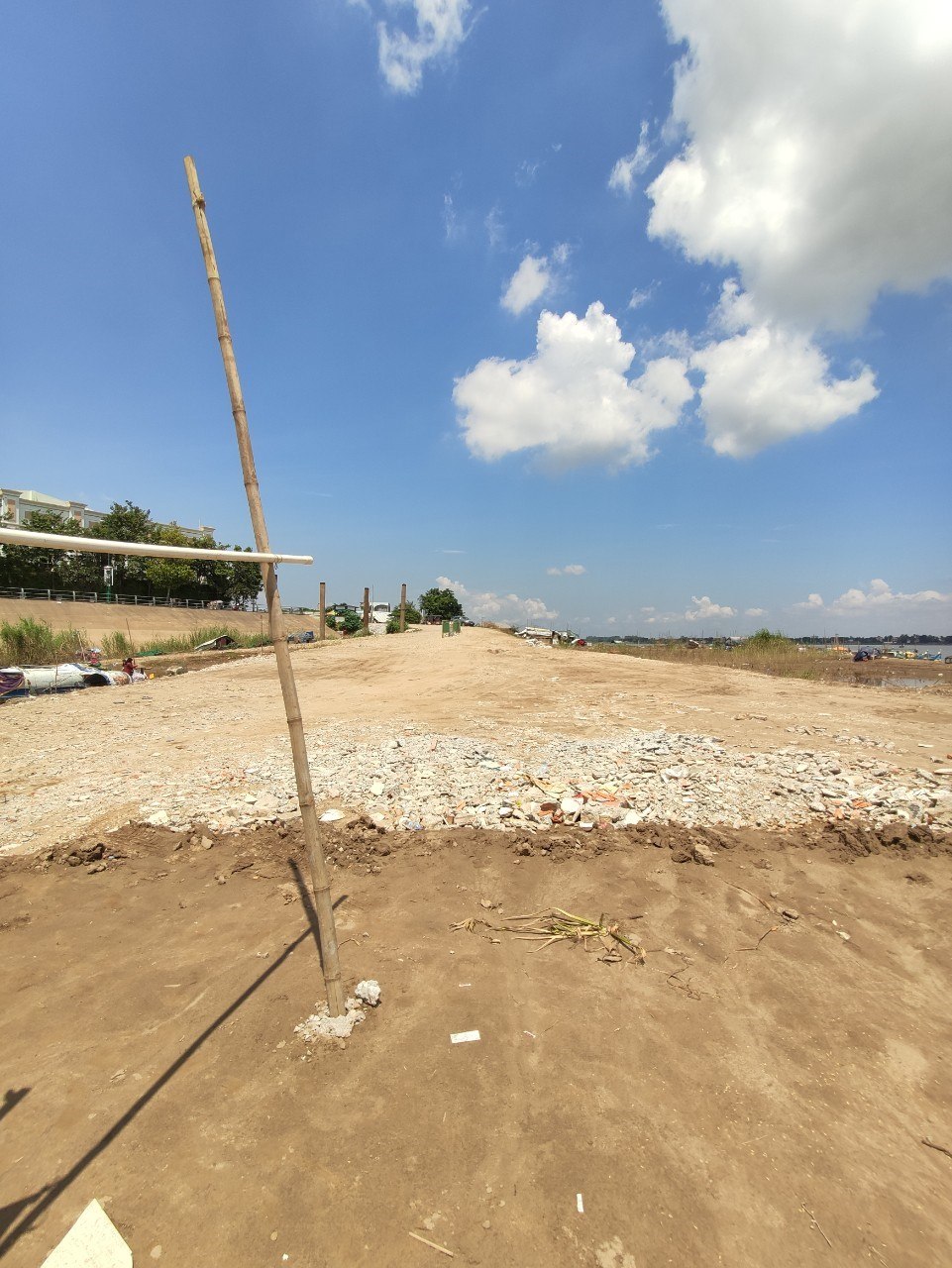
Land reclamation along the riverbank — Phnom Penh is literally claiming more ground from the Mekong
Chapter 4
Riverside Luxury: The Phnom Penh Hotel Experience
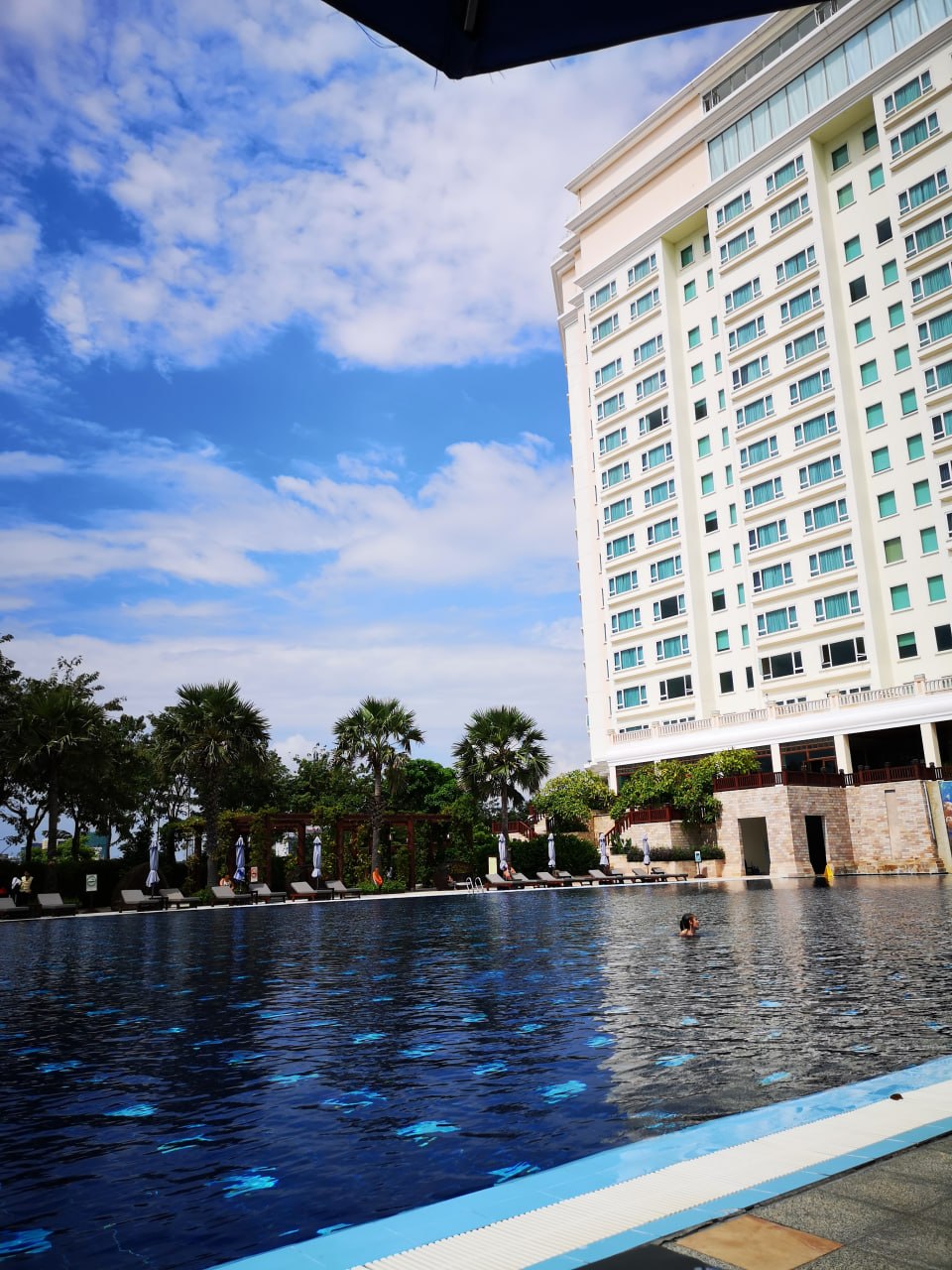
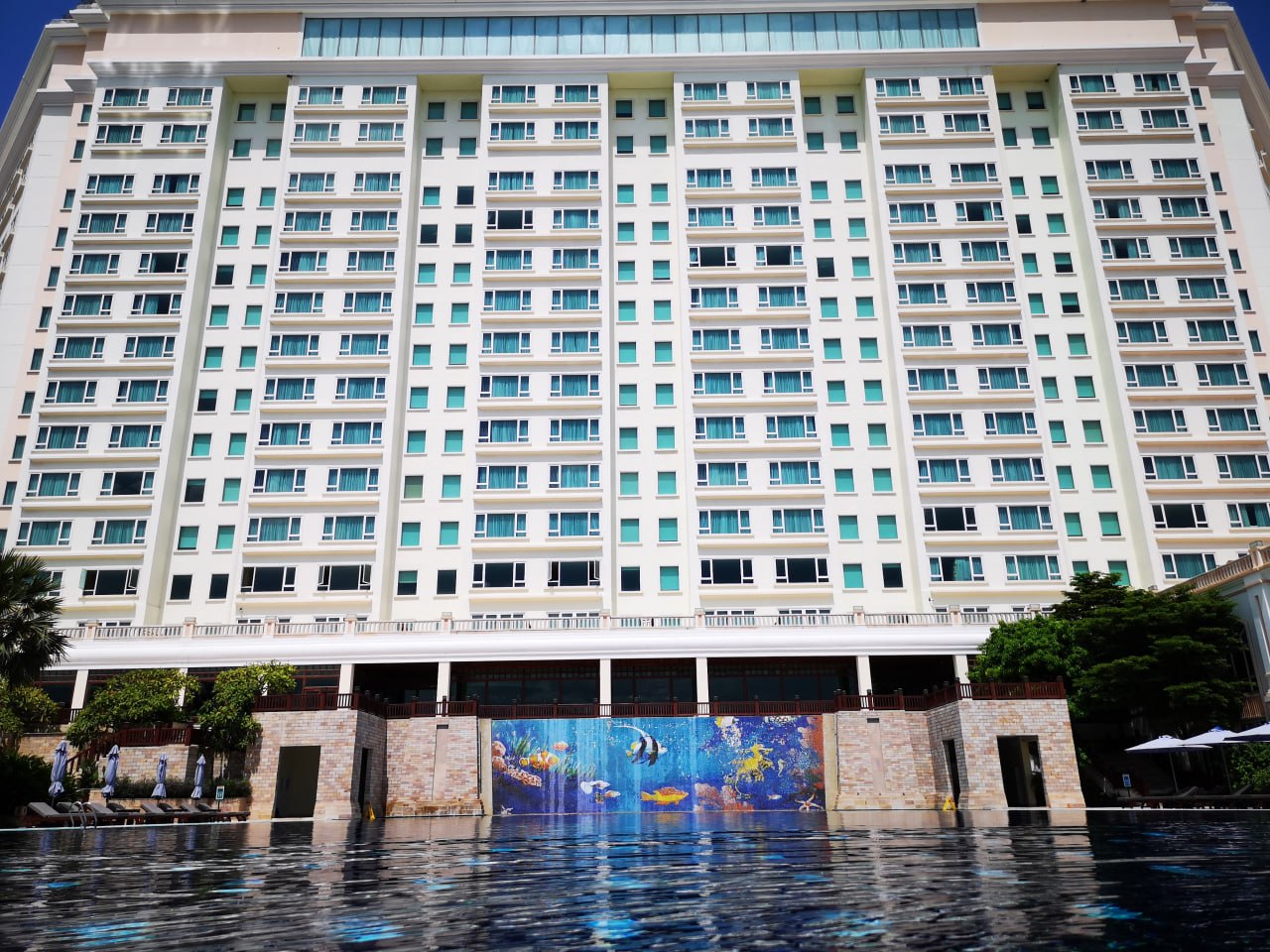
Phnom Penh's hotels offer some of the best value in all of Southeast Asia. The riverside five-star hotel I stayed at this time had an infinity pool looking straight out at the Mekong, and the price was barely a third of what you'd pay in Bangkok or Singapore.
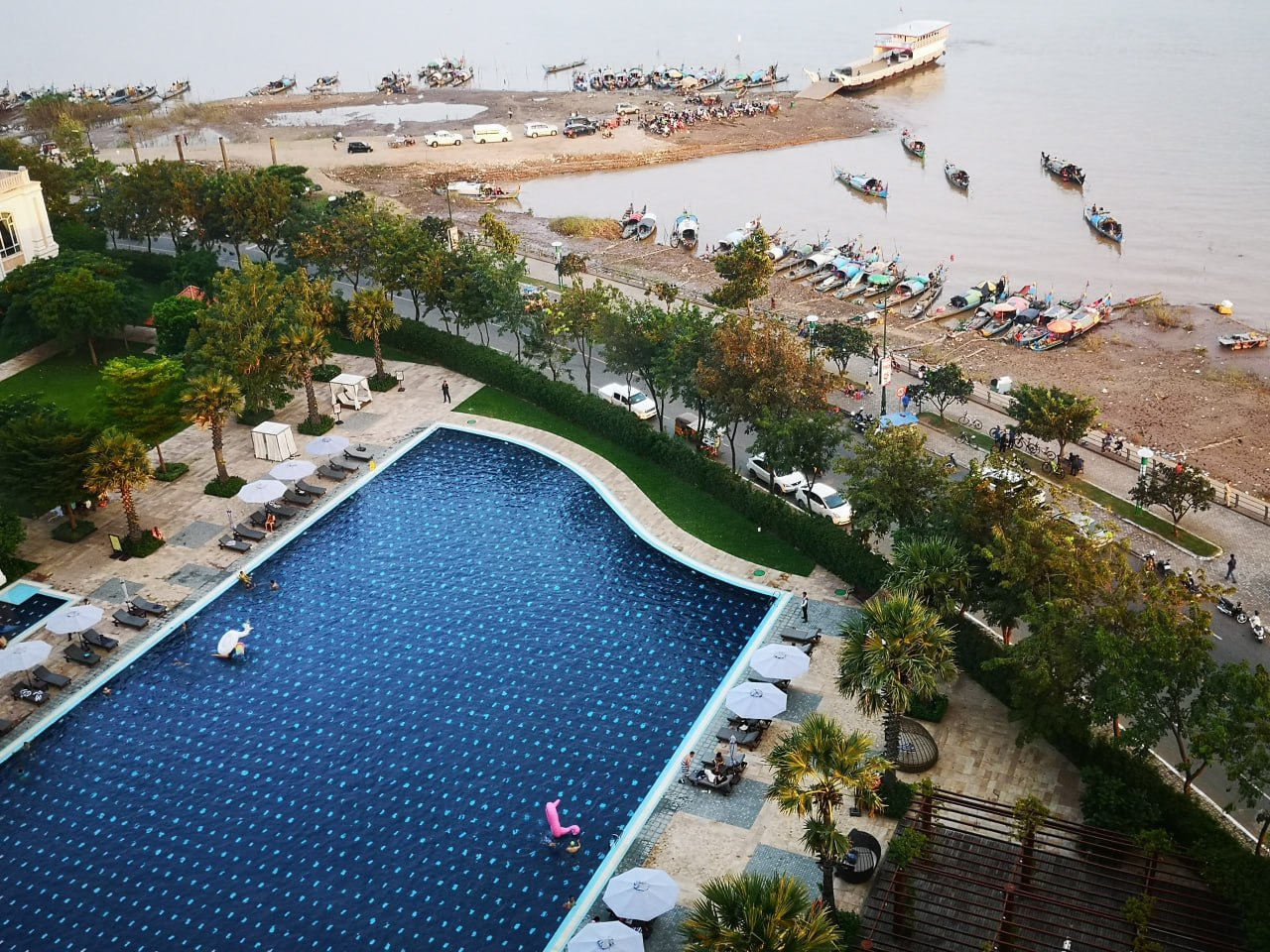
Looking down at the hotel pool and the Mekong from my room — this view, for under a hundred bucks a night
A lazy afternoon by the pool
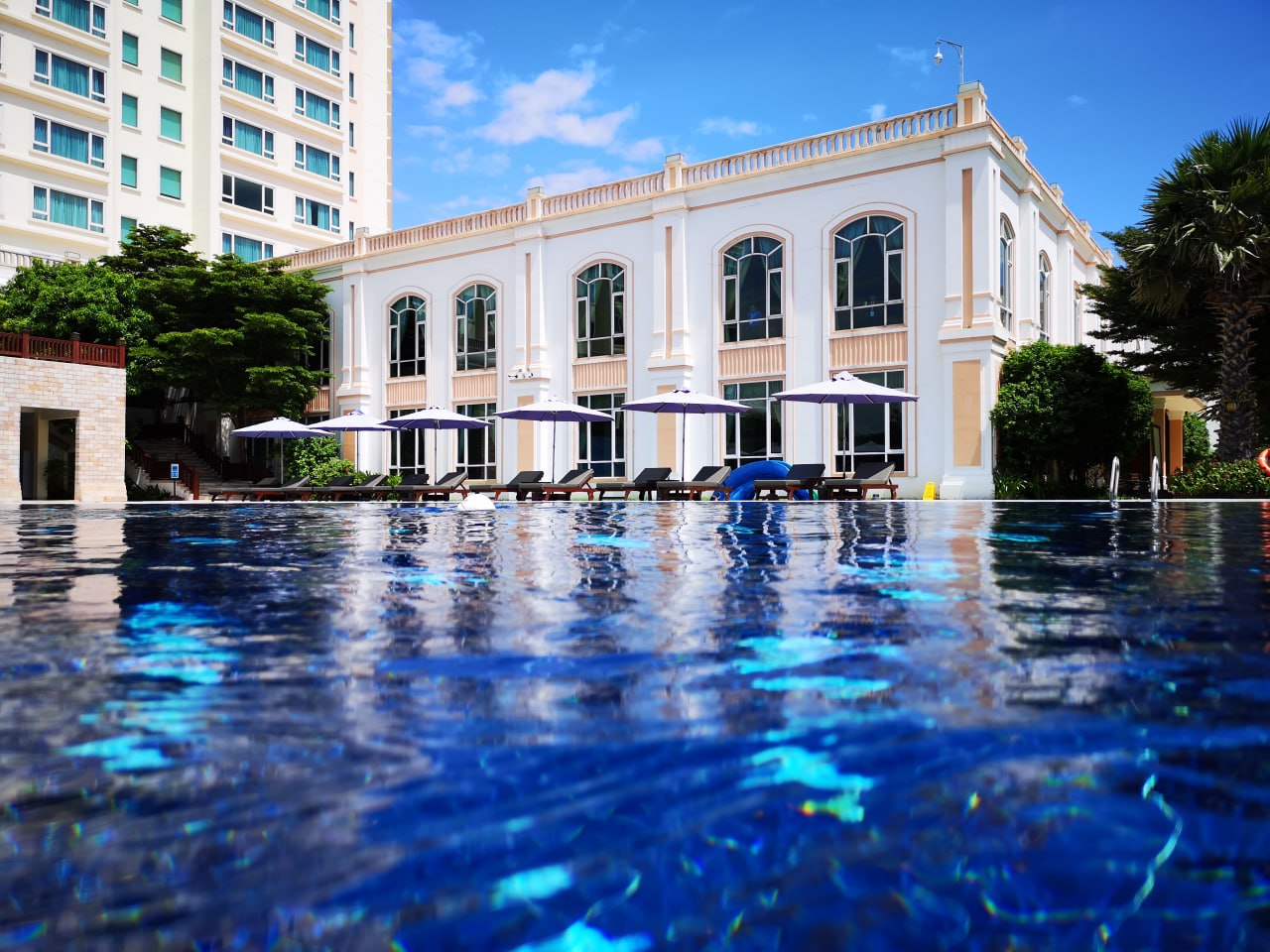
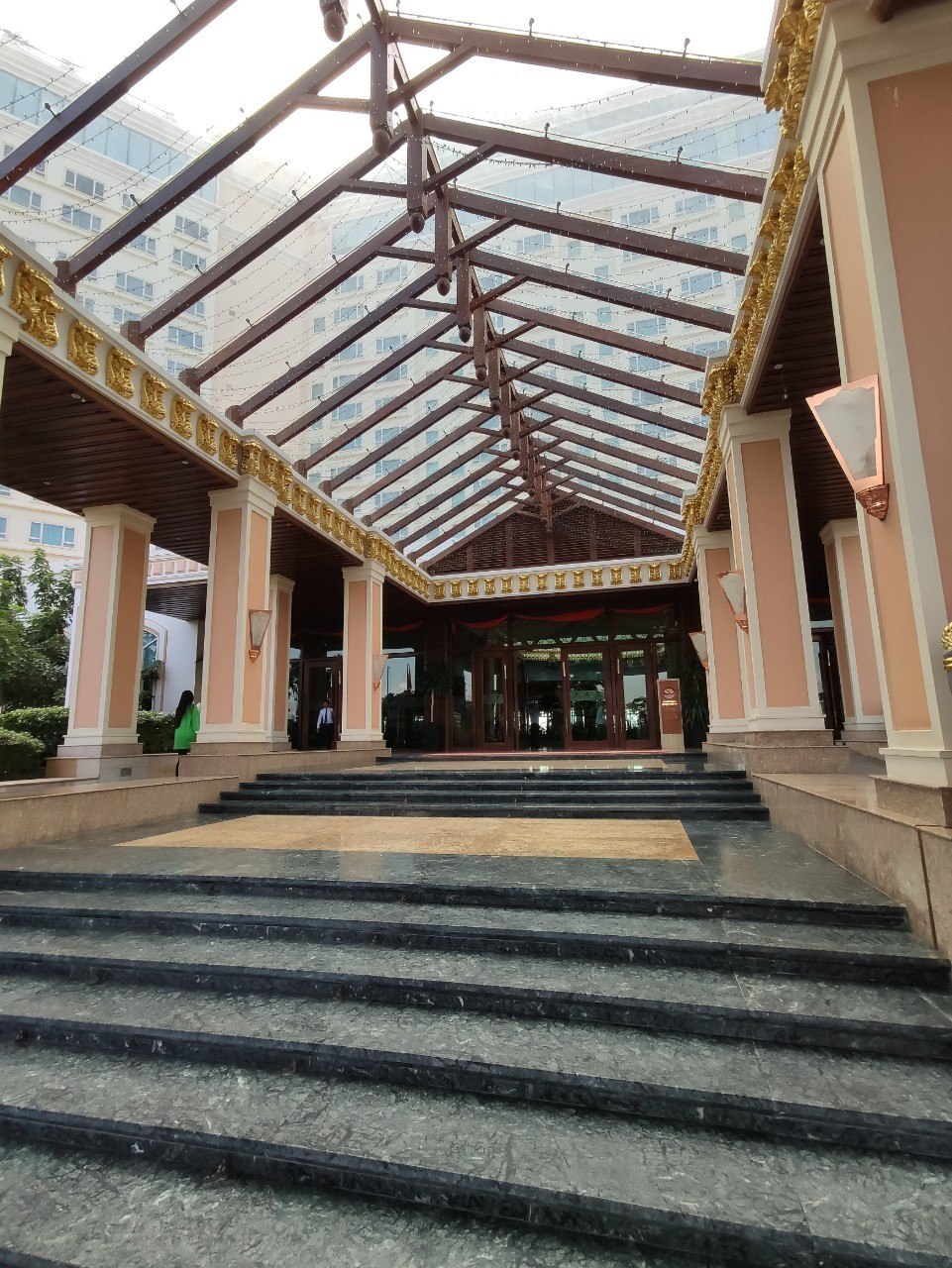
Colonial-style hotel architecture paired with a modern pool
Seeing the hotel from water level — every bit as impressive as any international chain
Chapter 5
Crossing the River: The Other Side of Phnom Penh
Leave the city center, hop on a ferry across the river, and a completely different Phnom Penh reveals itself. No high-rises, no casinos — just dirt roads, stilt houses, and dogs sunbathing by the roadside. This is everyday life for most Cambodians.
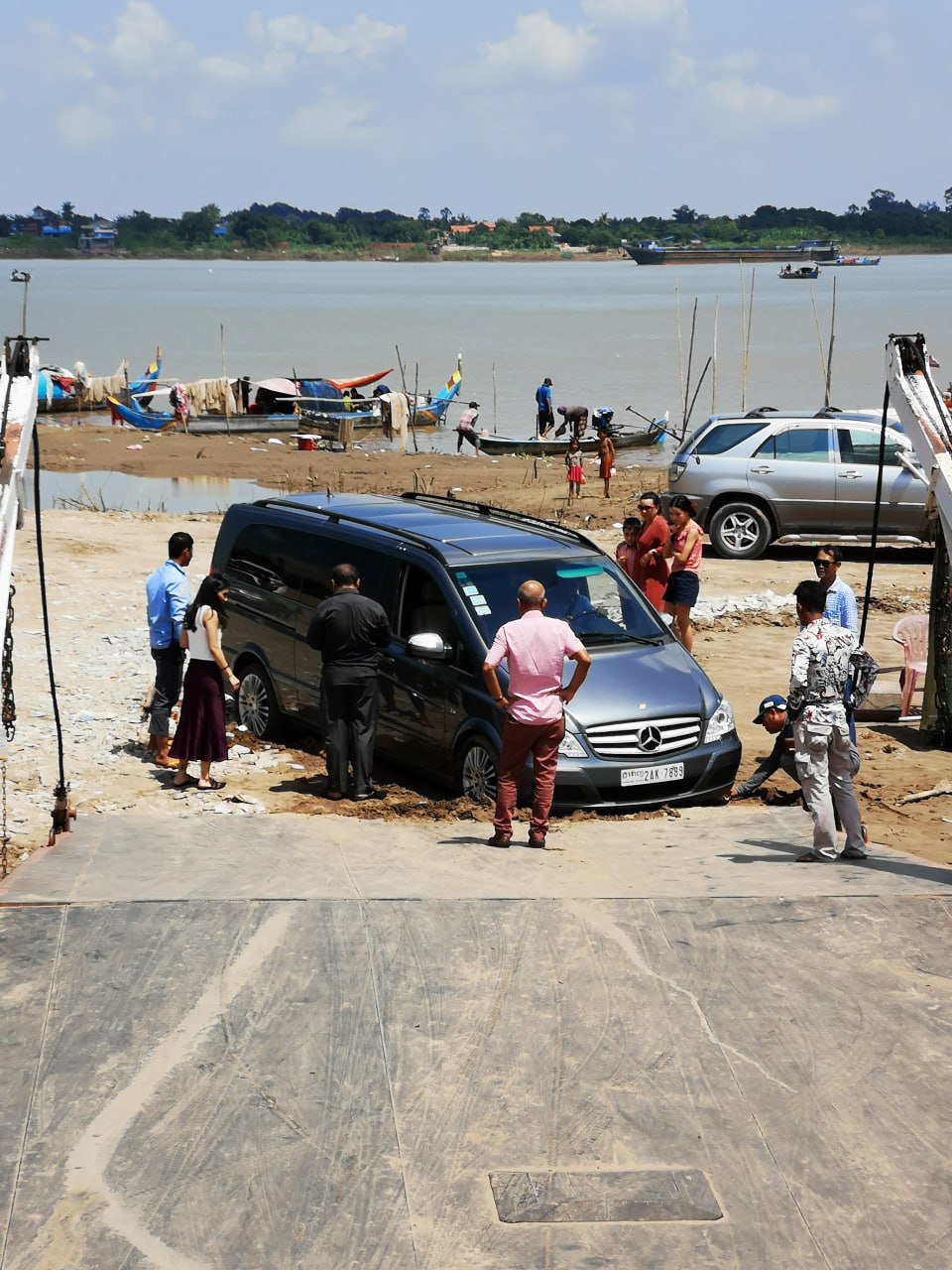
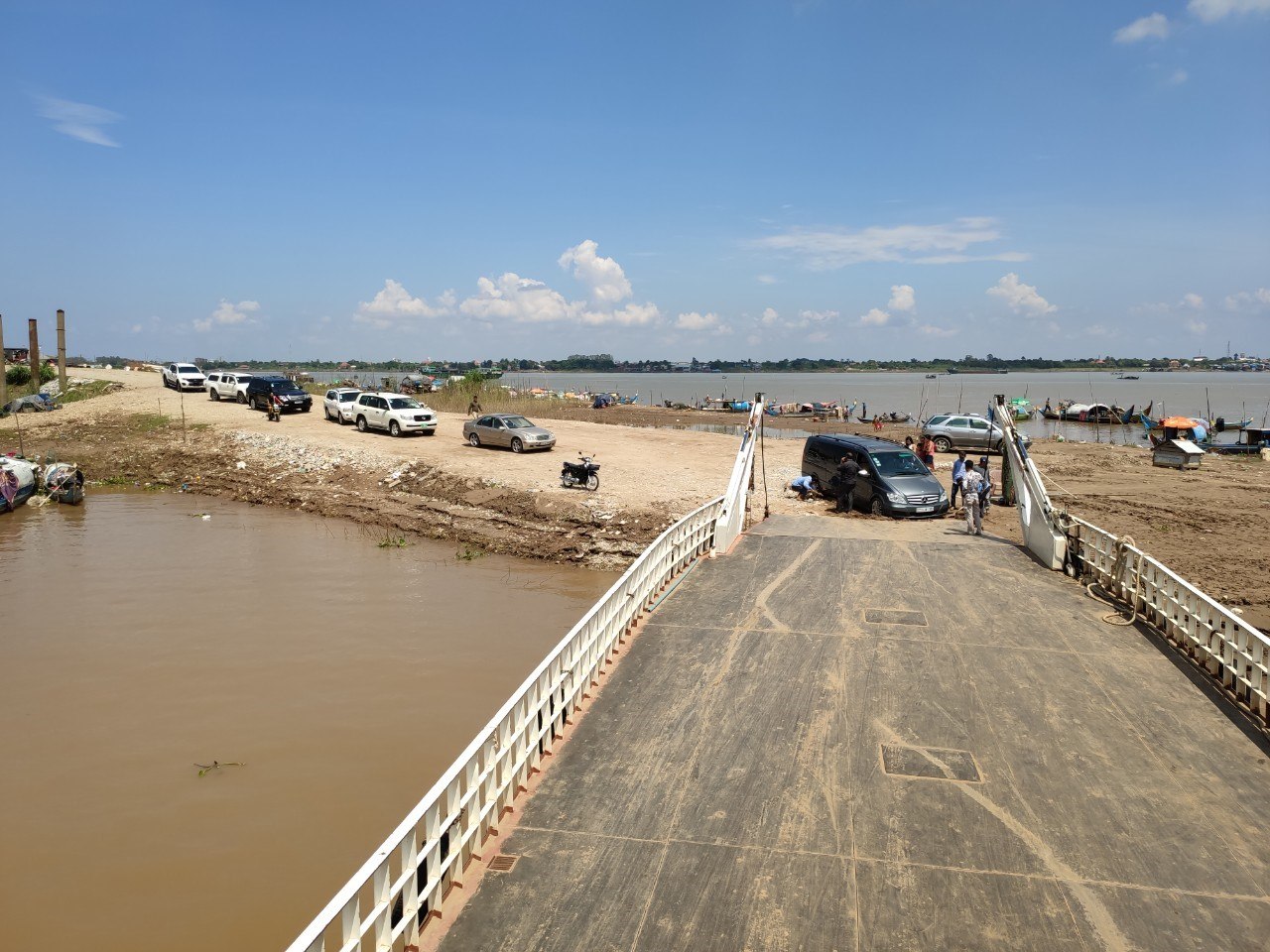
The ferry dock — cars drive right onto the boat, the most old-school way to cross the river
A makeshift ferry ramp — the only link between city and countryside
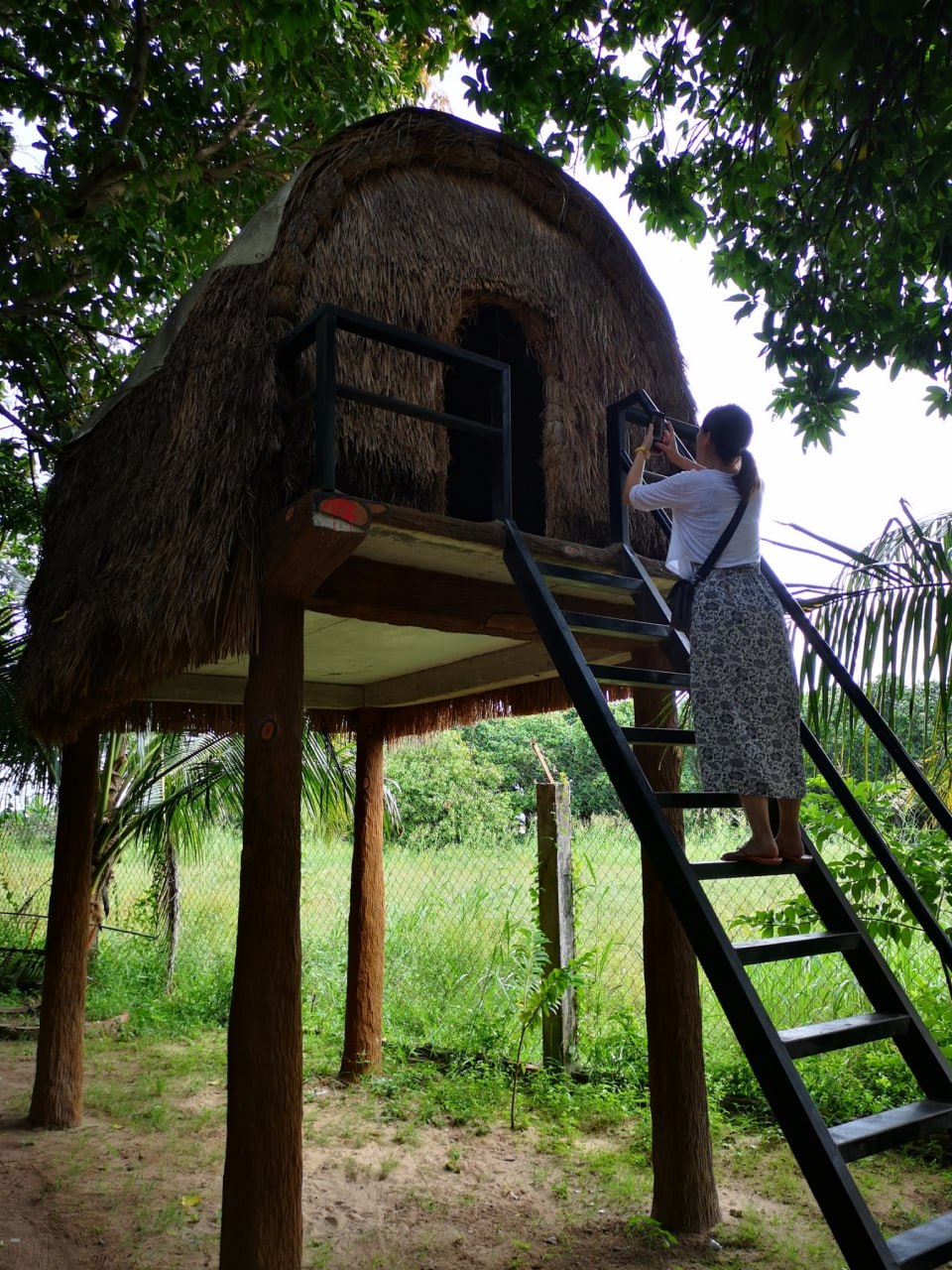
A traditional stilt house — when the river rises during rainy season, the whole village depends on these stilts
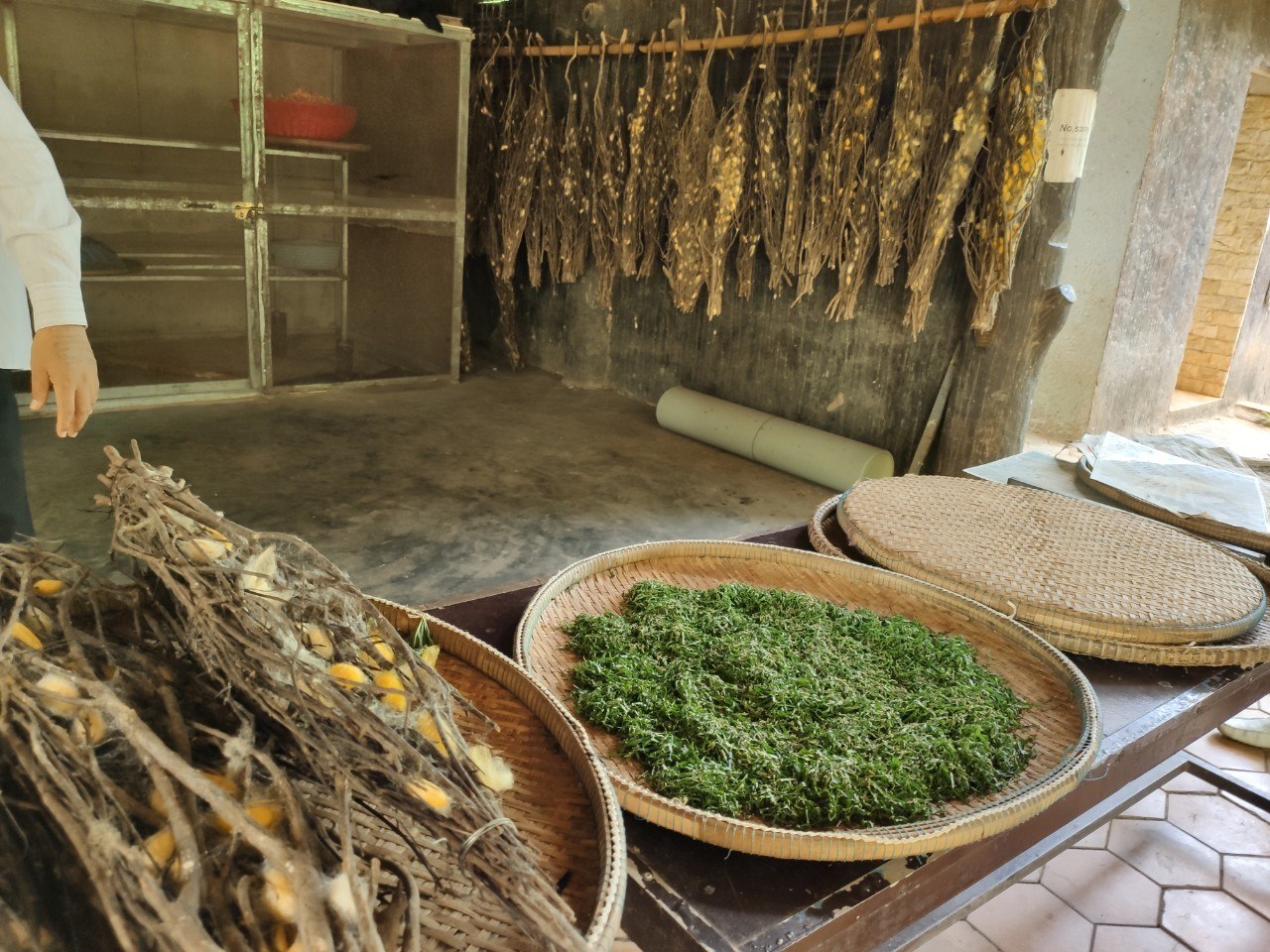
Herbs and tobacco leaves drying in the village, with fresh herbs laid out on bamboo trays
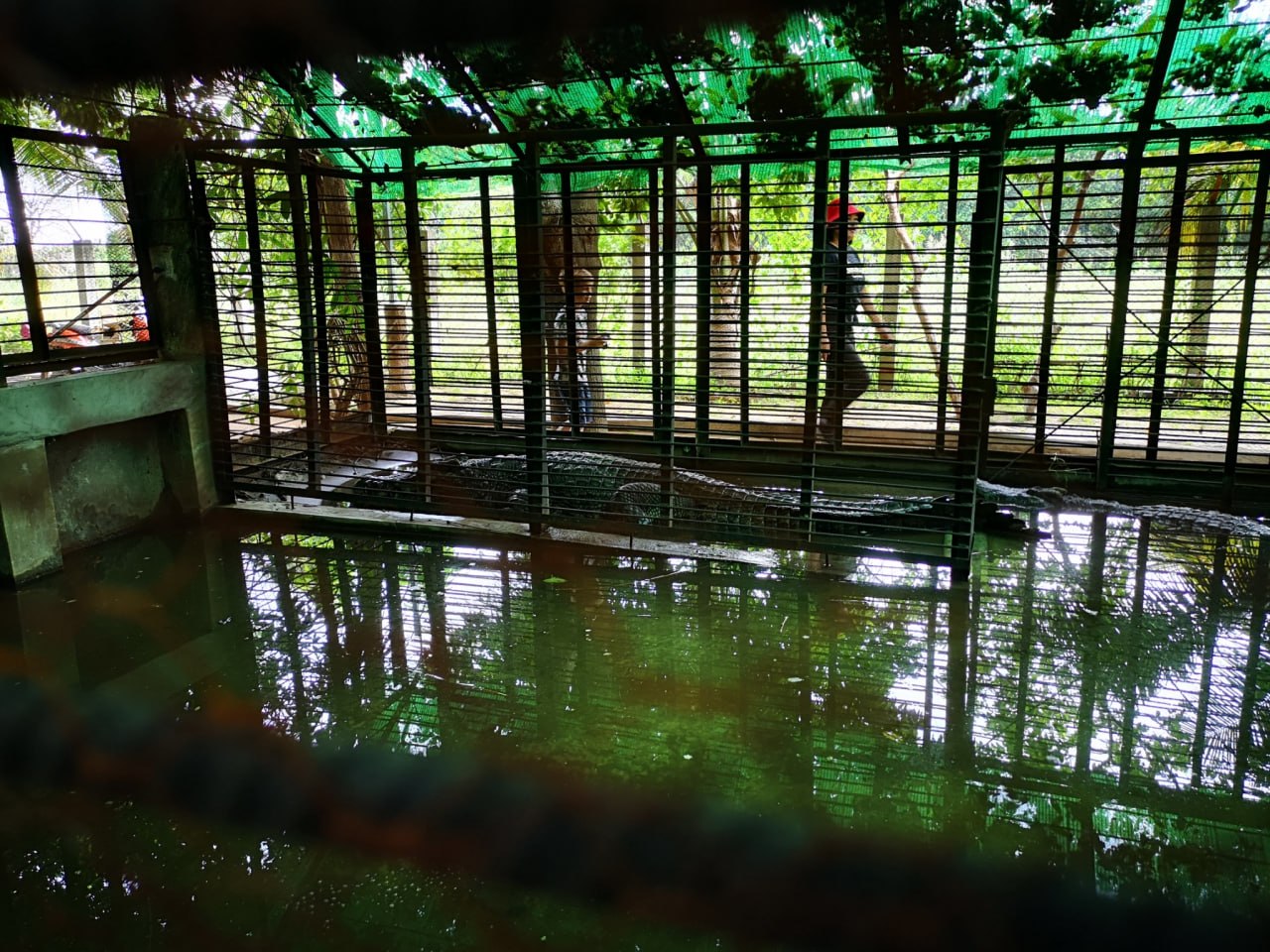
A rural crocodile farm — an industry unique to Cambodia
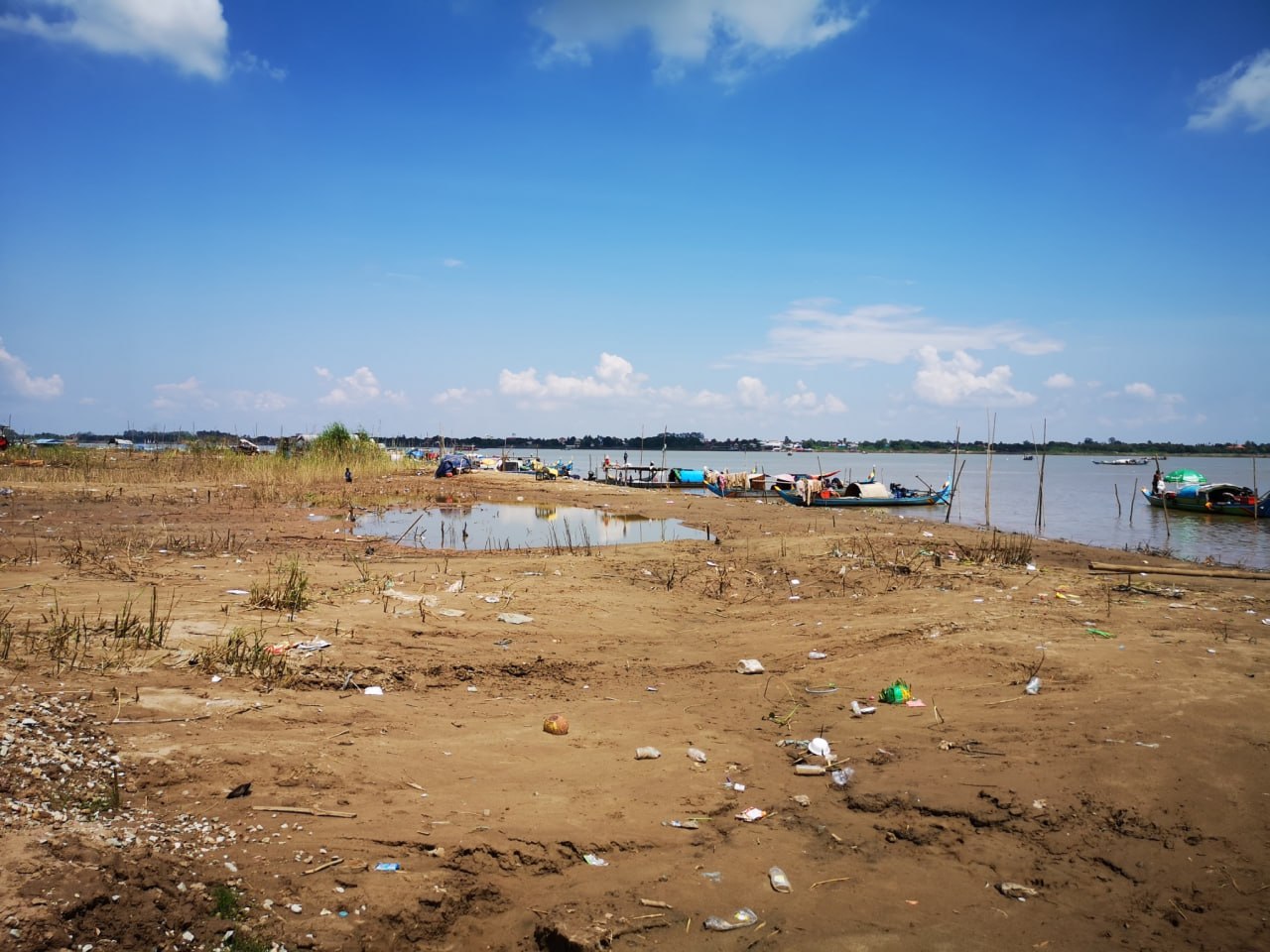
The rural riverbank on the opposite shore — a whole different world from the bustling city center
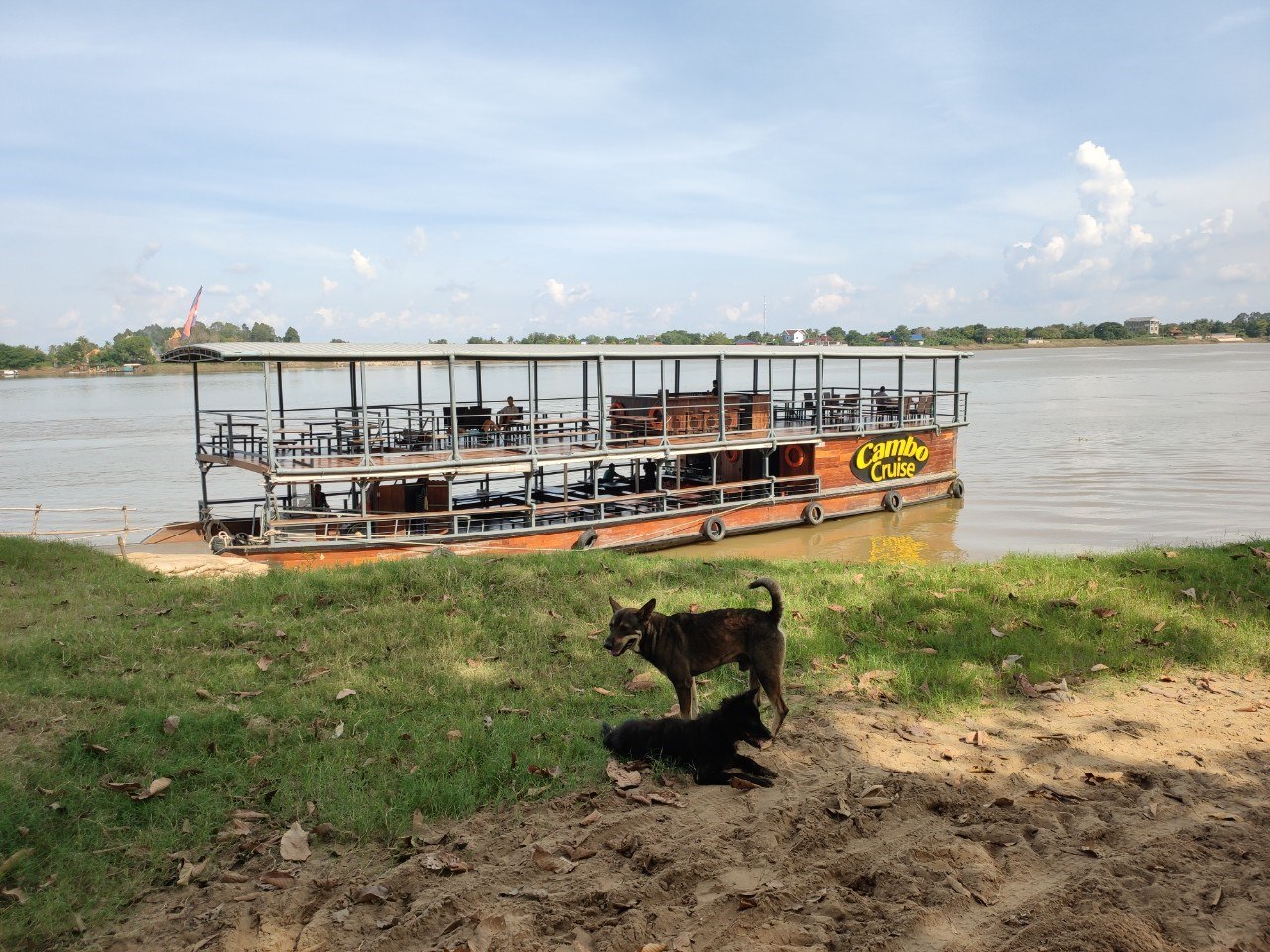
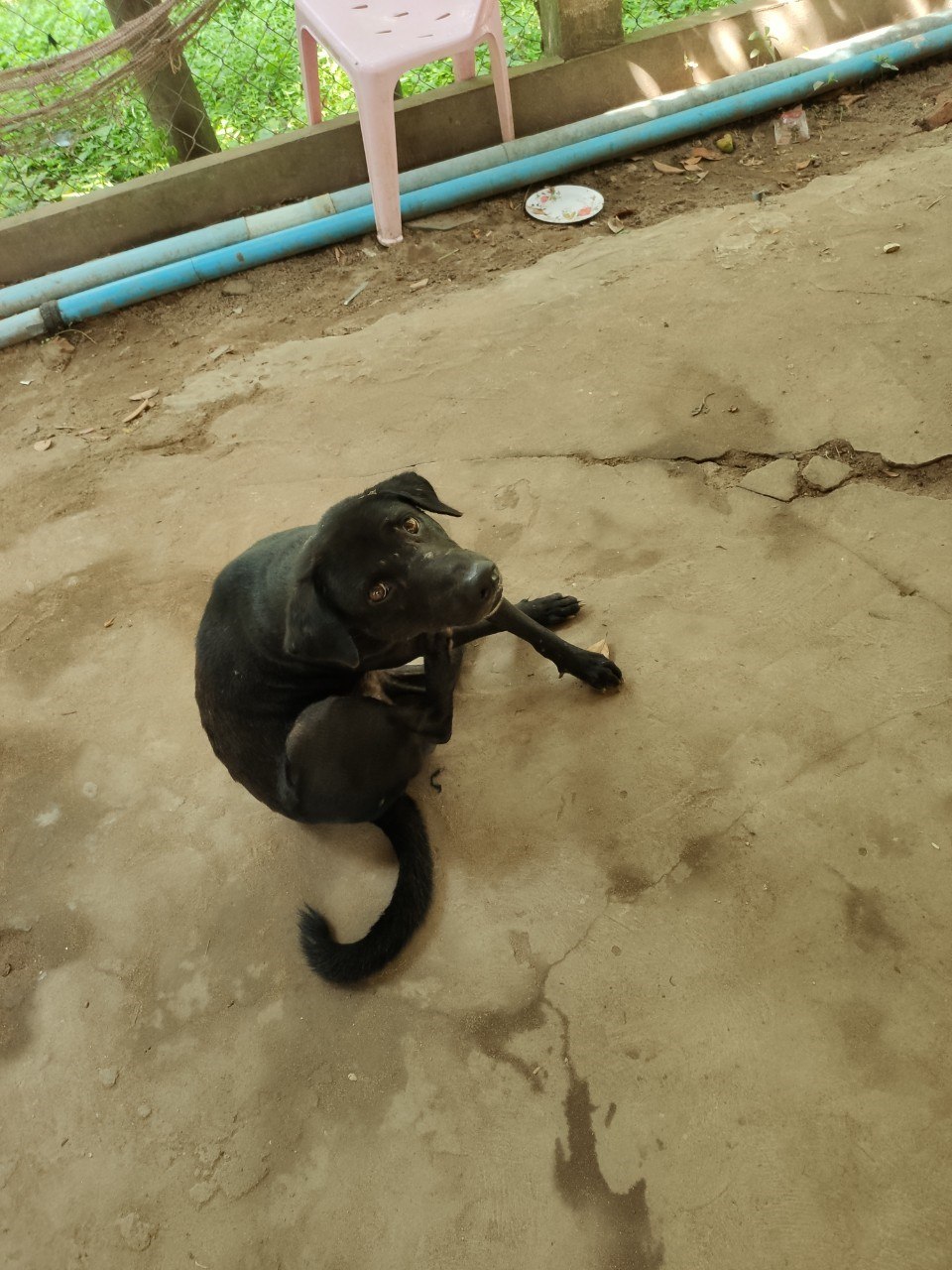
A tour boat and a laid-back dog by the river — Phnom Penh is full of free-roaming furry friends
Chapter 6
Everyday Phnom Penh
Phnom Penh is a city that makes you slow down. There are no must-see attractions, but just walking the streets or sitting by the river is a pleasure in itself.
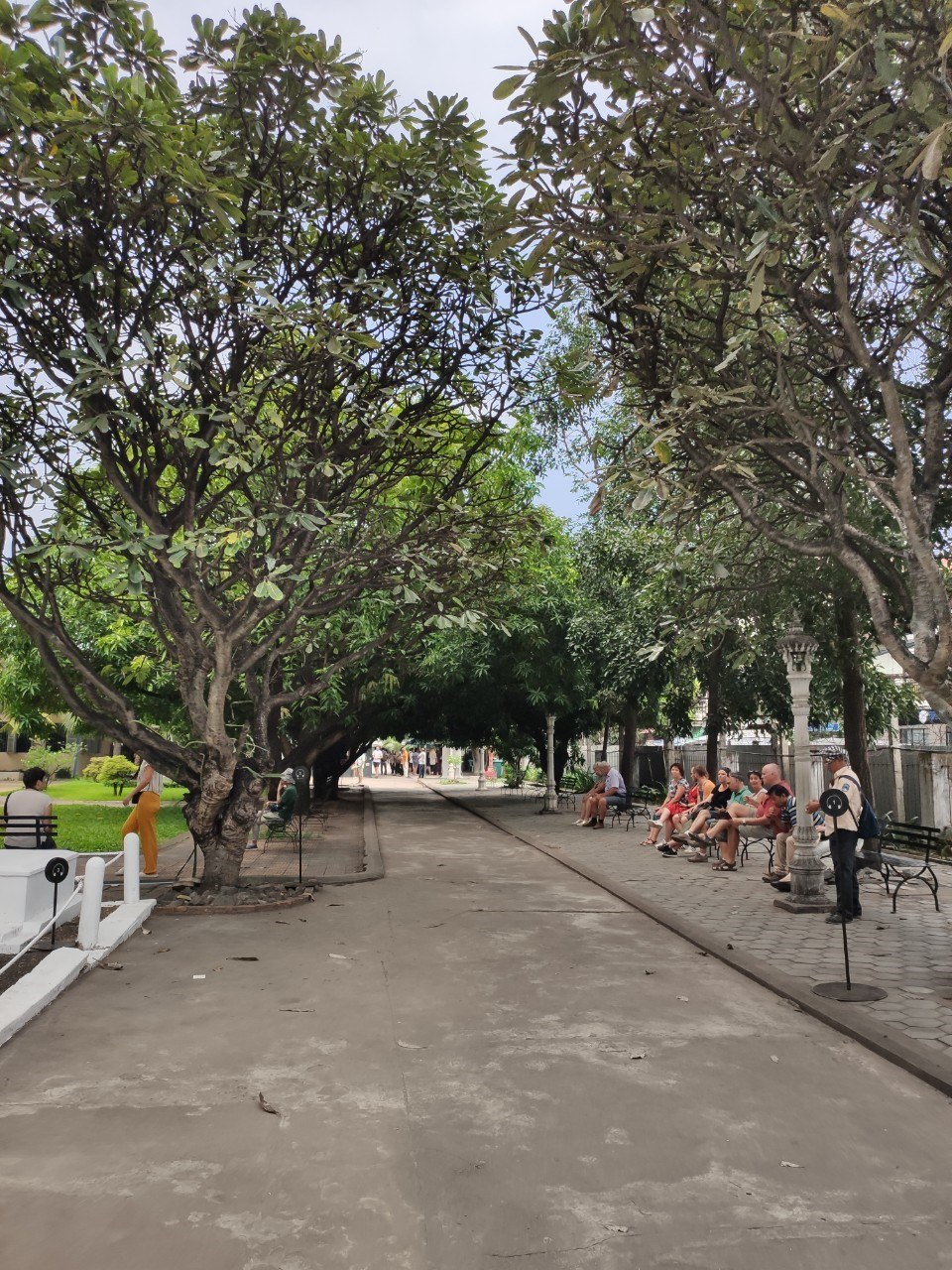
A tree-lined boulevard from the French colonial era — blissfully cool walking in the shade
Architecture near the Royal Palace, with its traditional Cambodian rooflines
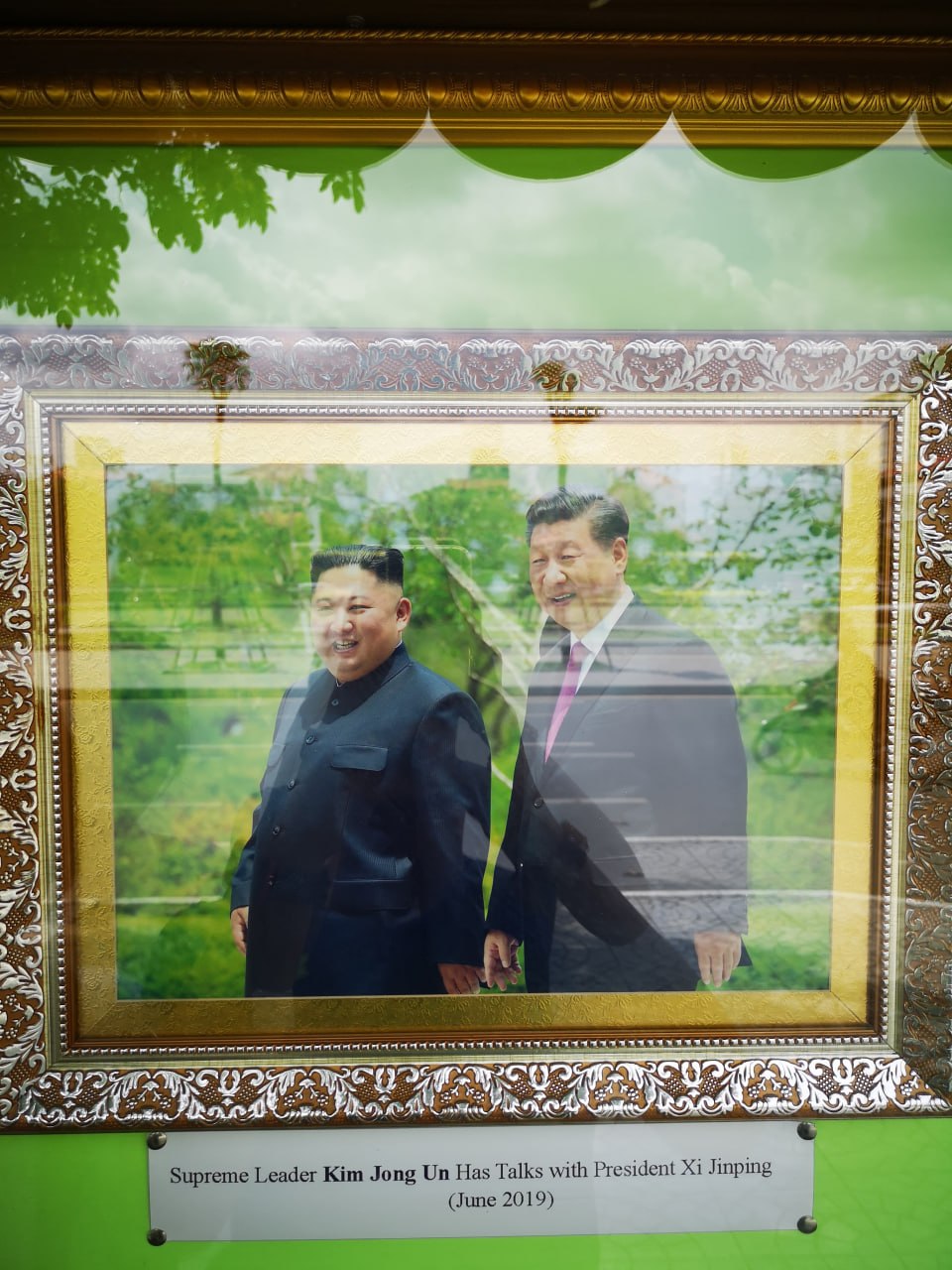
A North Korean restaurant right here in Phnom Penh — photos of Kim Jong-un and Xi Jinping on the wall. Probably the most surreal dining experience on the planet
The North Korean restaurants in Phnom Penh are truly one of a kind. Run by the North Korean government and scattered across Southeast Asia, the waitstaff are reportedly carefully vetted North Korean citizens. Occasionally there are live song-and-dance performances during dinner, creating an atmosphere so surreal you don't know whether to laugh or sit in quiet contemplation.
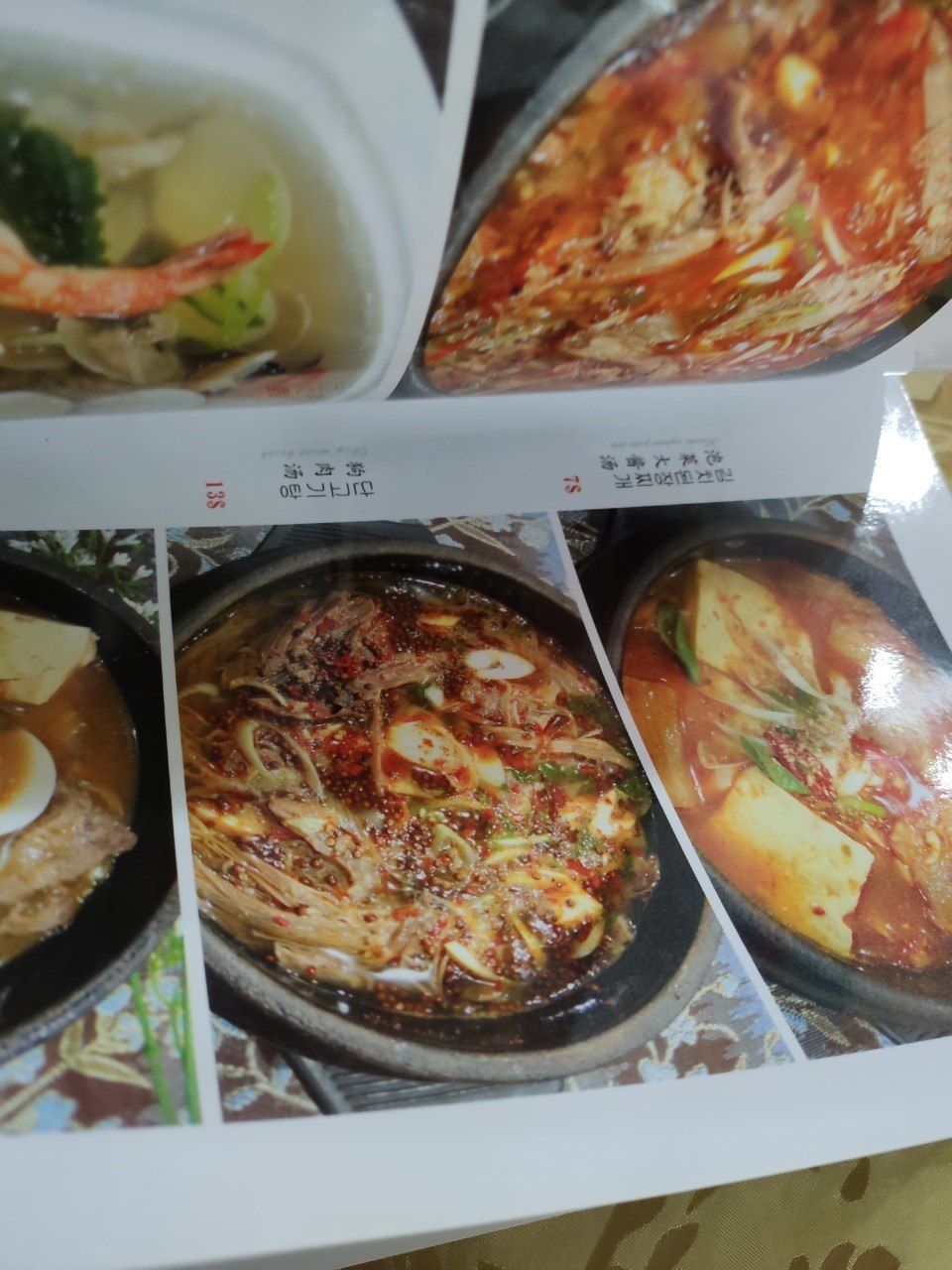
Korean dishes on the menu — the food is actually quite authentic
Phnom Penh's Furry Residents
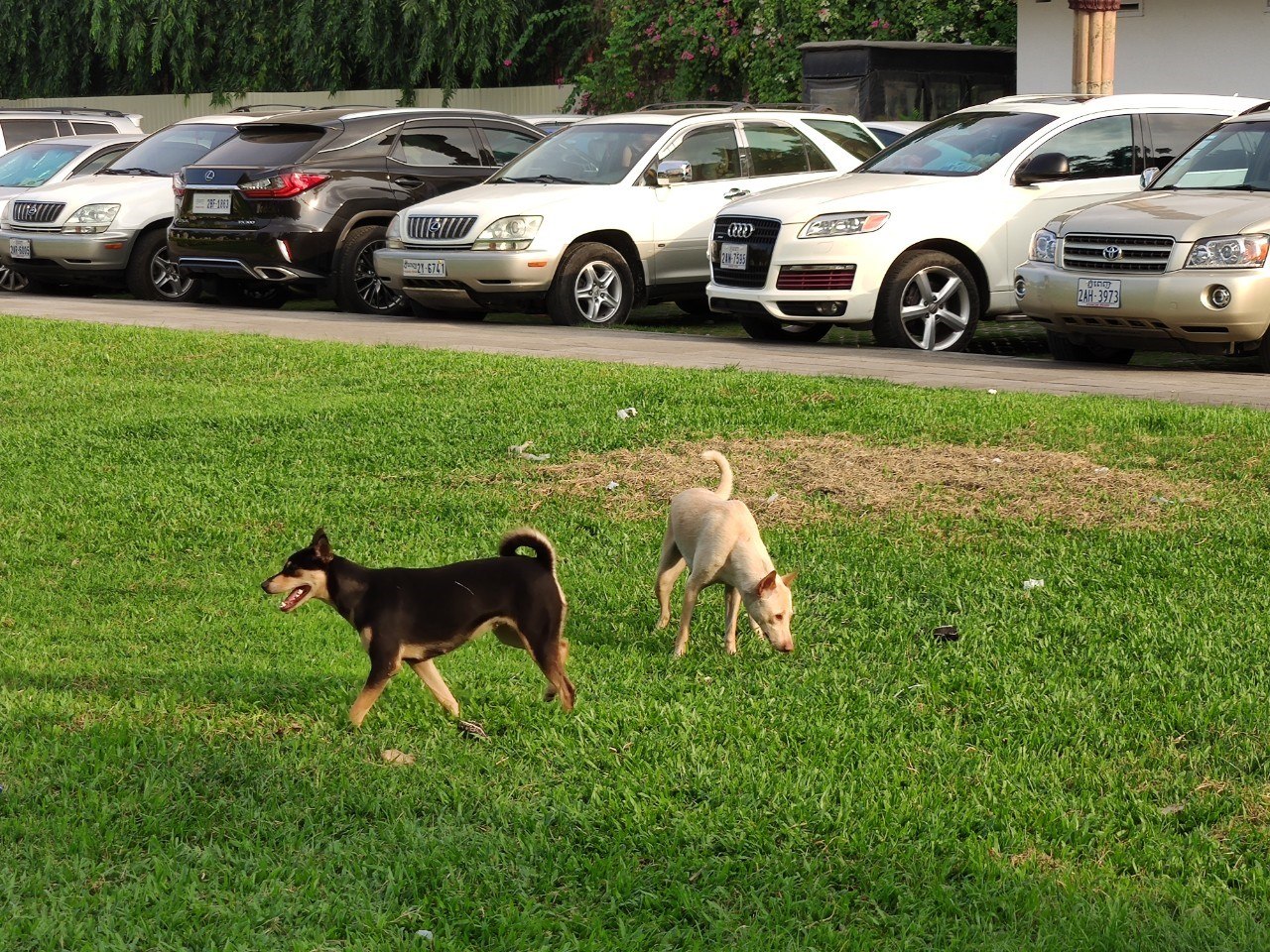
Walking around Phnom Penh, you'll run into a dog or cat every few steps. They're completely unfazed by people, lounging on sidewalks, in temples, along the riverbanks — as if the entire city is their personal territory.
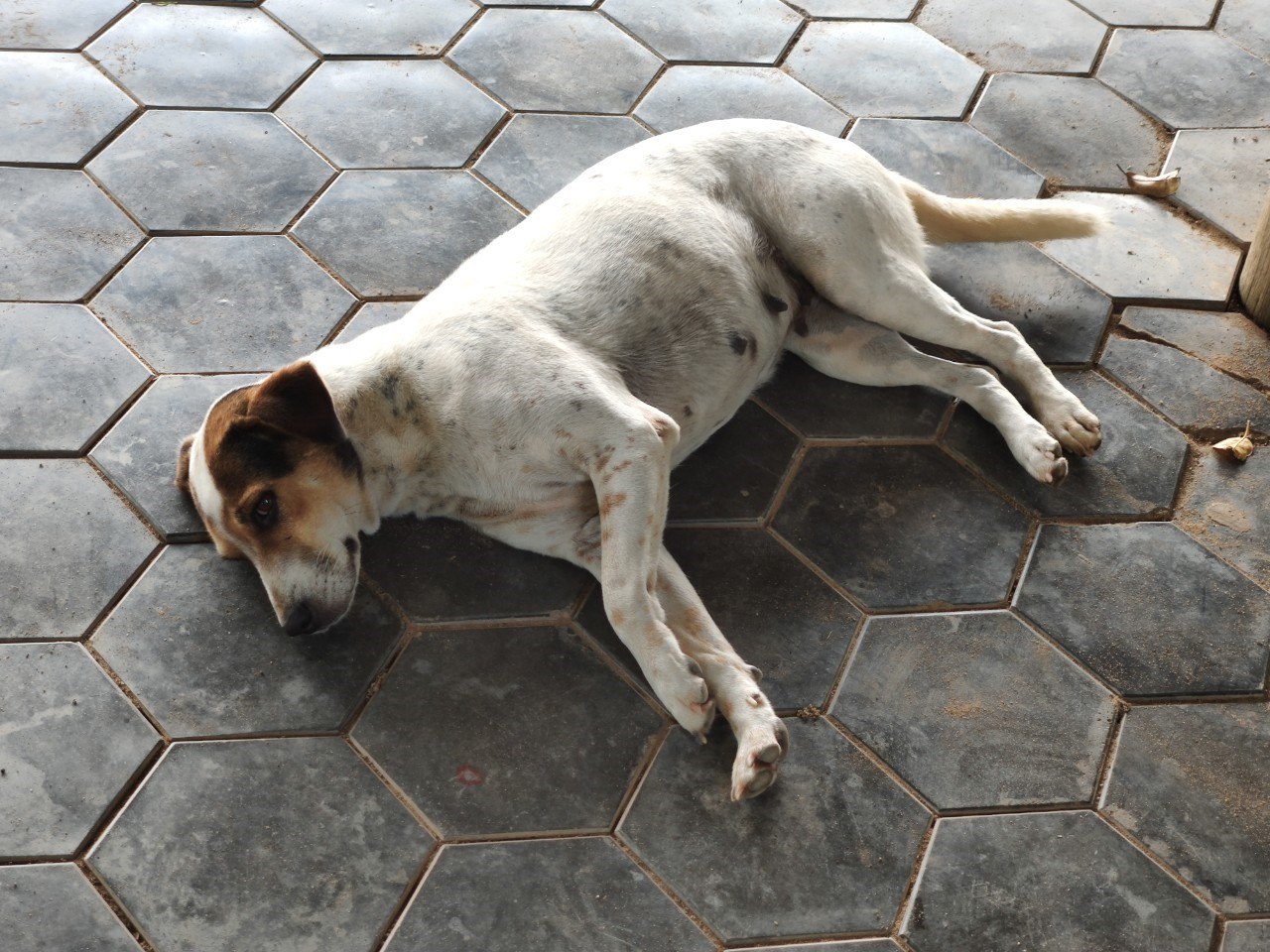
A pup fast asleep on the sidewalk, completely unbothered by passersby
A black cat spotted by the river, casually grooming itself
Two dogs strolling on the grass — Phnom Penh's furry residents live the good life
Final thoughts: Revisiting Phnom Penh two years later, the overwhelming feeling was one of speed. New towers going up one after another, the riverbank constantly being reclaimed, Chinese-funded signage everywhere — this city is sprinting to catch up with the times. And yet, the pigeons still flock along the riverbanks, the dogs are still just as laid-back, and Central Market's dome is still just as beautiful. That's Phnom Penh — a city of contradictions and endless fascination. Next time I visit, I probably won't even recognize it.
Travel Info
- When: 2019
- Destination: Phnom Penh, Cambodia
- Visa: Visa on arrival available for most nationalities, USD 30
- Currency: Cambodian Riel, though USD is widely accepted (1 USD ≈ 4,000 Riel)
- Getting around: Tuk-tuks and Grab in the city; ferries to cross the river
- Accommodation: Riverside five-star hotels from around USD 60-100/night — incredible value
- Must-see: Riverside promenade, Central Market (Phsar Thmei), Royal Palace, S-21 Museum
- Must-do: Ferry to the rural opposite bank, sunset juice by the river, North Korean restaurant