Vienna Central Cemetery
Sunlight filters through the treetops and spills across the gravestones; birdsong is the only background music.
This is not a place of sorrow — it is a concert hall without a roof.
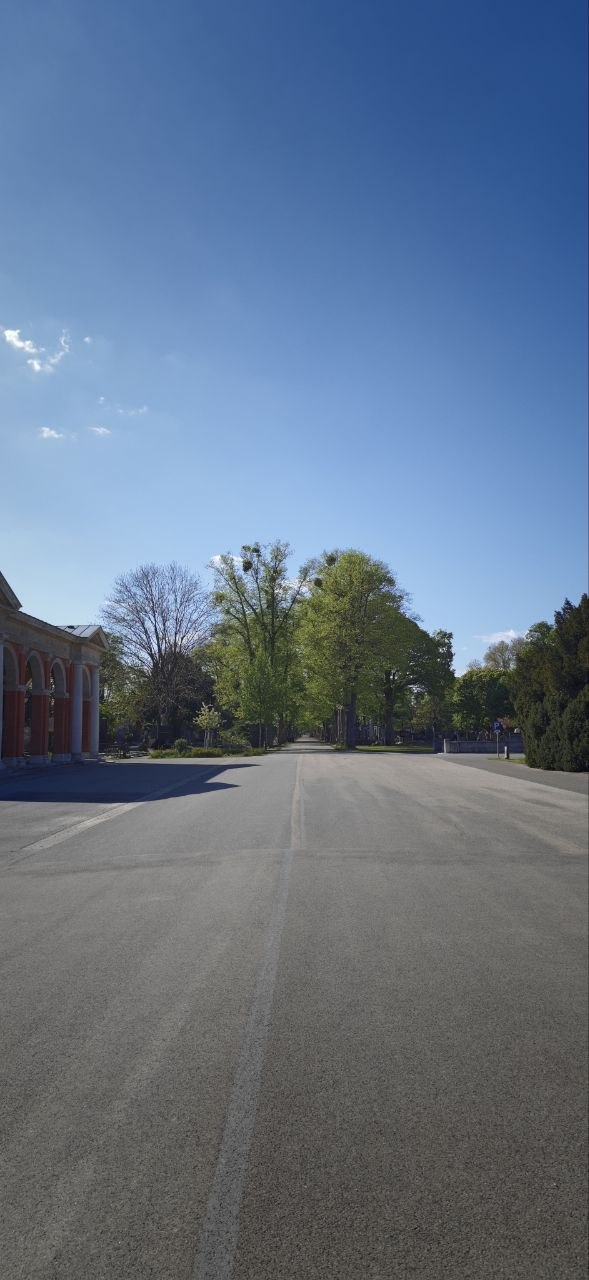
I. A Resting Place for 2.5 Million
Vienna's Central Cemetery (Wiener Zentralfriedhof), opened in 1874, spans 2.5 square kilometres and ranks as Europe's second-largest and one of the most populated cemeteries in the world — more than 2.5 million people rest here, outnumbering the living residents of Vienna today.
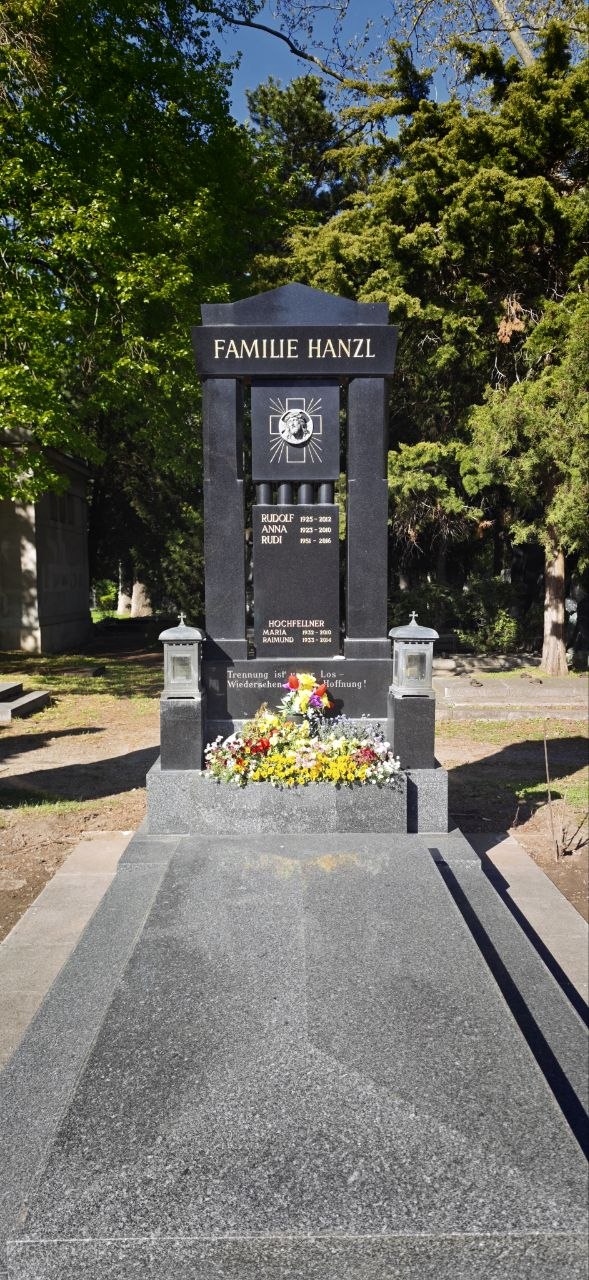
Yet what made this cemetery world-famous is not its scale, but its residents. In the "Honorary Graves" (Ehrengräber) of Section 32A, Vienna has arranged her most beloved sons and daughters together — composers, poets, scientists, statesmen — as though insisting they remain neighbours even in death.
II. Face to Face with the Great Composers
Stepping into Section 32A is like opening a three-dimensional history of Western music. Every gravestone is a work of art; every name once held the world's audiences in breathless silence.
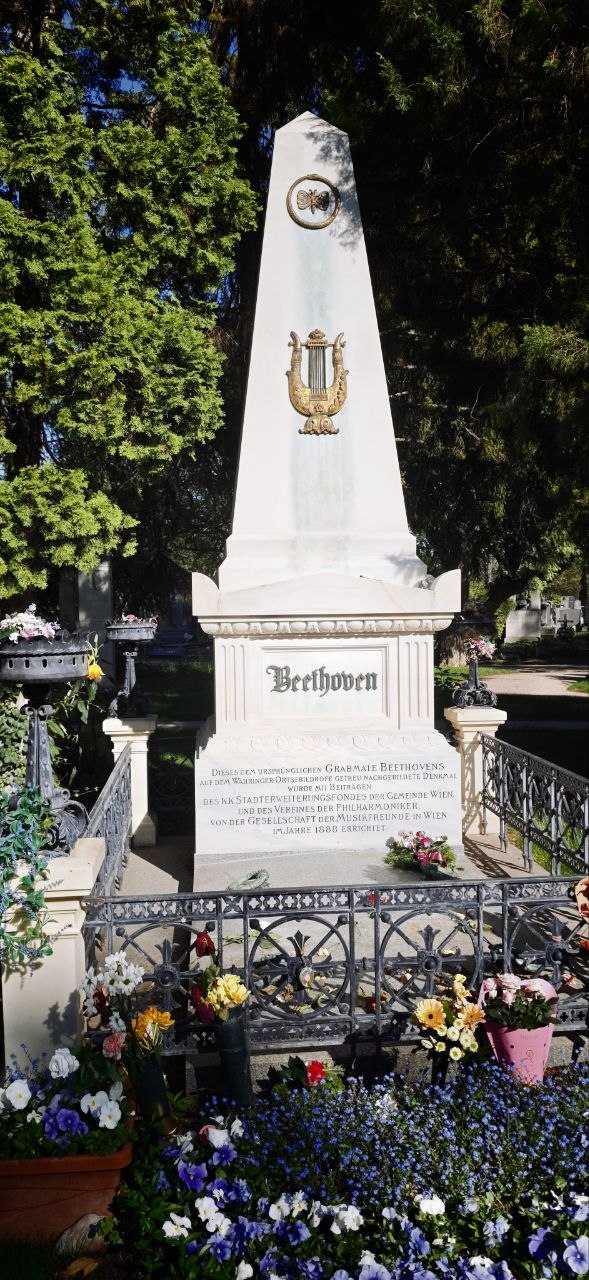
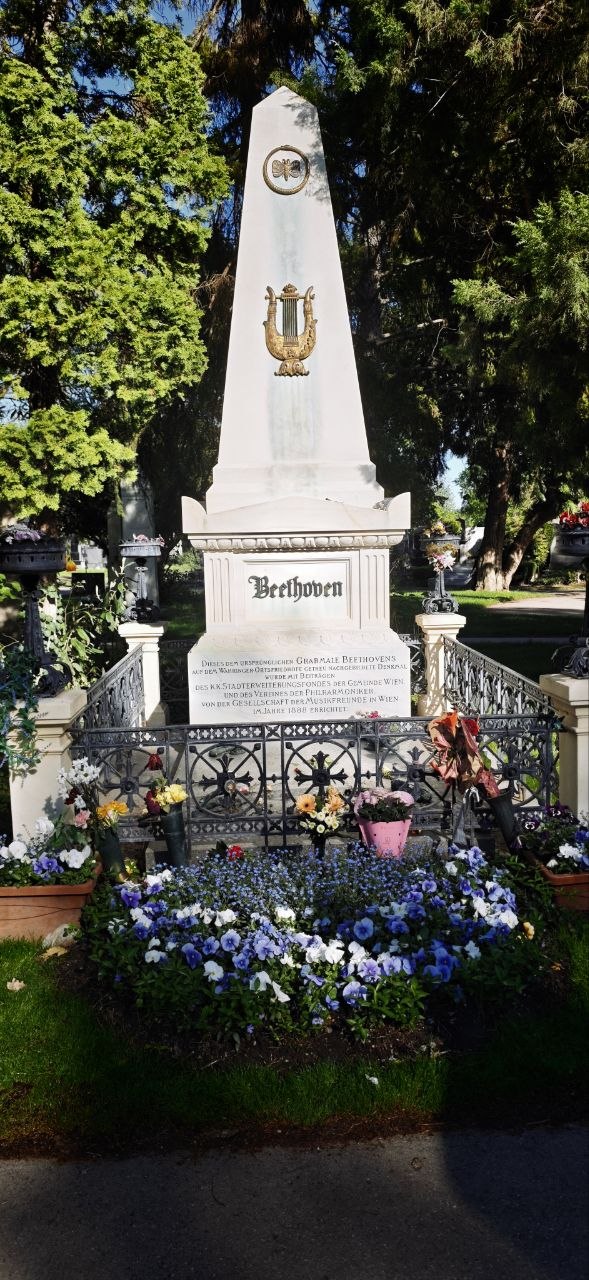
Ludwig van Beethoven (1770–1827)
A golden lyre is set into a white obelisk, surrounded by flowers. In his final years Beethoven was nearly completely deaf, yet from that silence he composed the most powerful passages in the history of music. His gravestone is stark and commanding — just like his music, it needs no adornment. The name alone is immortal.
The flowers before his grave have never ceased. Two hundred years on, people still remember to visit.
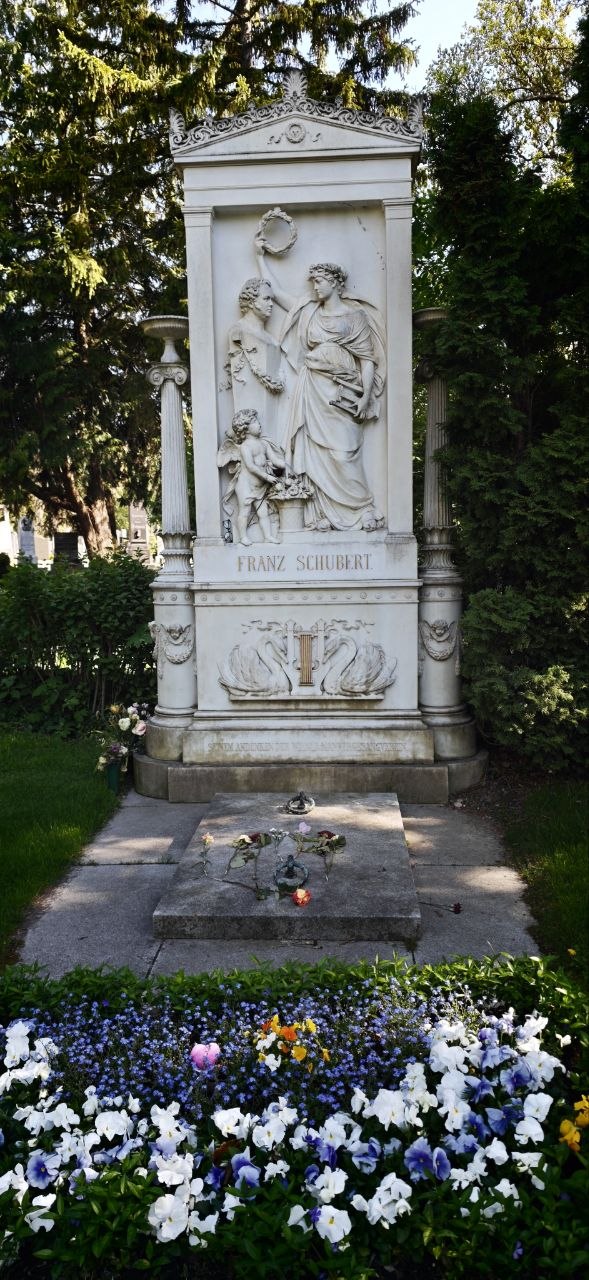
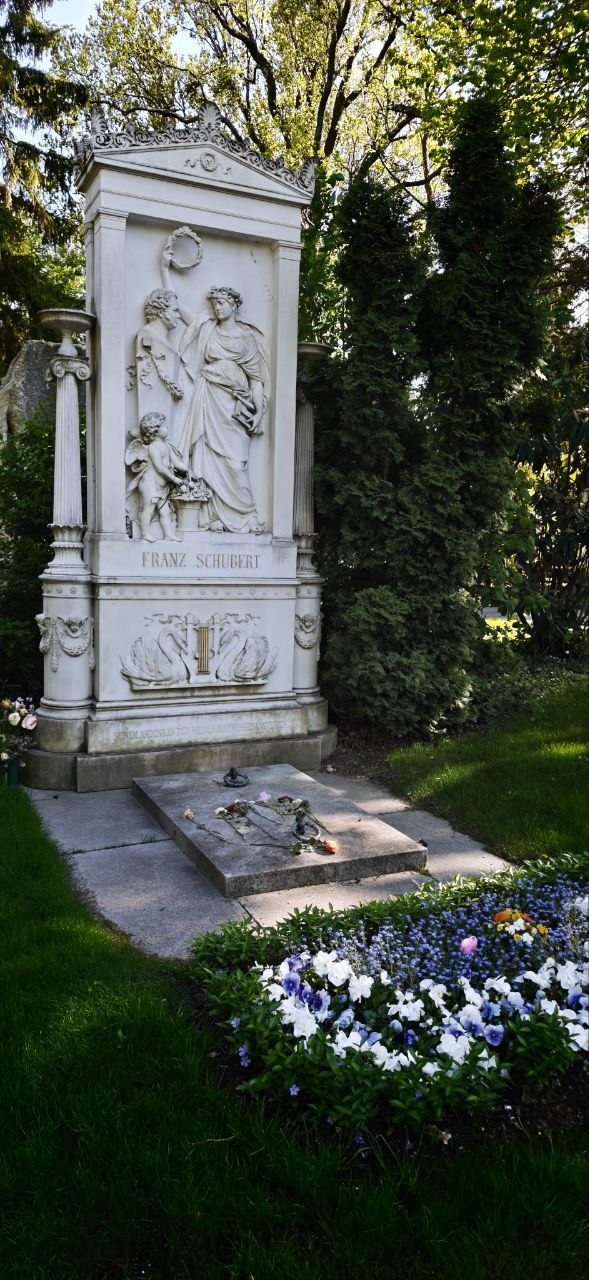
Franz Schubert (1797–1828)
Schubert lived only thirty-one years, yet left behind more than 600 art songs. Impoverished in life, he was laid to rest beside his idol Beethoven after death — Vienna's highest tribute. The relief on his gravestone is tender and melancholy, much like the aching melodies that run through his music.
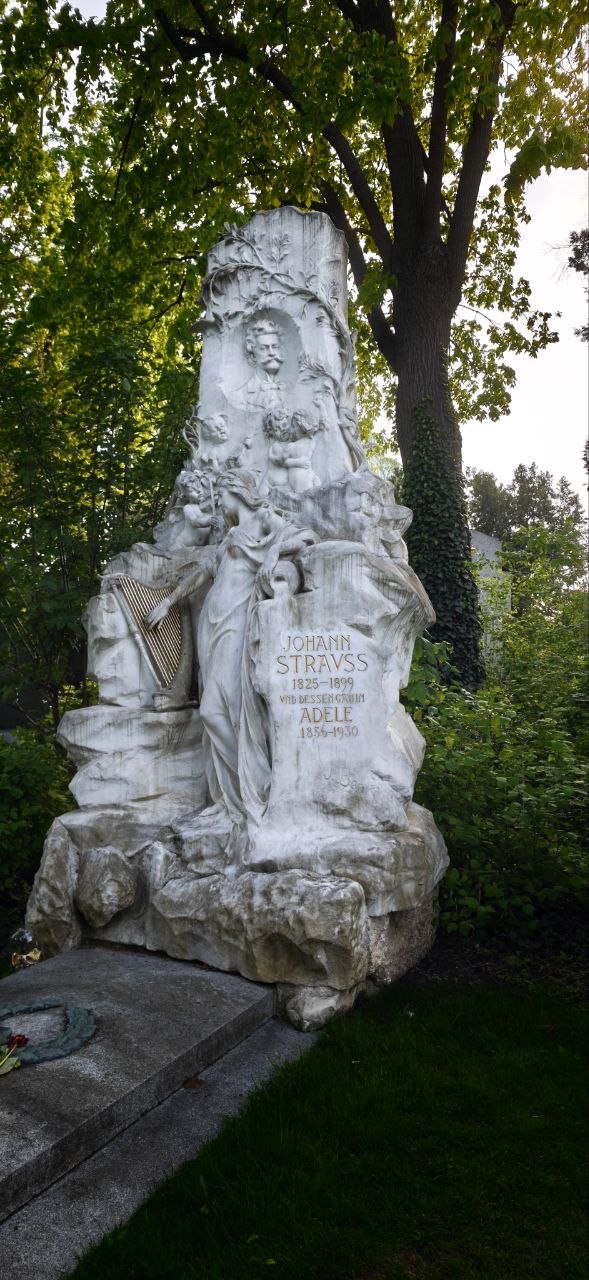
Johann Strauss II (1825–1899)
Strauss's monument is the most lavish in the entire honorary section. Carved in white marble, a goddess reclines beside his portrait, surrounded by cherubs and musical instrument reliefs. The tomb itself is a waltz frozen in stone — elegant, resplendent, impossible to look away from.
He set all of Europe dancing in three-quarter time. Even here in the cemetery, you can almost hear the melody of "The Blue Danube" seeping out from between the stones.
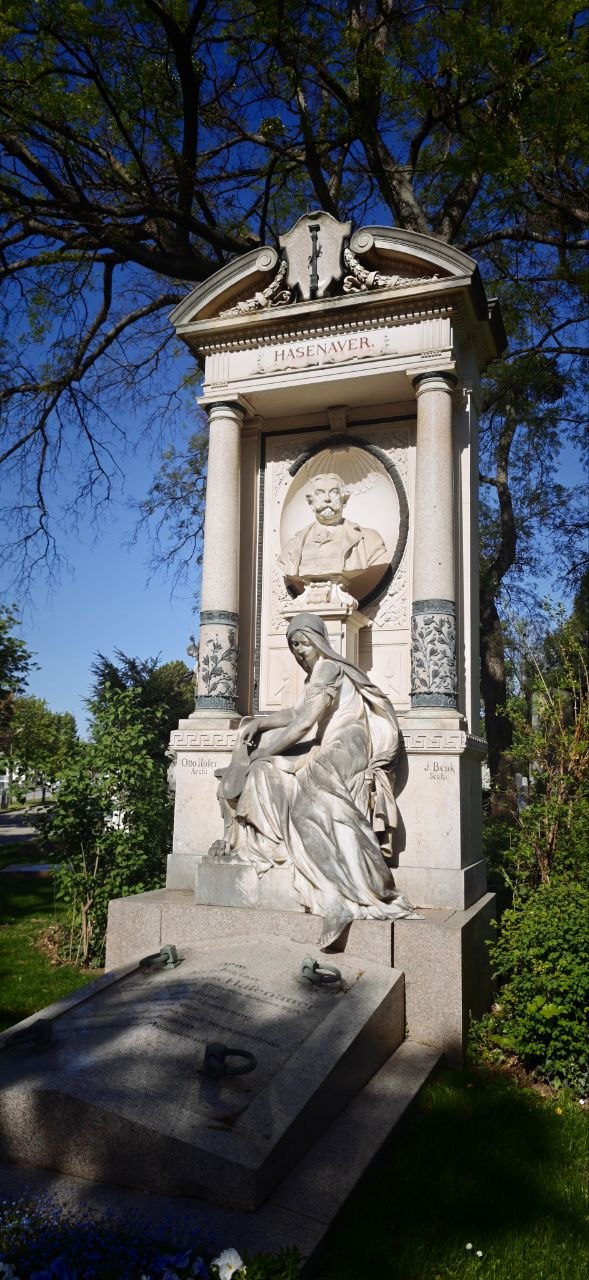
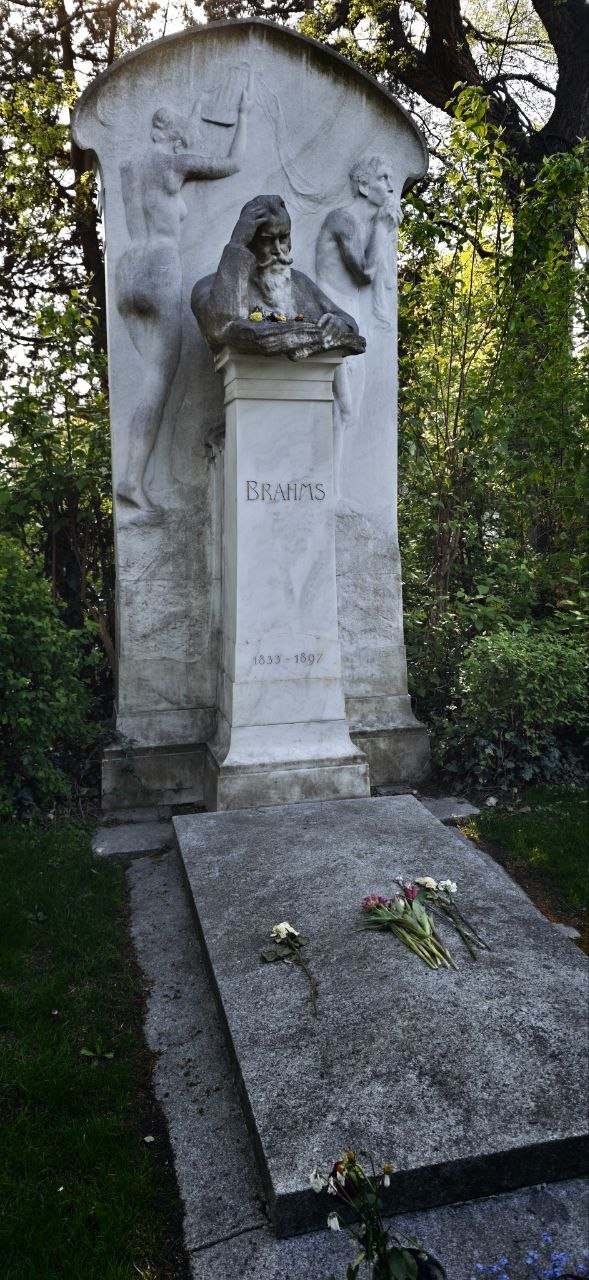
Johannes Brahms (1833–1897)
Brahms's gravestone is a contemplative bronze figure — head bowed, as though composing the next movement in his mind. Of all the musicians' memorials here, his is the quietest, the most restrained, perfectly in keeping with his character. Brahms spent his whole life in "Beethoven's shadow," burdened with the expectation of being classical music's heir. He rose to the challenge — only in his own way.
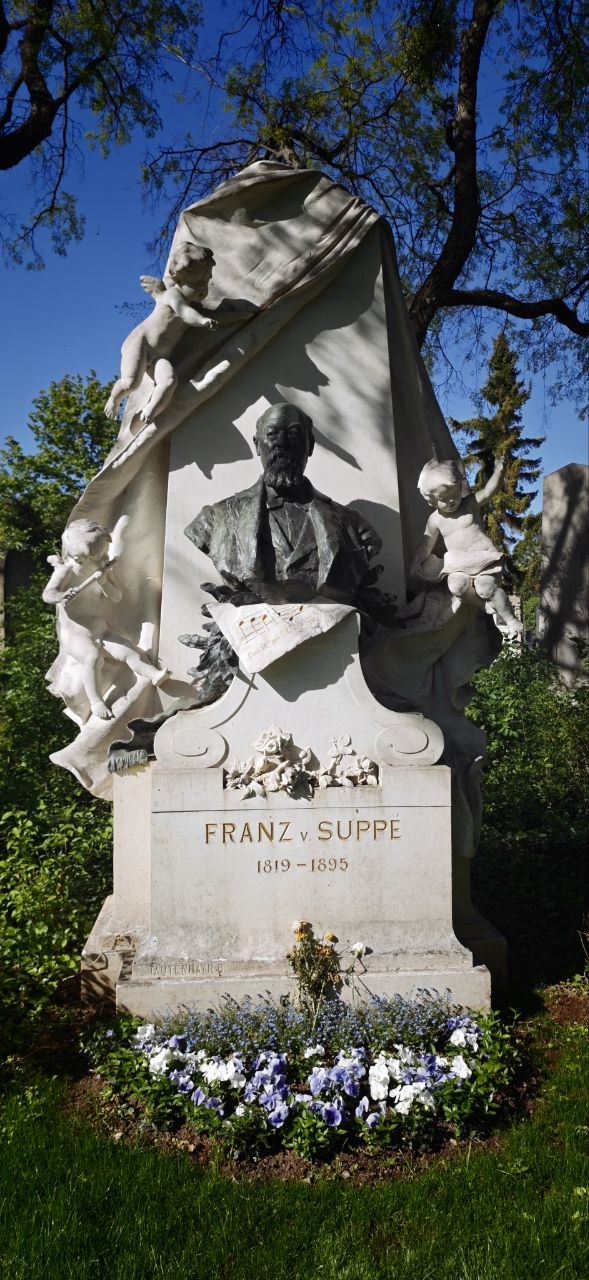
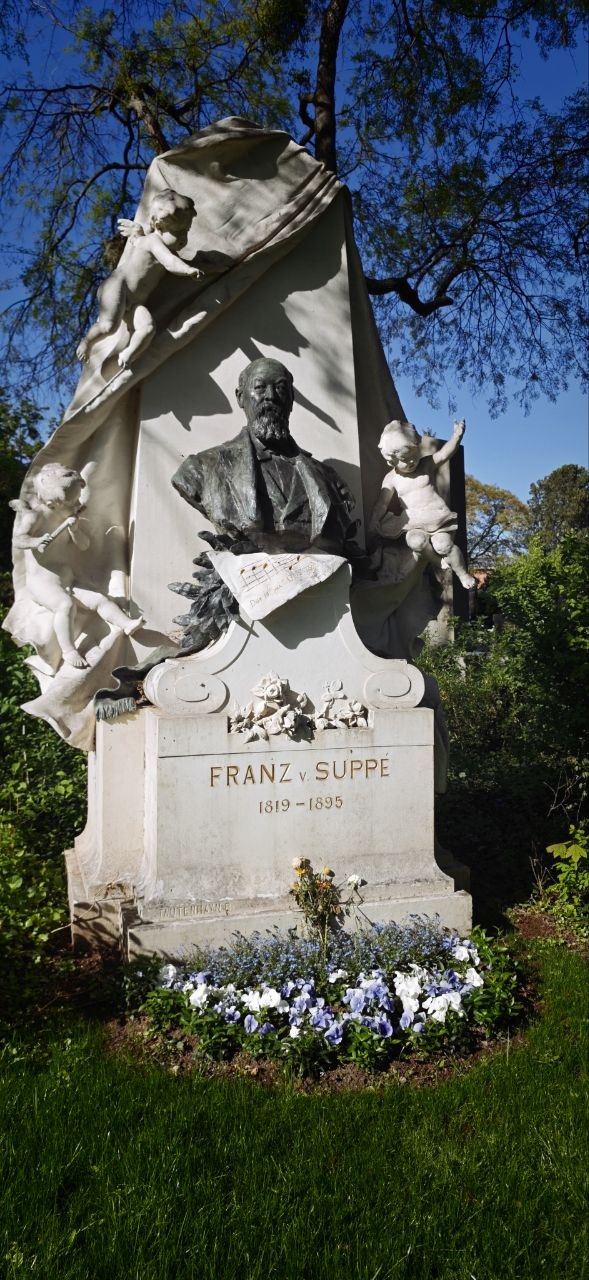
Franz von Suppé (1819–1895)
Suppé's gravestone bears his portrait in relief, flanked by theatrical masks and garlands. He was the pioneer of Viennese operetta, paving the way for Johann Strauss II. If Strauss was the Waltz King, Suppé was the man who built the ballroom.
Josef Lanner (1801–1843)
Lanner's gravestone features an angel watching over his portrait relief. He began composing waltzes before the Strauss family, and was one of the true originators of the Viennese dance tradition. The two men started as partners, later became rivals, but history ultimately placed them in the same cemetery.
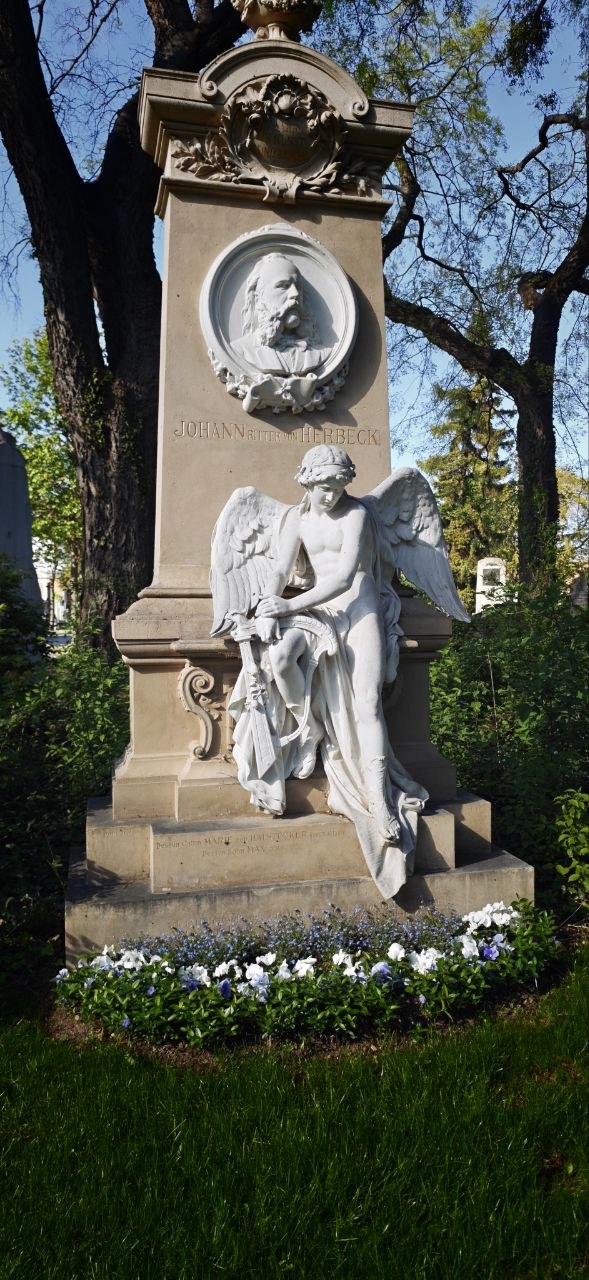
Marie Wilt (1833–1891)
Wilt's memorial is an elegant white stone marker with a circular portrait relief at its centre. Her voice once filled the Vienna State Opera; now this quiet gravestone is the last silhouette she left the world.
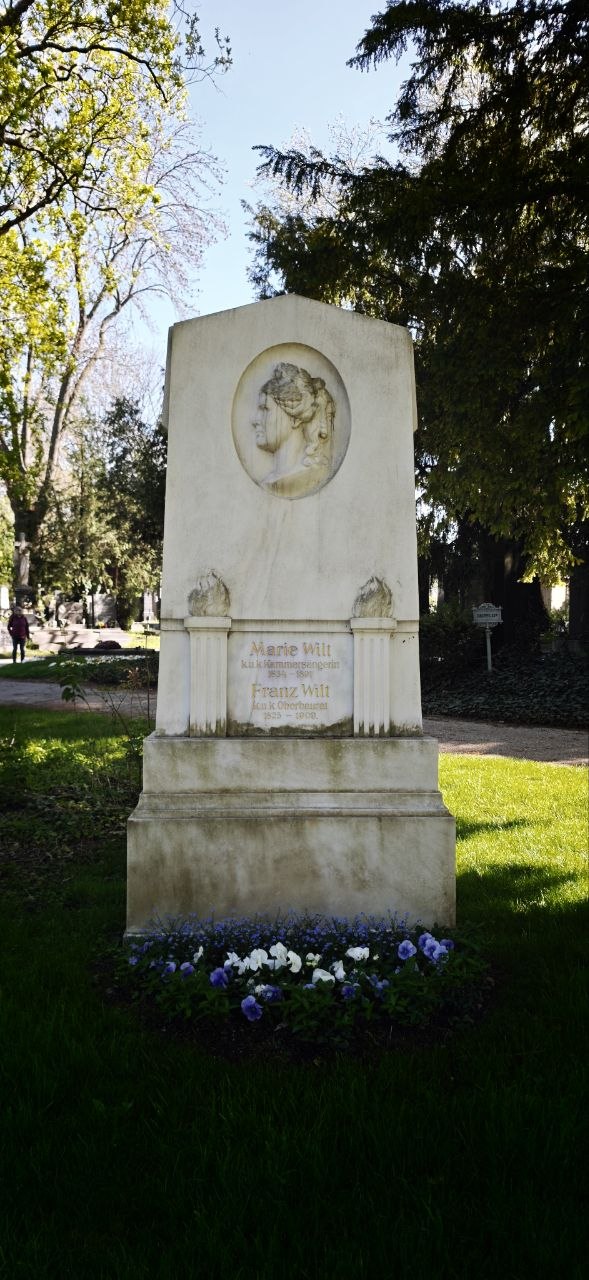
Nikolaus Dumba (1830–1900)
Dumba was not a musician, but without him many a composer's works might never have seen the light of day. He was a patron of Brahms and Strauss, using his wealth to safeguard Vienna's musical heritage. His dark gravestone is understated and dignified — like all great figures who work behind the scenes.
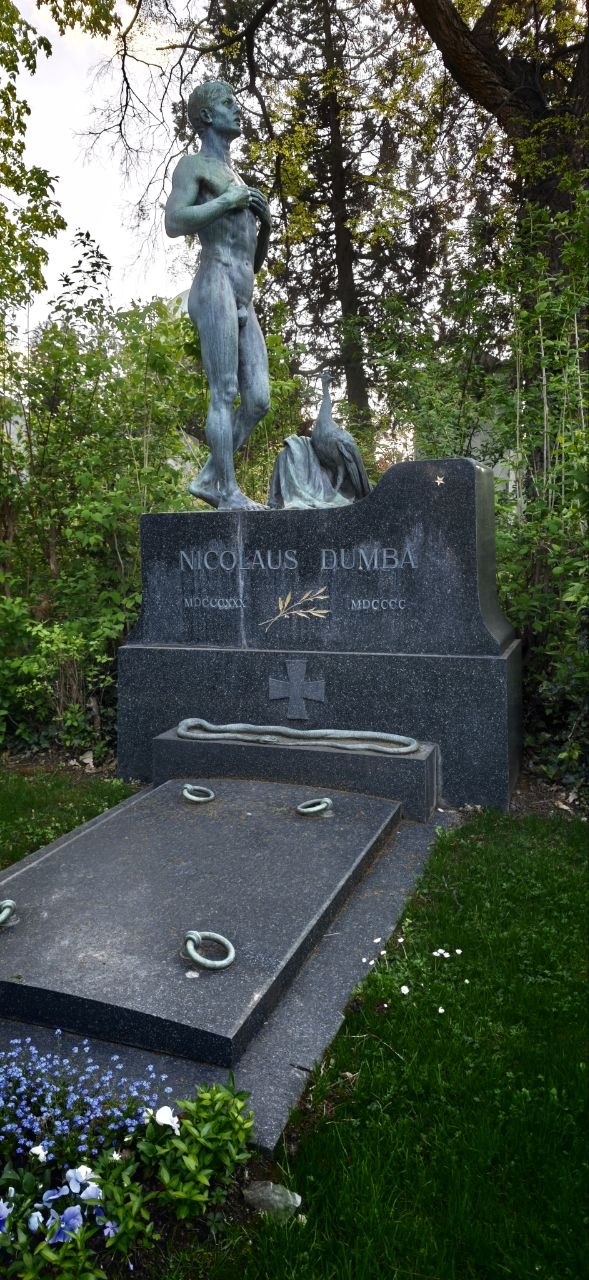
III. Mozart's Empty Grave
At the very centre of the honorary section stands a monument to Mozart. But his remains are not here — when he died in 1791, he was buried in an unmarked communal grave at St. Marx Cemetery, and to this day no one knows the exact spot.
Vienna's Central Cemetery erected this memorial so that posterity would have a place to pay their respects. An empty grave — yet one of the most visited spots in the entire cemetery.
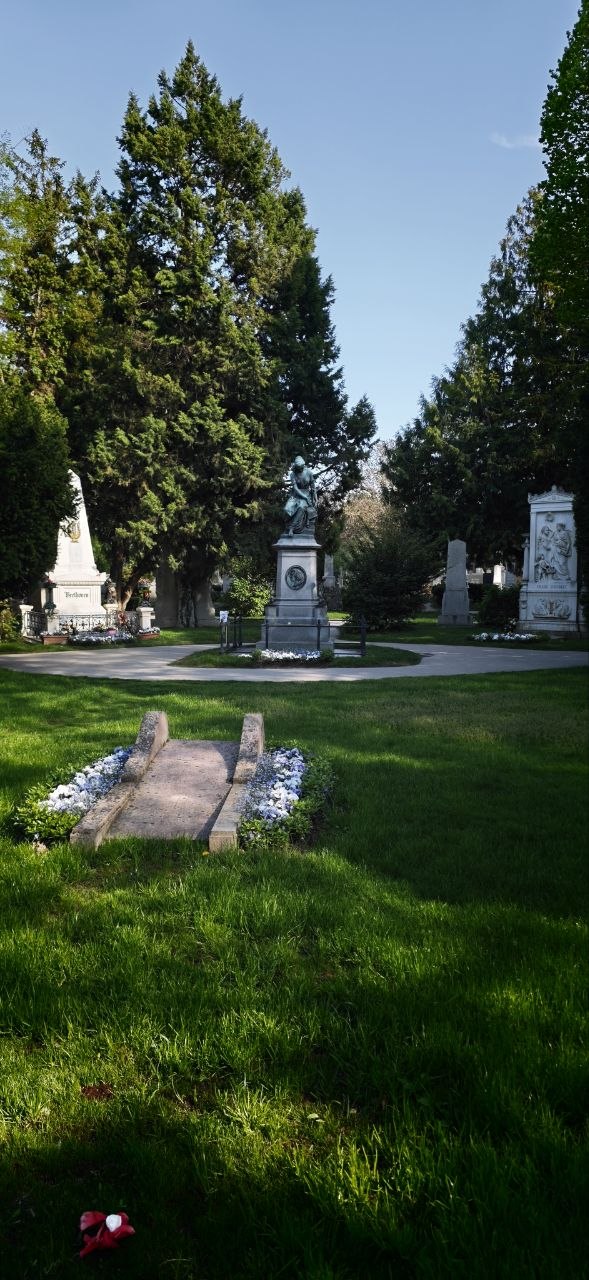
IV. A Cemetery You Never Want to Leave
Walking through Vienna's Central Cemetery, the strongest feeling is not sorrow but serenity.
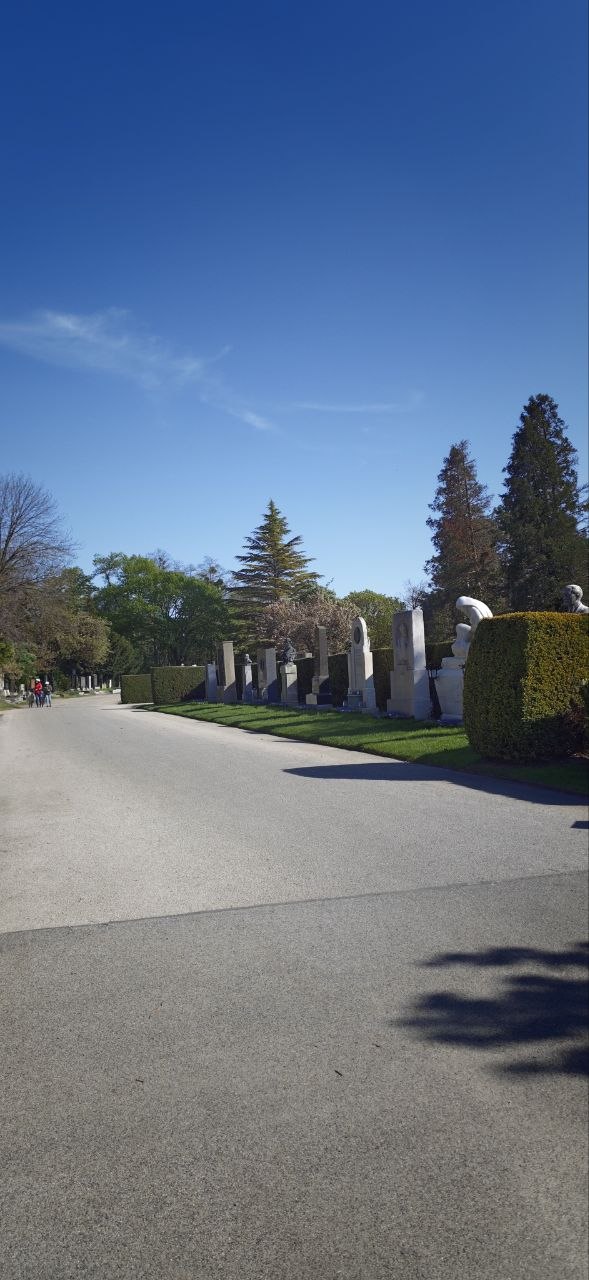
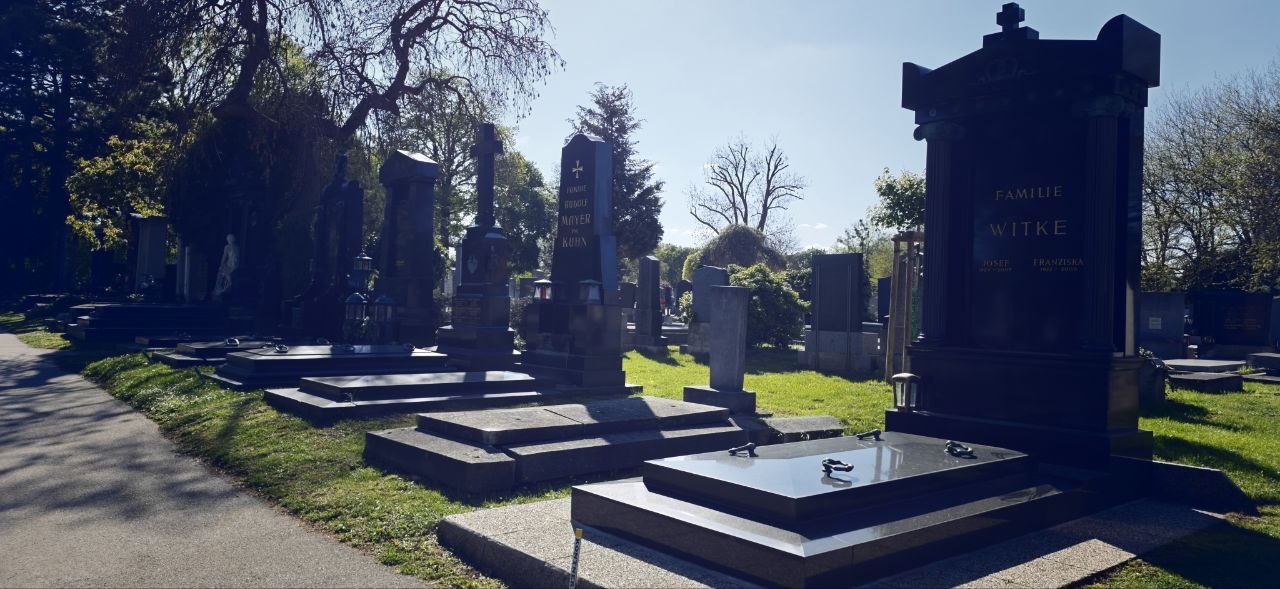
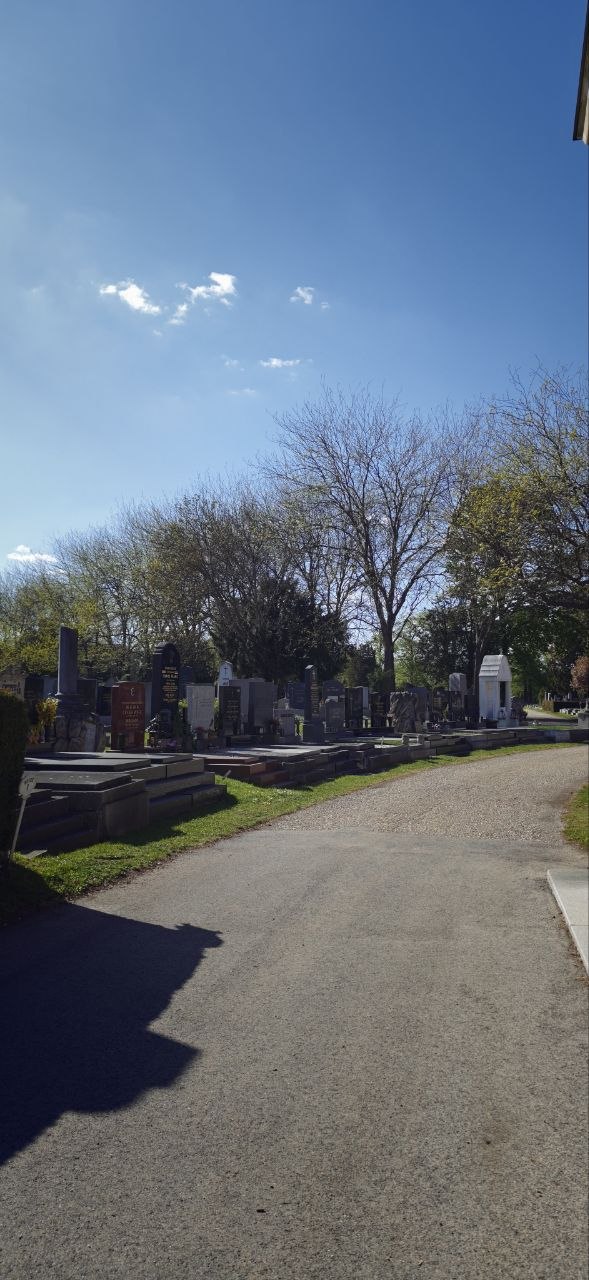
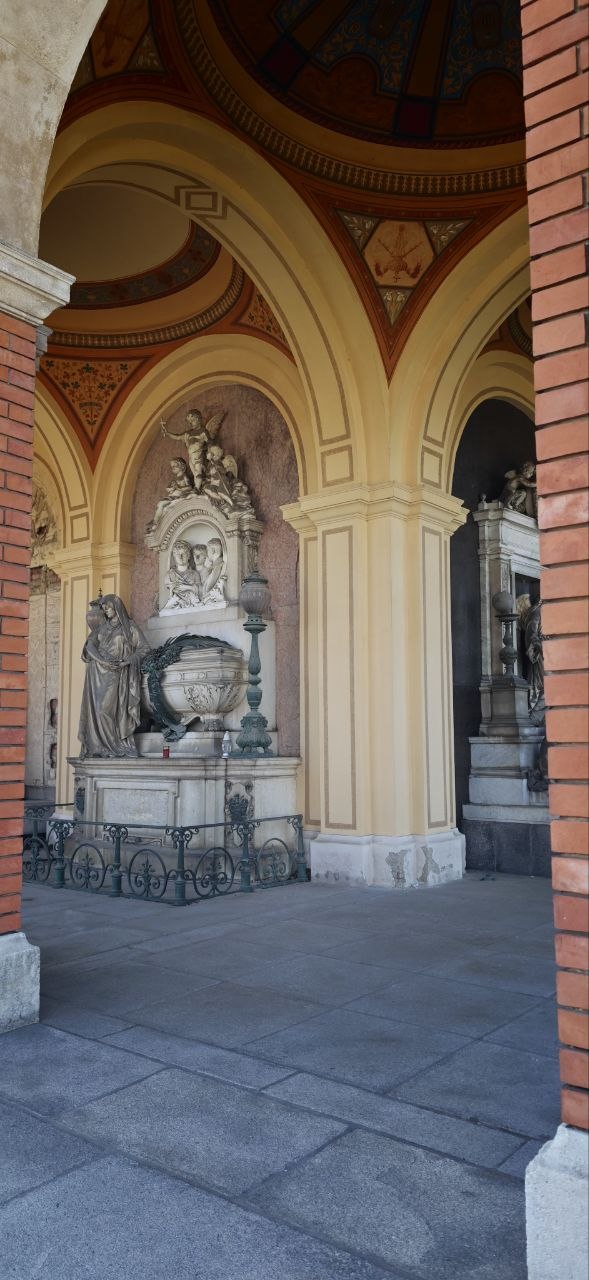
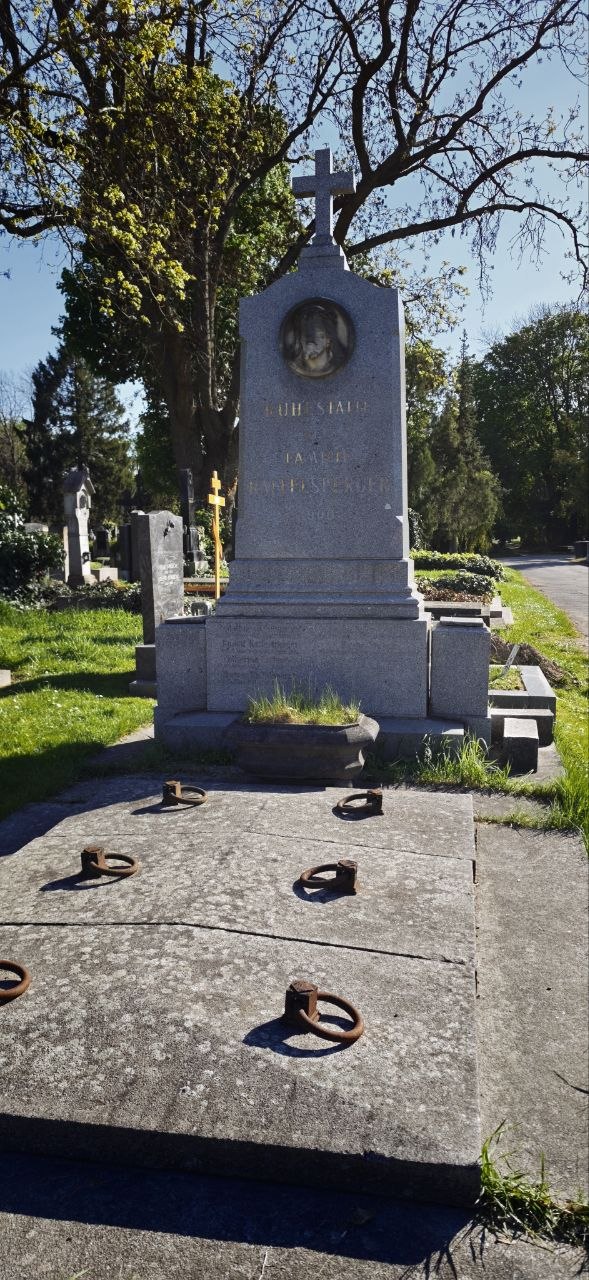
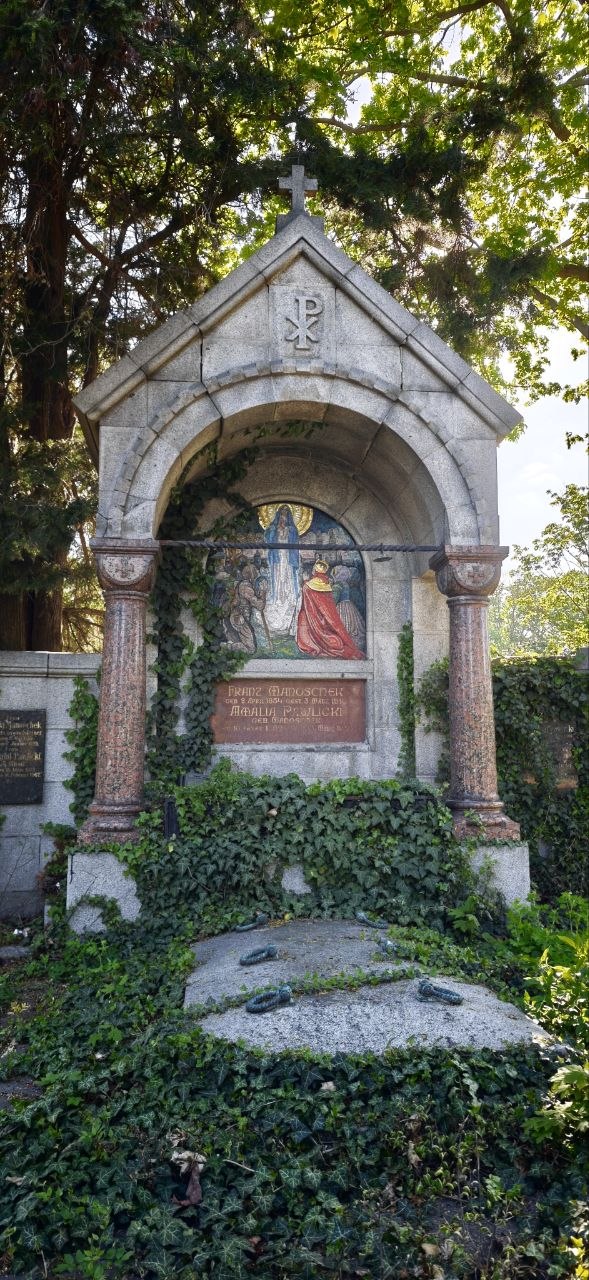
On an April afternoon, sunlight falls through the tall old trees, painting dappled patterns on the gravestones. A breeze sweeps across the manicured lawns, carrying the scent of earth and blossoms. Now and then birdsong drifts in from the distance, but more often the only sound is your own footsteps.
This place feels less like a graveyard and more like a vast garden. Pansies and forget-me-nots fill the spaces between the headstones, and rust-red cast-iron railings glow warmly in the sun. Every grave is lovingly tended — someone comes regularly to change the flowers, wipe the stone, tidy the plot. For over two hundred years, the Viennese have never forgotten their neighbours.
Epilogue
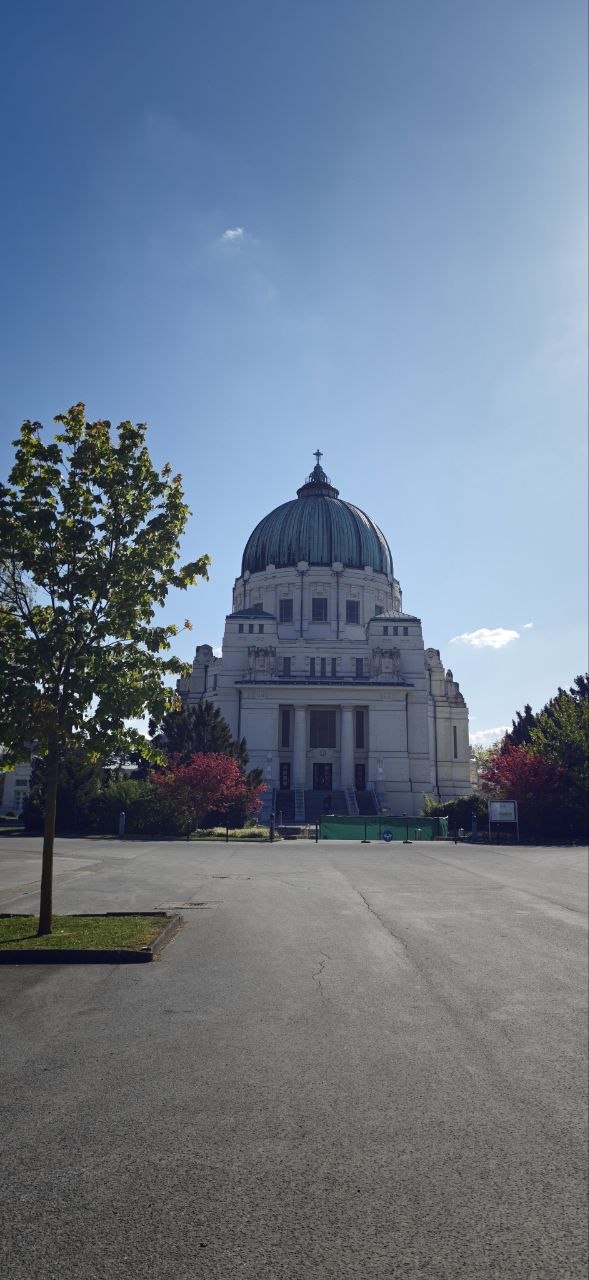
On the way out I looked back one last time. The dome of the church shone under a blue sky, and the tree-lined avenue ran straight and true to the vanishing point.
In this cemetery, death is not an ending but another form of existence. Beethoven's fate still knocks at the door, Schubert's song still flows, Strauss's waltz still spins. Their music left the gravestones long ago and lives on in the heart of everyone who has ever listened.
But to come here, to stand before them, to linger a while in this stillness — that is Vienna's most extraordinary gift to the traveller.
There are places you visit and simply understand:
why Vienna is the City of Music.
Not because of the Musikverein's Golden Hall, but because even the cemetery is performing.