Aso Volcano Trip
In the morning, we met Japan's most famous chimpanzee, Pan-kun (パンくん), at the zoo.
In the afternoon, we boarded a helicopter and looked down at one of the world's largest active volcanic craters from 300 meters above.
This single day swung from tenderness to ferocity — like two completely different trips.
I. Aso Cuddly Dominion — Pan-kun's Home
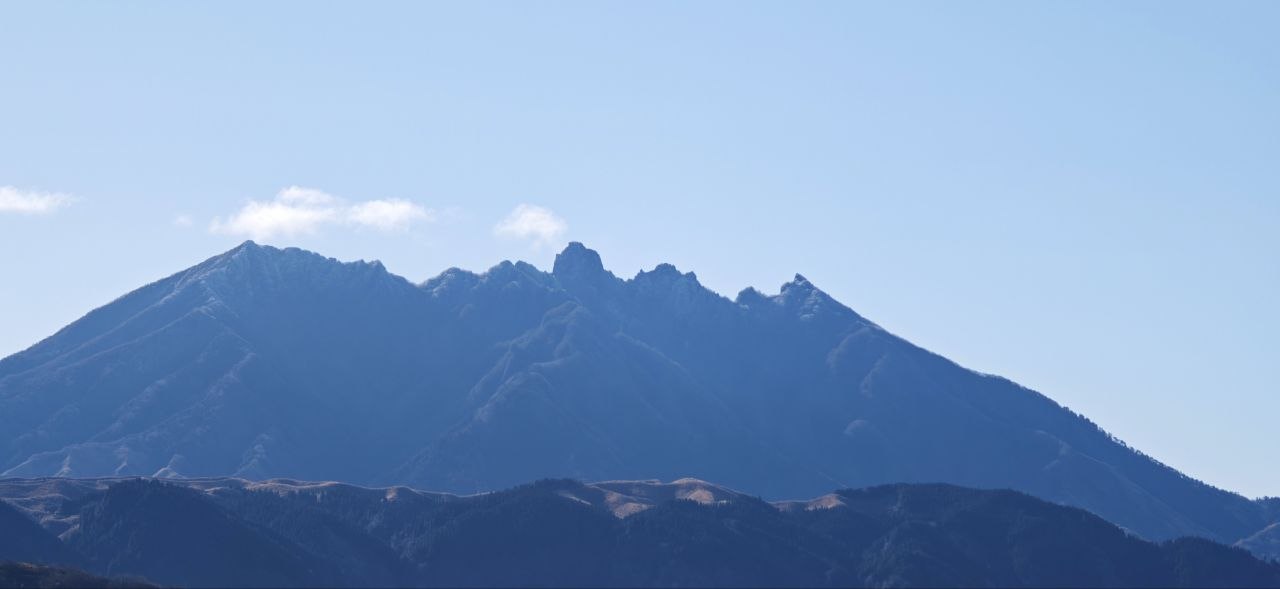
Aso Cuddly Dominion (阿蘇カドリー・ドミニオン) is a zoo at the foot of Mount Aso, home to around 60 species and 350 animals. But what truly made it famous across Japan wasn't the number of animals — it was one chimpanzee and one bulldog.
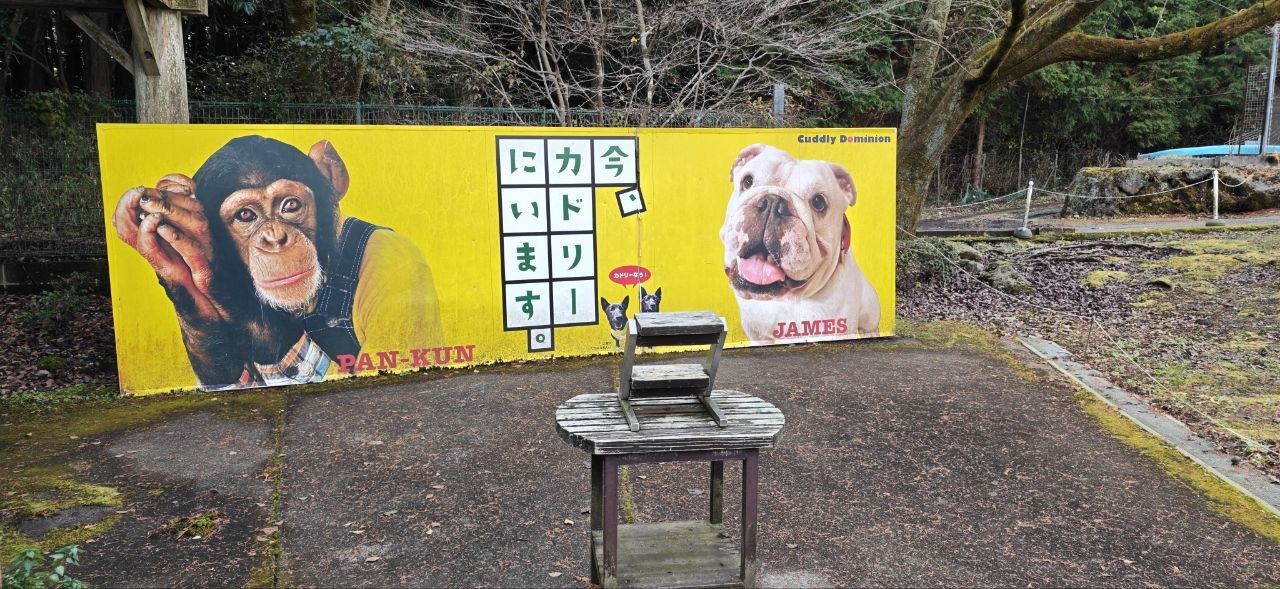
Pan-kun (パンくん) is a male chimpanzee born in 2001, raised and trained from infancy by Atsushi Miyazawa (みやざわあつし). Starting in 2004, Pan-kun and his bulldog partner JAMES starred in the wildly popular NTV show Shimura Zoo (天才!志村どうぶつ園), becoming Japan's beloved "genius chimpanzee." On the show, Pan-kun would ride a bicycle, do household chores, and go grocery shopping, with JAMES always trotting alongside. This duo accompanied an entire generation of Japanese viewers.
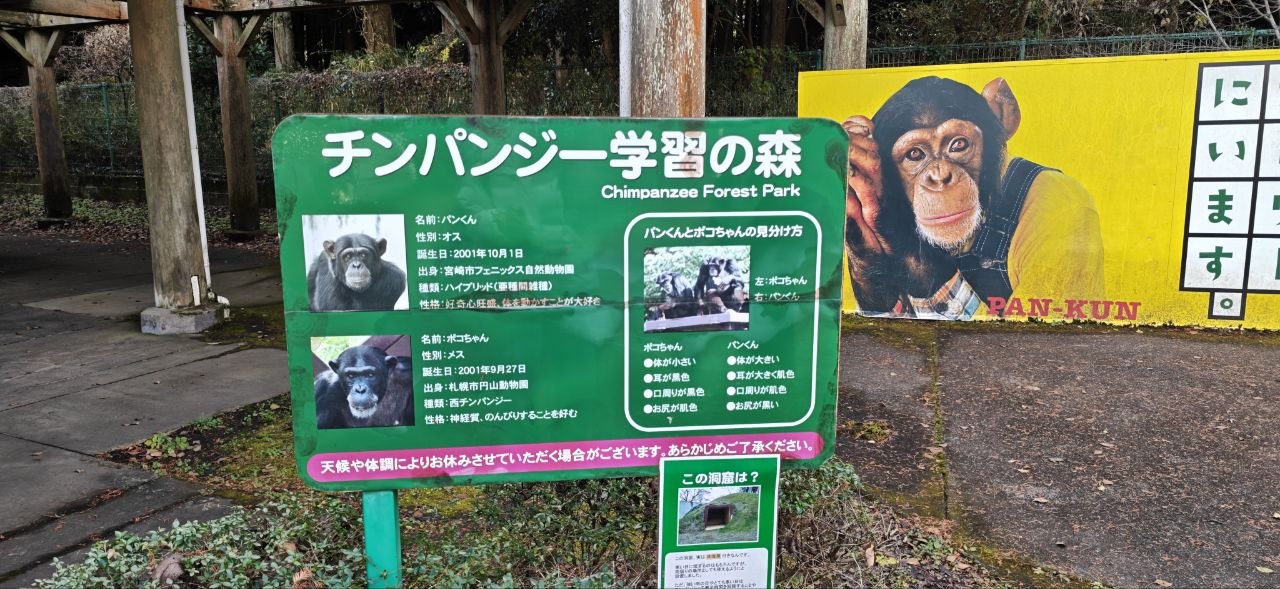
The original JAMES passed away on March 8, 2016. Today, Pan-kun lives in the park's "Chimpanzee Learning Forest" with his mate Pochan and their child Purin, still the zoo's biggest star.
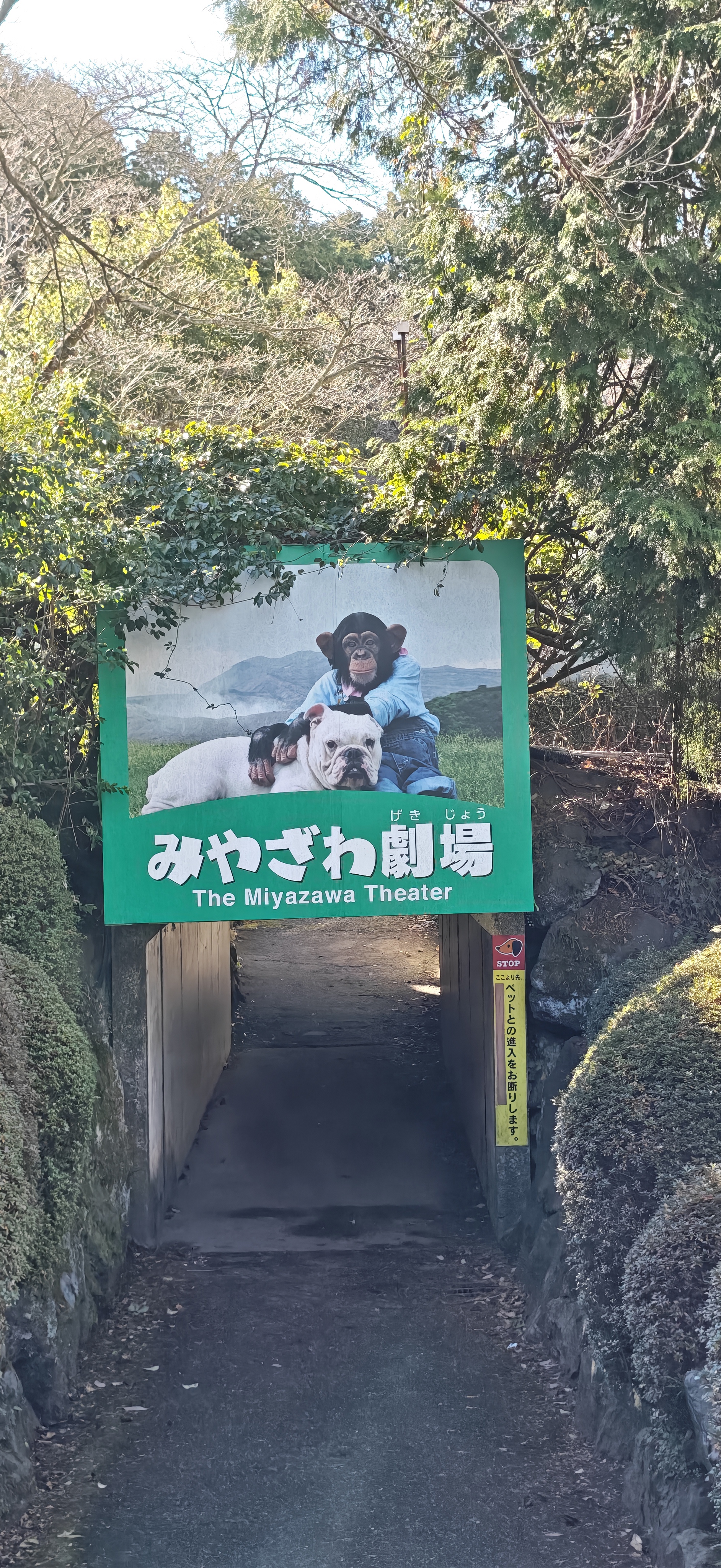
Miyazawa Theater (みやざわ劇場)
The Miyazawa Theater is where Pan-kun and JAMES got their start — it's where trainer Atsushi Miyazawa first began working with Pan-kun. At the theater entrance, the sign shows a chimpanzee with his arm around a bulldog's shoulders — the iconic image from Shimura Zoo.
Chimpanzee Learning Forest (チンパンジー学習の森)
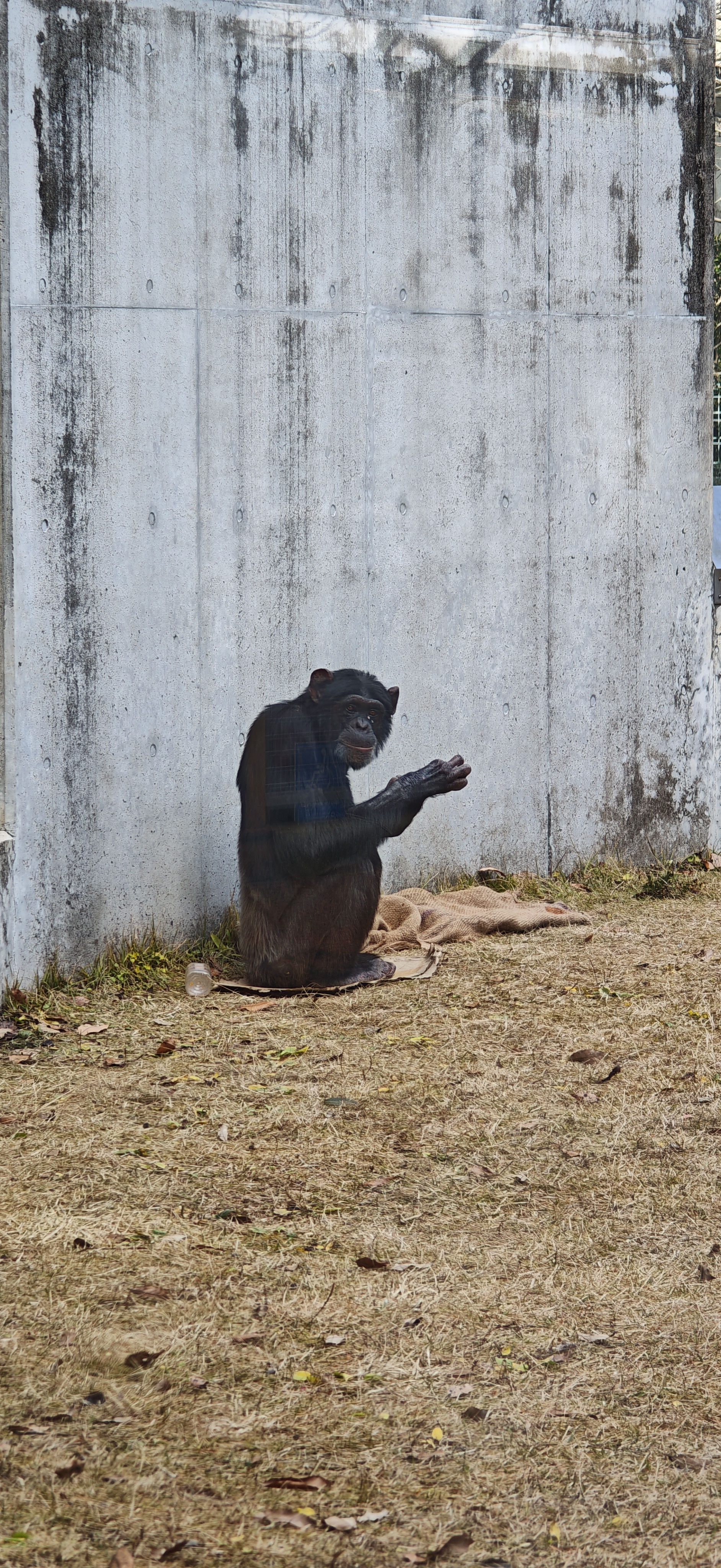
Opened in 2007, the "Chimpanzee Learning Forest" is Pan-kun and his family's lifelong residence. When we visited, a chimpanzee sat alone by a concrete wall, gazing down at its own palms. The slanting winter afternoon sun fell across its body — a scene so quiet you felt reluctant to disturb it.
JAMES and the Park's Animals
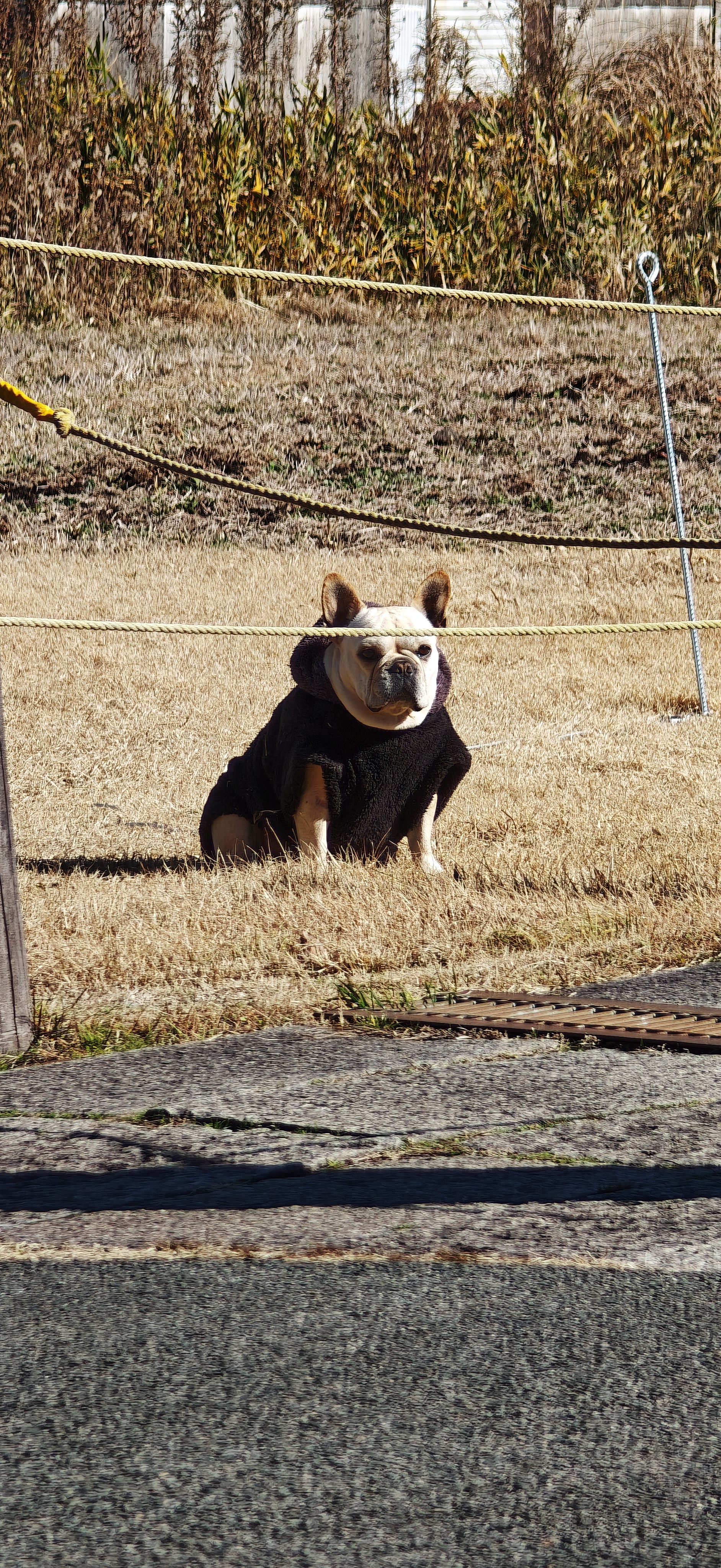
JAMES's presence is everywhere in the park — on billboards, in the souvenir shop, on signboards. Although the original JAMES is gone, the bulldog remains the zoo's mascot. On the lawn we spotted a bulldog in a black coat, lazily basking in the sun — likely one of JAMES's successors.
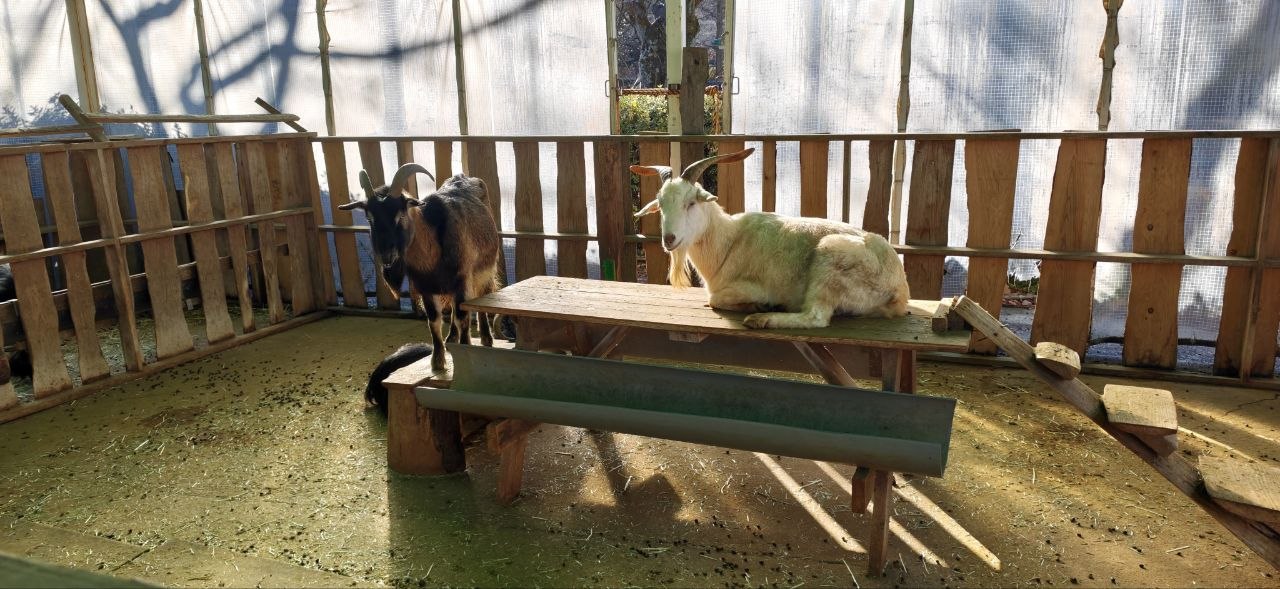
The park also had adorable goats sunbathing on wooden platforms. Although it was winter in Kyushu, the sunshine was generous and the animals were thoroughly relaxed.
II. A Volcano Breathing Beneath Our Feet
Leaving the zoo exhibits behind, we headed up the mountain. Mount Aso (あそさん) is Japan's largest active volcano. Its caldera stretches approximately 25 km north-to-south and 18 km east-to-west, making it one of the largest volcanic calderas in the world. The entire city of Aso and tens of thousands of residents live inside this caldera.
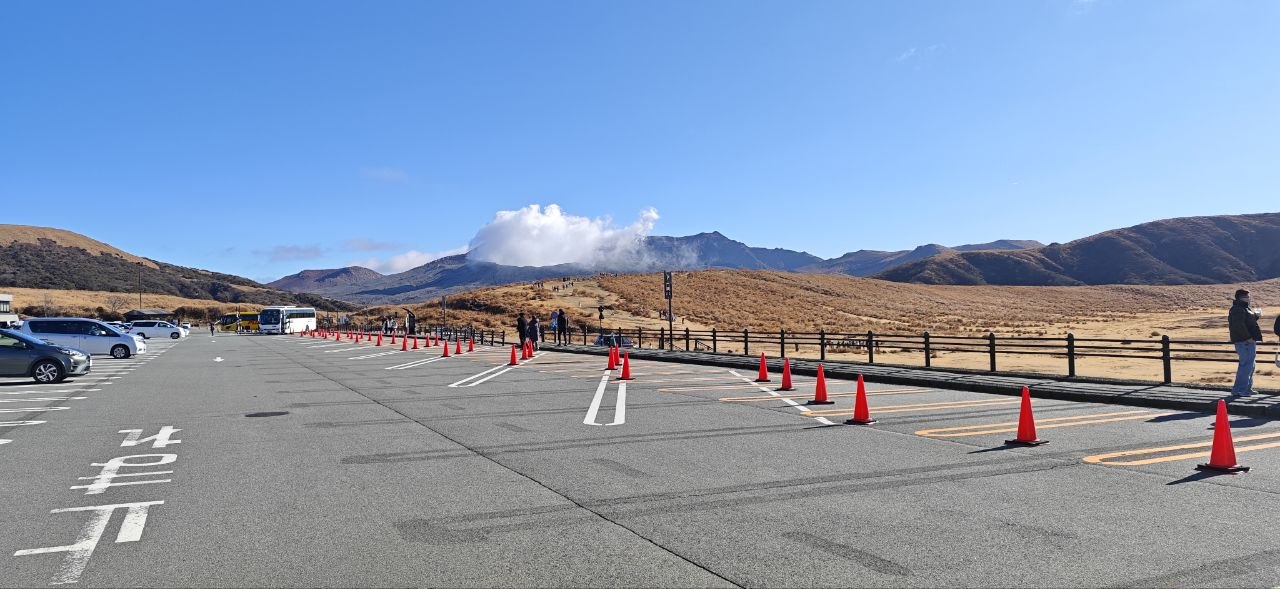
Location: Aso City, Kumamoto Prefecture (N 32.88°, E 131.10°)
Elevation: Highest peak Takadake 1,592m; Nakadake 1,506m
Caldera: 25km N-S × 18km E-W, one of the world's largest
Last eruption: October 2021 (ash plume reached 3,500m)
Crater lake: Emerald green, water temperature over 60°C, high concentrations of sulfuric and hydrochloric acid
III. Helicopter Flight Over an Active Volcano
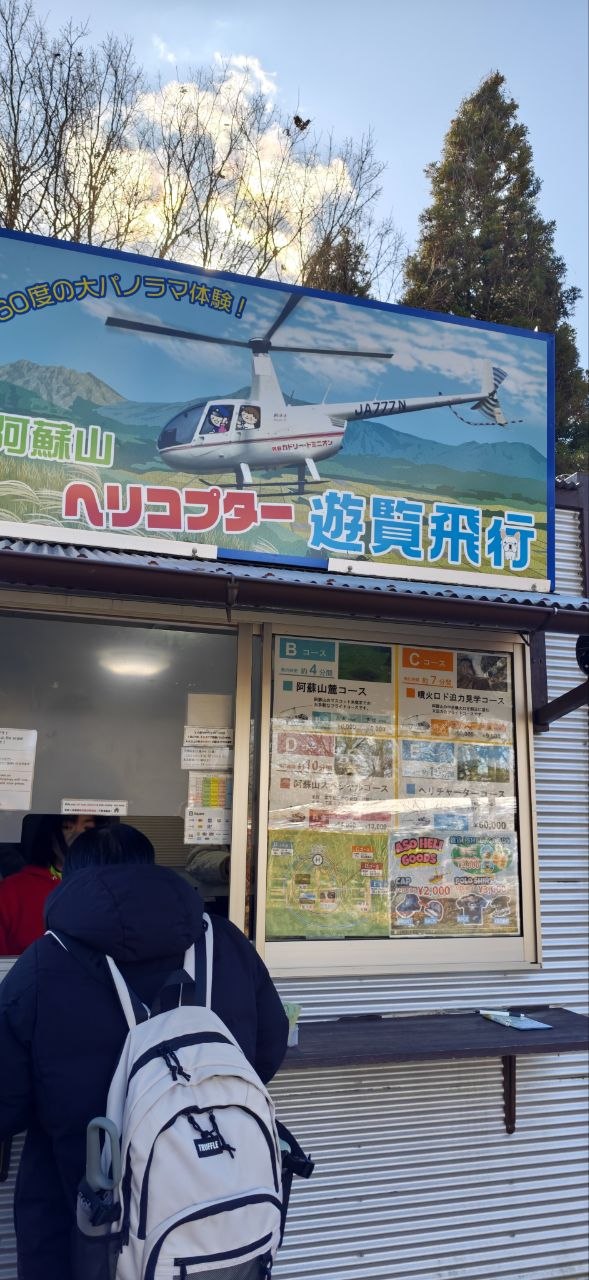
Aso Cuddly Dominion has a unique add-on facility — sightseeing helicopter flights. These aren't ordinary scenic flights; the route takes you directly over the Aso volcanic crater. The ticket booth is in one corner of the park, with a sign reading "Aso Mountain Helicopter Sightseeing Flight — 360° Panoramic Experience!"
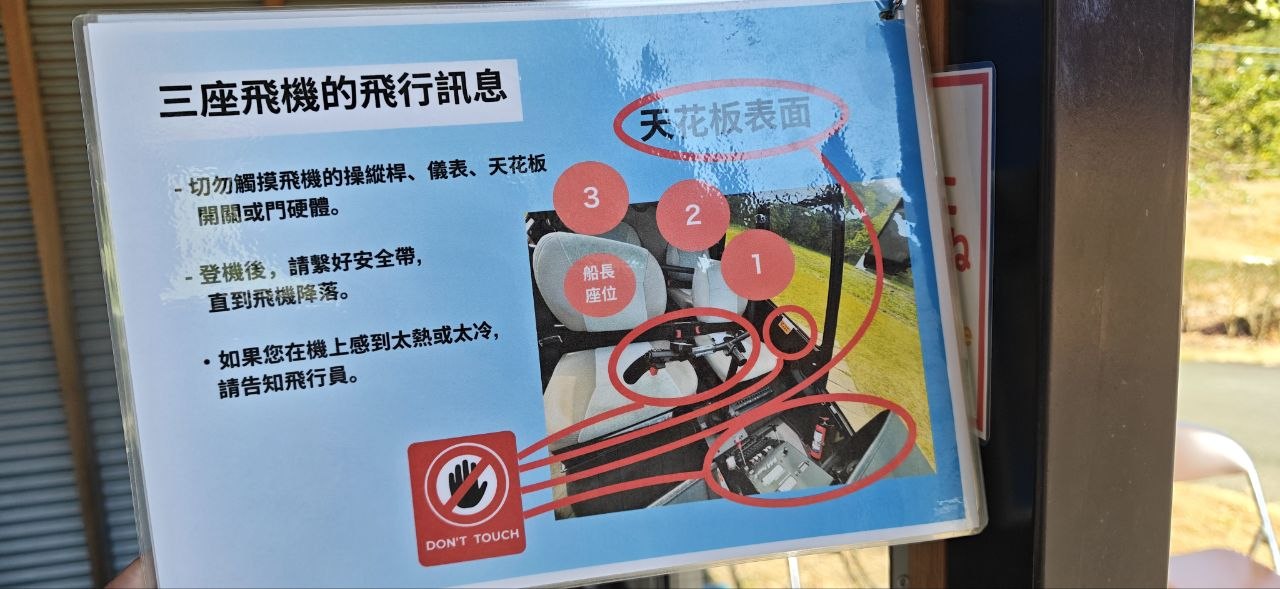
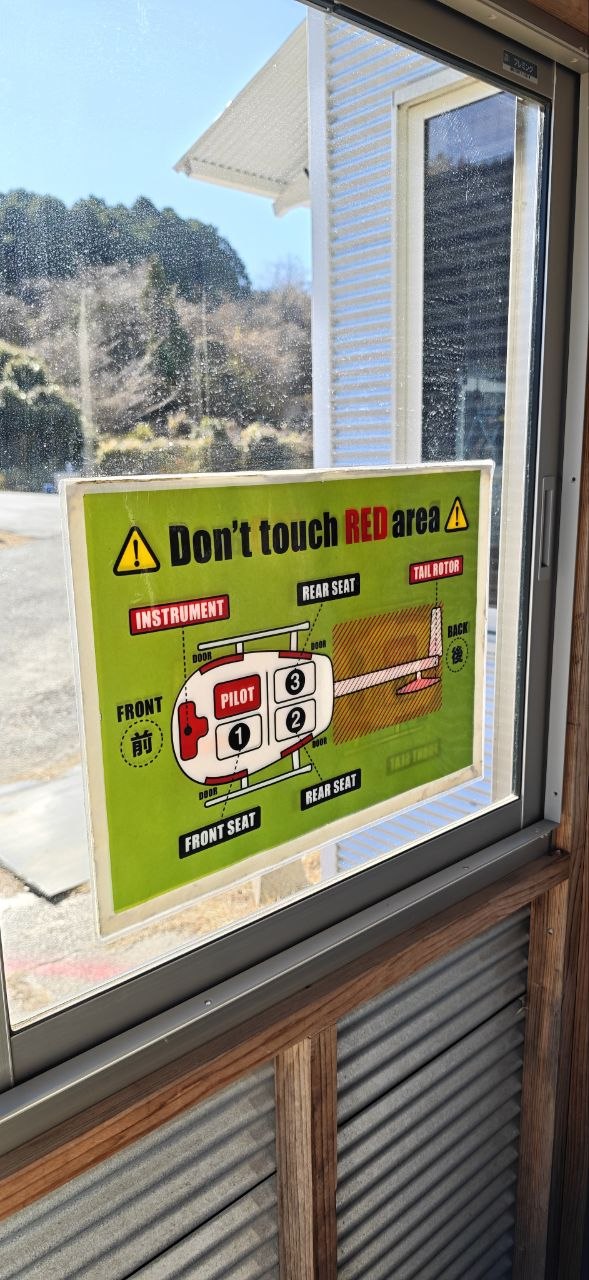
The aircraft is a three-seat Robinson R44. Seats one and two are for passengers; seat three is for the pilot. Before boarding, you watch a safety briefing: don't touch the control stick, keep your seatbelt fastened at all times, and don't touch the ceiling or door handles. Thoughtfully, the safety instructions are available in Chinese.
- Confirm you are in good health before boarding; those with cardiovascular conditions, hypertension, or fear of heights should carefully assess the risks
- Keep your seatbelt fastened at all times; do not touch the control stick, instrument panel, or door handles
- Flight routes may be adjusted or cancelled due to weather or volcanic activity levels
- Toxic gases (sulfur dioxide) may be present near the crater; those with respiratory conditions should take special care
- Follow all instructions from the pilot to ensure your safety and that of fellow passengers
- This experience is separately charged from park admission; fees vary by route and duration
Once airborne, the world transformed in an instant. The parking lot shrank rapidly below; the brown grasslands unrolled like a carpet beneath us; the distant ridgelines stood crisp as if carved by a knife. The helicopter circled the crater, offering views from every angle of the emerald-green crater lake and the constantly rising column of white smoke.
360° Panoramic Video
This is a 360-degree panoramic video filmed from the helicopter. During playback, you can drag with your mouse (desktop) or swipe with your finger (mobile) to change the viewing angle and experience the full sweep of Aso Volcano from above.
Postscript: A Heartbreaking Piece of News
Nearly a month later, search teams used drones to confirm images of three bodies near the wreckage. Due to the high concentration of volcanic gases and unstable terrain inside the crater, rescue personnel were unable to enter the site. The families ultimately agreed not to risk further rescue attempts, opting instead for a mechanical assessment of potential recovery.
When I read this news, my hands were shaking. Because we rode the same helicopter, at the same place, along the same route. The blue sky and beautiful scenery that day were probably identical to what they saw on the day of the accident.
Risks of Helicopter Sightseeing
While sightseeing helicopter accidents are uncommon, flying near a volcanic crater carries unique risks:
- Volcanic air currents — Heat from the crater generates irregular updrafts and turbulence that can affect flight stability without warning
- Volcanic gases — High concentrations of sulfur dioxide and hydrogen sulfide can impair engine performance and endanger human health
- Visibility — Volcanic smoke can change visibility in an instant, causing pilots to lose their bearings
- Impossible rescue after a crash — Conditions inside the crater are extremely hostile; once a helicopter goes down, immediate rescue is virtually impossible
I'm not trying to discourage anyone from going. The view of Aso Volcano from the air that day was genuinely one of the most awe-inspiring sights I've ever witnessed. But I feel obligated to let anyone reading this know: this is not a zero-risk experience. If you decide to go, please confirm favorable weather conditions, understand the safety protocols, and mentally prepare yourself.
May the Taiwanese couple and the pilot rest in peace.
Closing Thoughts
As we left Mount Aso, I looked back one last time. The volcanic plume was still rising, exactly as it had been when we arrived. It doesn't care whether you come or go — it has been doing this for tens of thousands of years.
The contrast of this single day was immense. In the morning, we watched Pan-kun's descendants sunbathing quietly at the zoo. In the afternoon, we gazed down at a boiling crater lake from 300 meters up. On one side, the tenderness of life; on the other, the fury of the Earth.
Perhaps that's the charm of Aso — in the embrace of an active volcano, people and animals still live in peace. But please remember: nature's beauty and its danger have always been one and the same.
Some scenery can only be seen from the sky.
Some forces can only be felt in person.
Some risks can only be truly understood through experience.
Mount Aso is exactly that kind of place.